Flat
refurbishment
in Bloomsbury, WC1
Architects, Engineers, Surveyors & Builders Under One Roof.
One Studio. One Contract. One Team.
Hampstead Chartered Surveyors & Building ConsultancyBloomsbury flats are found in a few converted Georgian townhouses and in 20th-century blocks built by the local authority and private developers, Camden's appraisal records. Each comes with its own lease and its own limits.
Bloomsbury is the great planned Georgian quarter of London, and its flats sit in some of the country's finest squares. Bedford Square is among the most complete Georgian ensembles anywhere, Russell Square and Gordon Square carry the Bloomsbury Group terraces, and Mecklenburgh Square and the surrounding blocks add mansion flats and academic conversions. Almost all of it lies within the Bloomsbury Conservation Area and largely on the Bedford Estate, so refurbishment is heritage work from the first drawing.
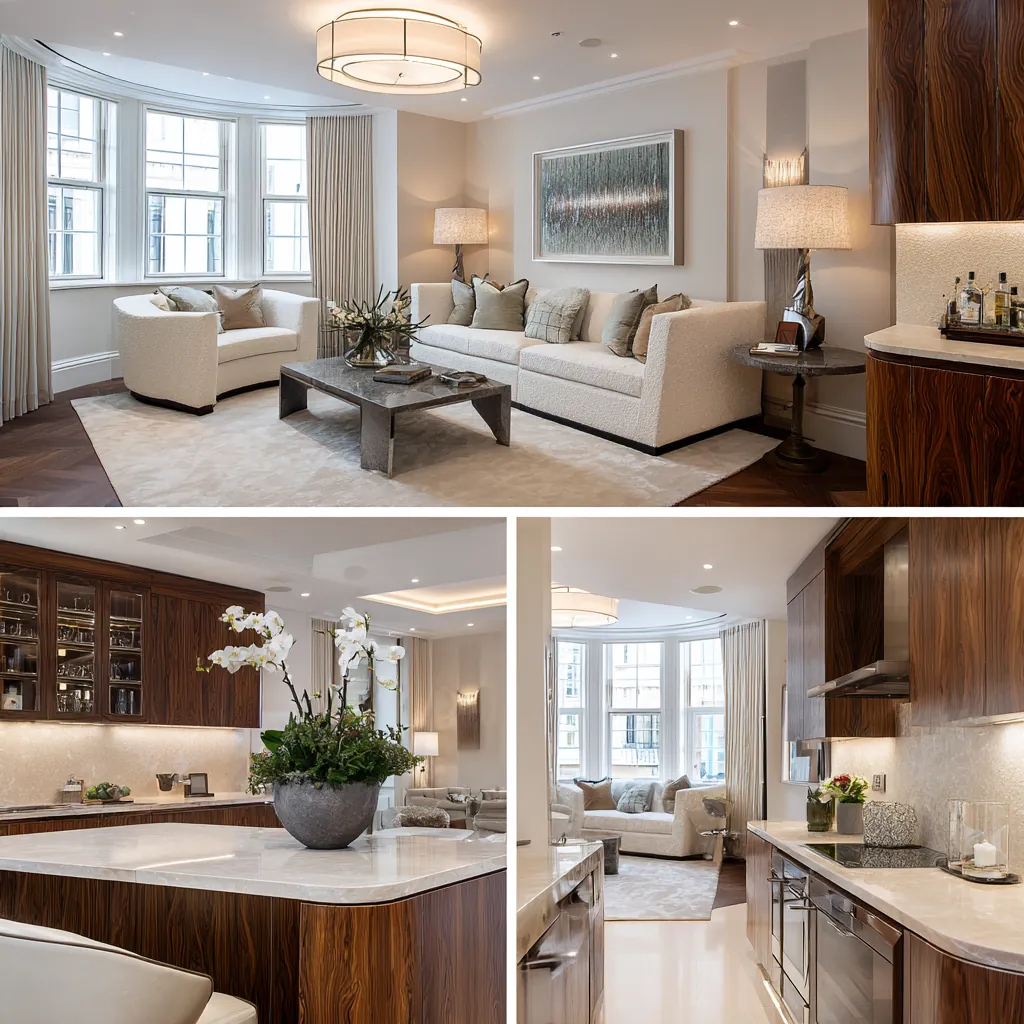
Two things shape a project here. Much of the stock is heavily listed and leasehold, which means Camden and, in places, the estate govern change, and listing can reach interior fabric as well as the frontage. And many of these townhouses long ago passed into institutional or multiple occupation, so a good share of the work is sensitive reconfiguration back toward homes, restoring Georgian brick, joinery and plaster while renewing services and improving acoustics between flats.
Because the listed terraces demand careful structural and party-wall sequencing, the programme is staged around the fabric on streets such as Bedford Square, Russell Square, Gordon Square and Mecklenburgh Square.
Services through a converted terrace
For a Bloomsbury conversion flat, trace the existing drainage and ventilation routes before moving the kitchen or bathroom. Identify which floors, ceilings and risers are shared with other occupiers, and confirm the permitted working and access arrangements for the building.
A flat in a Bloomsbury block or divided townhouse: what it covers
Bloomsbury flats sit in late 19th-century tenement and mansion blocks, in 20th-century council and private blocks, and in terraced townhouses that have been divided. Each type has a different construction behind its finishes, so survey the floors, partitions and services before a layout is drawn.
Source: Bloomsbury conservation area appraisal and management strategy, April 2011
Ask the managing agent who controls the isolation valves on the shared stack, since a refit may mean turning off water beyond the flat. Open a small section of floor to check joist direction and old notching before moving a partition, and ask an engineer what each wall supports.
Source: LEASE: alterations and home improvements · When Building Regulations approval is needed
Where a townhouse has been split into flats, treat sound insulation, floor build-up and the lease's terms as one question; Approved Document E applies to relevant building work. Where original sashes survive, Camden's strategy expects repair rather than replacement unless they are beyond it, so cost draught-proofing or secondary glazing first.
Source: GOV.UK: Approved Document E, resistance to sound · When Building Regulations approval is needed · LEASE: alterations and home improvements · Bloomsbury conservation area appraisal and management strategy, April 2011
Permissions to check for a Bloomsbury flat
Some long leases rule out structural alterations altogether and allow other works only with the landlord's written consent, which may come with conditions; check before the scope is fixed. Building Regulations stand apart from that consent and from planning, and a full rewire of a mansion-block flat, new drainage or a removed wall can bring them in.
Source: LEASE: alterations and home improvements · When Building Regulations approval is needed
Ordinary internal work in a flat is generally not development. Outside, a flat carries no householder permitted development rights, so replacing a window or adding a vent through an external wall should be checked for planning permission. Camden lists no heritage Article 4 direction for the Bloomsbury conservation area, but that absence does not make such an alteration acceptable.
Source: When planning permission is required · Householder permitted development technical guidance · Camden: current heritage Article 4 directions · Bloomsbury conservation area appraisal and management strategy, April 2011
If the block or house is listed, consent can be needed for interior work affecting its special interest, and Camden treats work done without it as a criminal offence, even if the listing was unknown. Party Wall Act notice is due only for qualifying work, for example cutting into the wall shared with the next building or removing a chimney breast from it.
Source: Historic England: listed-building consent · Camden: listed buildings and listed building consent · Party-wall work requiring notice
Working inside a shared Bloomsbury building
Materials must travel from the kerb to the flat through any shared hall, stair or lift, so check widths and turns before ordering anything long or heavy. Settle with the building manager how the common parts will be protected, where stripped-out material is held, and the times shared services may be shut down.
Source: LEASE: alterations and home improvements
Camden permits noisy building work from 8am to 6pm, Monday to Friday, and 8am to 1pm on Saturday, but not on Sundays or bank holidays; other hours need its prior consent under section 61. The lease or house rules may impose shorter hours, and neighbours above and below should hear about the loudest days in advance.
Source: Camden: noisy building works and prior consent · LEASE: alterations and home improvements
The adjoining building may be a hotel, offices or a university building as well as homes, so find out early whom to contact. A skip outside needs a Camden licence applied for by the skip company, or a TfL one on Euston Road, a red route, and a skip in a parking bay also needs a suspension.
Source: Bloomsbury conservation area appraisal and management strategy, April 2011 · Camden: skip licences · Camden: parking bay suspensions · TfL: red routes and the TLRN map · TfL: highway licences on red routes
What to gather for a Bloomsbury flat quotation
State the address, which floor the flat is on and whether it has a lift, and whether the building is a mansion or tenement block, a 20th-century block or a divided townhouse. Photograph the rooms you want to change, the entrance and shared stair, and any damp or ceiling stains.
Send the lease, any building rules for works, existing plans and earlier planning, listed building and building control papers. Say whether the building is listed and whether the address lies within the Oxford Street Development Corporation's area near Tottenham Court Road station, since that body, not Camden, would be the planning authority there.
Source: LEASE: alterations and home improvements · Camden: transfer of planning powers to the Oxford Street Development Corporation · Oxford Street Development Corporation area boundary map
List what is decided, such as known repairs and chosen finishes, apart from anything awaiting lifted floors, an engineer or a measured survey, which should be priced as provisional. Name who will request the landlord's licence, notify neighbours and book building control visits.
What does a flat refurbishment cost in Bloomsbury?
A written scope and site assessment are needed before any project price can be fixed.
Guide rates exclude VAT and are set by depth of work, not by property type. Compare scopes in our London refurbishment cost-per-square-metre guide.
Flats in Bloomsbury: converted townhouses and 20th-century blocks
Camden's appraisal says only a few Bloomsbury townhouses have been converted to flats, and that a small but increasing number are returning to single family use. A flat in a converted townhouse is part of a building planned as one house, which affects where a kitchen or bathroom can sensibly go.
The 20th century added blocks of flats built by the local authority and by private developers. In these, the structure, risers and windows belong to the building, and work inside a flat is set by the lease and the managing agent's rules.
LEASE notes that, depending on the lease, you may need the landlord's permission before making alterations even when planning permission or building regulations approval is in place, and that other clauses can restrict work such as cutting external walls or laying hard floors. We read the lease before drawing a layout.
In a converted townhouse the windows tell you which floor you are on: the appraisal describes openings that diminish in size above large first-floor windows, with recessed sliding sashes. A first-floor flat often holds the grandest rooms of the original house, with plasterwork and joinery worth keeping.
Noisy work in a shared building stays inside Camden's permitted hours; anything outside them needs prior consent under section 61 of the Control of Pollution Act 1974, applied for at least 28 days before the works.
Second World War bomb damage led to large new developments in Bloomsbury, the appraisal records, such as the Brunswick Centre and Lasdun's Faculty of Education. A flat in a post-war building like the Brunswick Centre comes with its own structure and services, and a refurbishment works within them.
The closest related case study is outside Bloomsbury: Chesterfield Street, Mayfair, an apartment refurbishment in Mayfair. We point to it because the work is comparable; the project itself is outside Bloomsbury.
Sources: Camden Council: Bloomsbury conservation area appraisal and management strategy (adopted 18 April 2011); LEASE: alterations and home improvements; Camden Council: noisy building works.
Flat Refurbishment in Bloomsbury: Questions
Are Bloomsbury flats listed, and does that affect refurbishment?
Some are. A flat in a listed terrace is covered by the listing, and Camden protects every part of a listed building, including the interior, so changes affecting its special interest need listed building consent, a separate application from planning permission. Flats in 20th-century blocks are mostly unlisted, but their leases set limits of their own.
Can a Bloomsbury flat be reconfigured back into a proper home?
Yes, and it is common work here. Many Bloomsbury townhouses passed into institutional or multiple occupation, so a sensitive reconfiguration back to family or single-flat use, restoring Georgian brick, joinery and plaster as it goes, is a large part of what we do.
Which Bloomsbury buildings do you refurbish flats in?
The apartments and conversions around the great squares: Bedford Square, Russell Square and Gordon Square with their Bloomsbury Group terraces, and the mansion flats and academic conversions around Mecklenburgh Square.
How much does a flat refurbishment cost in Bloomsbury?
Whether the flat is in a converted Georgian townhouse or a twentieth-century block changes almost everything about the cost. In a listed house, consent can govern partitions, floors and joinery, while in a block the lease, the freeholder's conditions and the shared services set the limits. Acoustic layers under new floors and the route for waste and extract add further work. We visit, agree the scope and specification with you, and only then set the price in a written quotation.
What makes a Bloomsbury flat refurbishment more involved?
Check Camden's current conservation boundaries and any Article 4 direction for the address and proposed work, and the listed terraces demand careful structural and party-wall sequencing, so work in these buildings is planned and staged with the heritage fabric in mind.