Flat renovation
and refurbishment
in Holland Park, W11
Many of Holland Park's Victorian houses were converted into flats after the Second World War and given roof extensions, and Oakwood Court is a group of mansion blocks around a private central garden. Your lease can make alterations subject to the landlord's permission, and where the house is listed, as the stuccoed houses on the three streets called Holland Park are, the protection reaches inside the flat as well.
Converted villas, listed stucco houses and mansion blocks
RBKC's 2017 appraisal of the conservation area describes its Victorian houses as generally built with two generous main storeys over half basements, and records that many were converted to flats after the Second World War, when roof extensions were added too. So we start by establishing which part of the original house a flat occupies, from the half basement to a principal floor or the added roof storey.
The appraisal treats the three streets of stuccoed houses called Holland Park, with the mews between them, as an important Italianate group listed at grade II. RBKC is clear that a listing covers the whole of a building, inside as well as out, internal features and later extensions included, so in a listed flat the consent question reaches the rooms themselves, not only the facade.
Oakwood Court is a group of mansion blocks with a private central garden, and the appraisal also notes a communal garden in front of it. The Local Plan 2024 draws a line that matters for these flats: a dwellinghouse has permitted development rights, whereas mansion blocks, frequently in multiple ownership, have none.
Sources: Royal Borough of Kensington and Chelsea: Holland Park Conservation Area Appraisal (adopted June 2017), Royal Borough of Kensington and Chelsea: listed buildings explained, Royal Borough of Kensington and Chelsea: Local Plan (adopted July 2024)
Lease, listing and planning: what each one controls
The lease comes first. According to the Leasehold Advisory Service, a lease can, depending on its wording, oblige a leaseholder to obtain the landlord's permission for any alteration, whatever planning permission or building regulations approval is already in place. A lease that allows alterations does not end the matter either: other clauses can limit the work, and LEASE's example is a clause insisting on carpeted floors, which could rule out timber or laminate.
On a listed building, RBKC's list of smaller works needing consent takes in removing or adding cornices, skirtings, architraves, internal doors and fireplaces, re-plastering, removing floorboards, new openings, suspended ceilings and recessed lighting. Bigger changes, taking out an internal wall among them, need consent too, though routine maintenance and some repairs do not.
What makes a listed building special is more than its looks: the Local Plan 2024 counts the historic fabric that survives, where the rooms sit and how they rank, and the original floor plans and levels. Policy CD5 resists changes that strip out internal features of architectural importance unless the case for them is clear and convincing, and RBKC warns that unconsented works affecting a listed building's interest are a criminal offence, leaving the owner as well as the builder liable and at risk of a criminal record.
Windows and cooling are where a flat meets planning. New windows in a flat can need planning permission where they would materially change how the building looks, and if the building is listed, RBKC puts every window alteration, even secondary glazing, on its consent list. For air conditioning, even one unit, the Local Plan expects the environmental impact to be weighed and passive cooling and ventilation to be explored fully first, and Policy GB8 resists plant, air conditioning units and heat pumps included, whose noise and vibration would be unacceptable for the homes around it.
Sources: LEASE: alterations and home improvements, Royal Borough of Kensington and Chelsea: listed buildings explained, Royal Borough of Kensington and Chelsea: Local Plan (adopted July 2024)
Building work inside a divided villa or mansion block
RBKC puts each site into one of three categories under its Code of Construction Practice, judged on the likely impact on the neighbourhood and settled before work begins. Category 3 covers internal refurbishment and cosmetic outside work, largely decorative and usually non-structural, with the shell of the building left as it is; if a flat scheme alters structure, we confirm the category with the scope.
Work audible beyond the site may run between 8am and 6pm on weekdays; at weekends and on public holidays it needs RBKC's written permission given in advance. Demolition and concrete breaking are held to two shorter weekday spells, between 9am and noon and between 2pm and 5.30pm, so lifting an old screed or tiled floor is timetabled inside them.
The Code asks that neighbours hear about the start date at least two weeks ahead; in a divided villa or a mansion block we begin with the households above, below and alongside the flat. Deliveries and collections may only happen between 9.30am and 4.30pm on weekdays, with the window closing at 3pm if the route passes a school or another traffic-sensitive use, and plant, materials and skips stay off the highway unless licensed.
Sources: Royal Borough of Kensington and Chelsea: Code of Construction Practice, Royal Borough of Kensington and Chelsea: Code of Construction Practice (April 2019), Royal Borough of Kensington and Chelsea: construction site enforcement
From feasibility visit to handover in a Holland Park flat
We first visit the flat to judge feasibility and measure it, then go through the lease, the title and any list entry with you and write down each consent the work will need. The layout and specification are drawn by our in-house architects and designers, and any structural alteration, to a wall, floor or beam, is designed by our in-house structural engineers.
Requests then go to the freeholder or managing agent, and to RBKC where listing or planning applies; building begins once each answer is in. The design and site programme is agreed in writing before work begins. Your written quotation follows the feasibility visit, No Deposit Required applies, and an independent survey can come first through our sister practice, Hampstead Chartered Surveyors (RICS Firm No. 923064).
Questions about a Holland Park flat
Can I change the outside of an Oakwood Court flat without planning permission?
Do not assume so. According to the Local Plan 2024, mansion blocks, often in multiple ownership, lack the permitted development rights a dwellinghouse enjoys, and the appraisal describes Oakwood Court as a group of mansion blocks, so external changes there are put to RBKC first.
Does the listing on Holland Park reach inside my flat?
It does. The houses on the three streets called Holland Park are listed grade II as a group, and RBKC says a listing covers the entire building, interior and internal features included, along with later extensions. Re-plastering, replacing a cornice or an internal door, or fitting recessed lighting can each need consent.
Can I lay a wooden floor in my Holland Park flat?
Check the lease before choosing the floor: LEASE notes that a lease allowing alterations may still carry other limits, a carpeted-floors clause being one that could stop timber or laminate going down. If the building is listed, removing floorboards is itself on RBKC's consent list.
What hours apply to noisy work in a Holland Park flat?
Weekdays between 8am and 6pm, for work that can be heard outside the site. RBKC's construction code brought in a ban on noisy work on Saturdays, and on Sundays and public holidays such work needs the council's written permission beforehand.
How much does a flat refurbishment cost in Holland Park?
Pricing: flat refurbishment is costed on approved London-wide bands of £900–£1,700 per sqm, typically £60,000–£110,000 for a two-bedroom flat, excluding VAT. Your Holland Park figure is confirmed after a feasibility visit.
Sources: Royal Borough of Kensington and Chelsea: Local Plan (adopted July 2024), Royal Borough of Kensington and Chelsea: Holland Park Conservation Area Appraisal (adopted June 2017), Royal Borough of Kensington and Chelsea: listed buildings explained, LEASE: alterations and home improvements, Royal Borough of Kensington and Chelsea: construction site enforcement, Royal Borough of Kensington and Chelsea: Code of Construction Practice (April 2019)
Flat refurbishments we have published nearby
Selected Hampstead Renovations projects in matching period and estate buildings across Prime Central and North-West London:
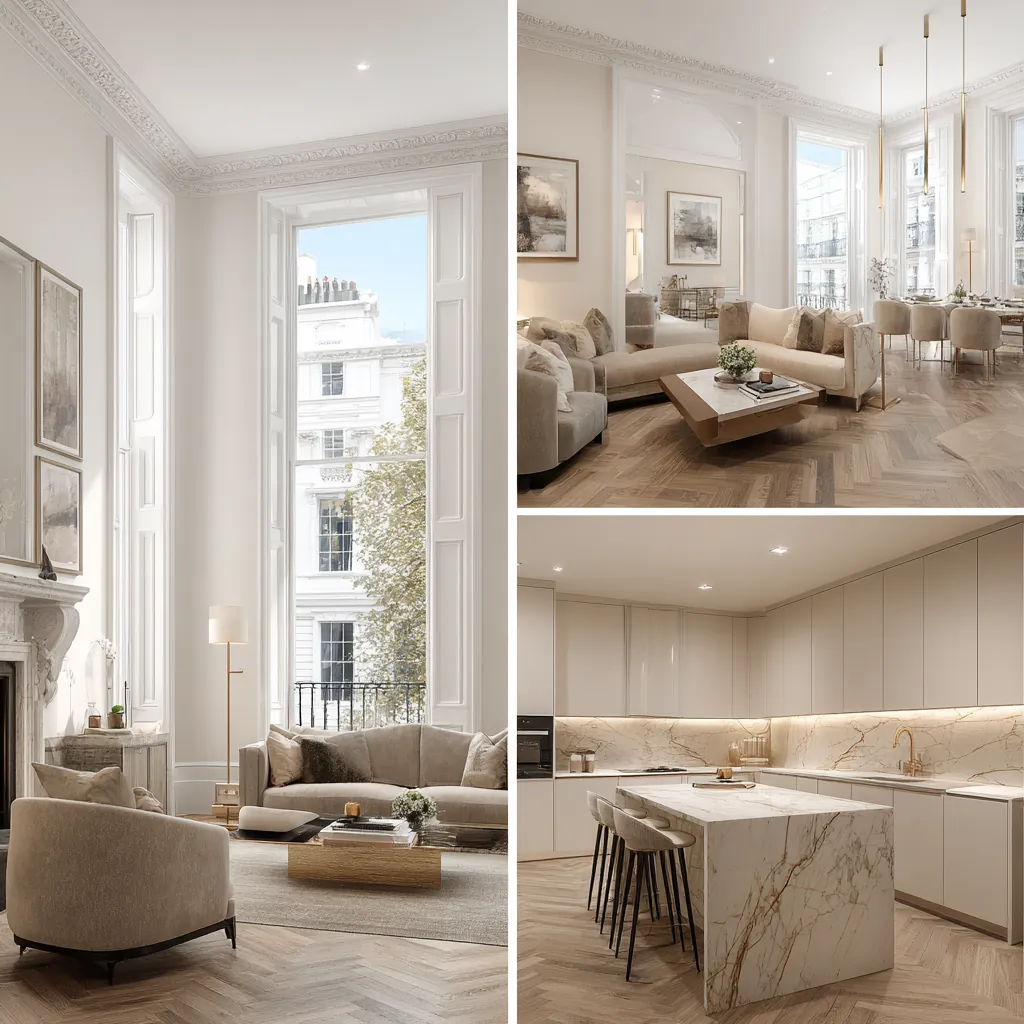
Rooms and elevations typical of Holland Park

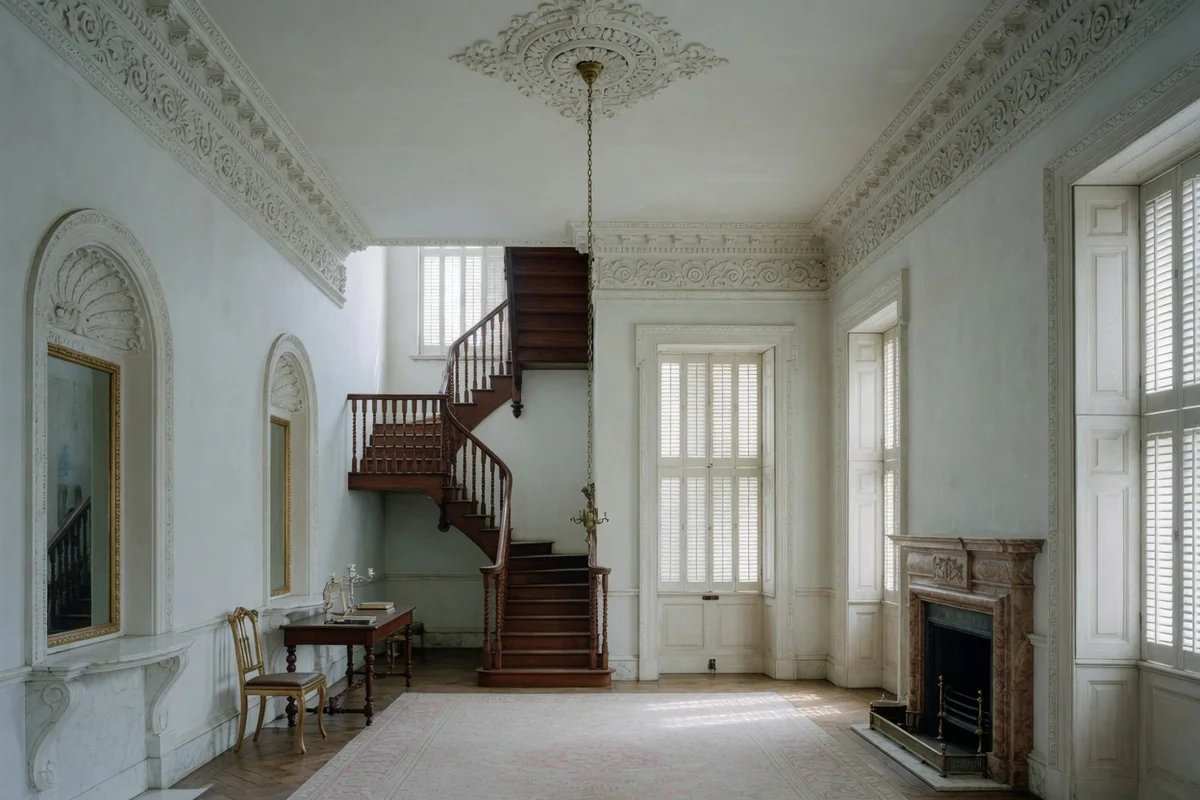
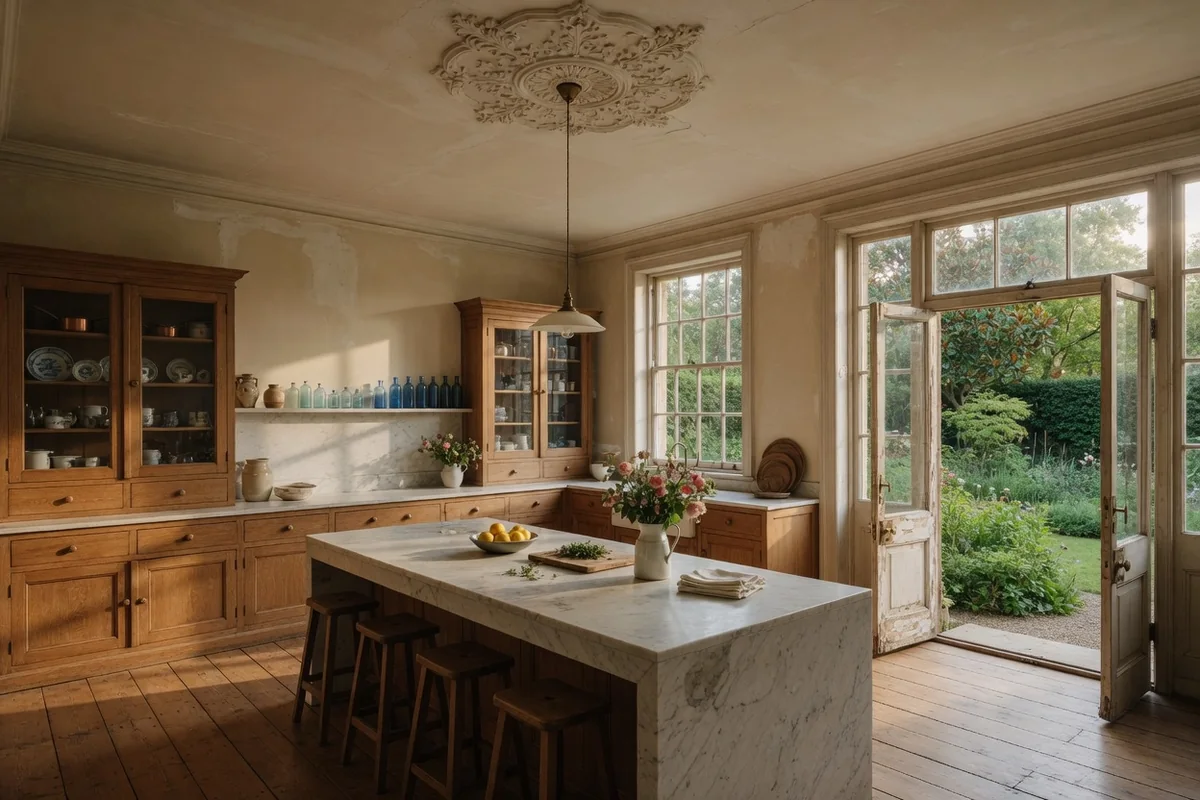
Design, joinery and the build, under one contract in Holland Park
The same team stays with the project from the first visit to handover. In-house RIBA chartered architects, interior designers and IStructE chartered structural engineers draw and specify the work. Master joiners make the fitted furniture. Licence to alter, party wall matters, schedules of condition and Building Regulations sign-off sit with the sister practice, Hampstead Chartered Surveyors & Building Consultancy (RICS Firm No. 923064). One JCT contract covers the building work. Electrical installation is certified to BS 7671 by a registered competent person. Completed structural work carries a 12-month defects liability period. Cover is £5M public liability, £10M employers' liability and contractors' all risks cover. Main office: 250 Finchley Road, Hampstead, London NW3 6DN. Central London client consultation address: 2 Eaton Gate, Belgravia, London SW1W 9BJ. Telephone 020 7101 3168.
Licence to alter · Surveying support from the sister practice
What clients have said about the work
I would like to thank Ross and his team for their consistent commitment to quality and their unerring reliability.
We have worked with Ross and his company many times. They are extremely professional and hardworking individuals who can work under any circumstances. There was no variation to the works.
Verified Planning, Estate & Conservation Sources
- Royal Borough of Kensington and Chelsea: Holland Park Conservation Area Appraisal (adopted June 2017)
- Royal Borough of Kensington and Chelsea: listed buildings explained
- Royal Borough of Kensington and Chelsea: Local Plan (adopted July 2024)
- LEASE: alterations and home improvements
- Royal Borough of Kensington and Chelsea: Code of Construction Practice
- Royal Borough of Kensington and Chelsea: Code of Construction Practice (April 2019)
- Royal Borough of Kensington and Chelsea: construction site enforcement