Local knowledge with a purpose
Understand the building before changing it
Homes around Tufnell Park may be in Islington, which has a ward and a conservation area named Tufnell Park, or in Camden, whose boundary with Islington follows Dartmouth Park Hill up from the station. Confirm the council, then the kind of building you own, before choosing finishes.
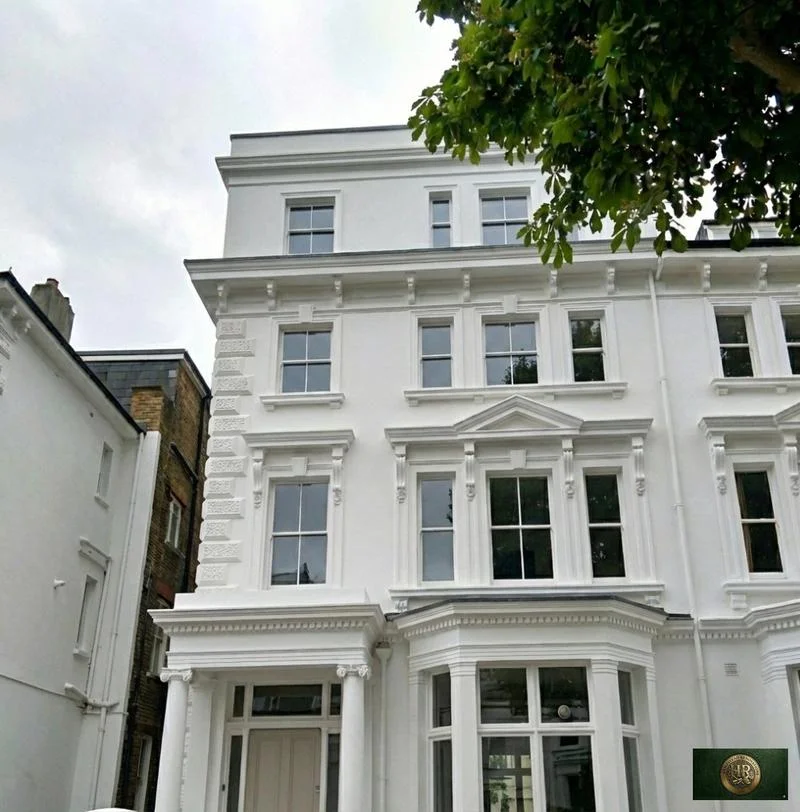
Islington’s Tufnell Park Conservation Area was designated on 23 June 1970 and last amended or extended on 20 May 1993. Its January 2002 design guidelines describe it as largely the residential estate Lord Tufnell laid out in the 1860s and 1870s, mainly spacious detached and semi-detached villas and terraces of three and four storeys, many designed by the estate’s surveyor, Truefitt, with a variety of styles and a flamboyant use of materials and decoration. They record the area as predominantly residential, with a few houses then providing hotel or bed and breakfast accommodation.
Islington conservation areas, designation dates and design guidelines · Islington: Tufnell Park (CA11) Conservation Area Design Guidelines, January 2002 (PDF)
The conservation area’s character, the guidelines explain, rests on surviving 19th century buildings in brick, stone and render, with timber windows and natural slate and tile roofs; only a few 20th century buildings exist. Roofs take the form of gables, mansards, exposed pitches and parapets, and sloping chimney stacks mark the rear of many terraces. Original porticos, porches and canopies are to be kept, as are ornate tiled dadoes in entrance porches, and front boundaries vary from railings on brick walls to engineering-brick finishes, several still carrying original house names. Gaps between houses give views of trees and rear gardens.
Islington: Tufnell Park (CA11) Conservation Area Design Guidelines, January 2002 (PDF)
Islington’s Hillmarton guidelines describe an area mostly first built in the 1850s and 1860s as pairs of three- and four-storey semi-detached villas or as terraces, and those for Mercers Road/Tavistock Terrace name 6 and 9–21 Tufnell Park Road among the 19th century buildings to retain. In Camden, the Dartmouth Park appraisal describes late Victorian villas and houses on Dartmouth Park Hill either side of a 1950 group of houses and maisonettes, and finds most of that conservation area built between 1840 and 1890, with late 18th century terraces, cottages, mansion blocks and Victorian villas side by side.
Islington: Hillmarton (CA32) Conservation Area Design Guidelines, January 2002 (PDF) · Islington: Mercers Road/Tavistock Terrace (CA24) Conservation Area Design Guidelines, December 2007 (PDF) · Camden: Dartmouth Park Conservation Area appraisal and management strategy, adopted 22 January 2009 (PDF)
The first local check
Confirm the council before anything else
In Islington, Tufnell Park is the name of a ward, a conservation area and a designated public open space, while Dartmouth Park Hill marks where Camden begins. Neither the name nor an N19 or N7 postcode settles the council, a conservation boundary, a listing, an Article 4 direction or the consent route. Use the official lookup to confirm the council, then check its conservation-area map, the list entry, its Article 4 schedule, the title or lease and the planning history for the address.