
Angel & Islington · Houses, flats & bathrooms

Angel & Islington Renovations & Design-Build — N1

Period character. Comfortable everyday living.

Rework a terrace, a converted flat or a bathroom around the way you live. Connect retained details and new interiors with the practical requirements of an N1 home: shared services, conservation controls, street access and the existing building.

Serving Angel and Islington from our Hampstead studio · NW3 6DN
020 7101 3168

Hampstead Renovations design and build studio on Finchley Road
Our Hampstead studio · Finchley Road, NW3 6DN

Start with your project

Choose the work your Angel and Islington home needs

Choose a focused room renovation or a coordinated refurbishment. Each service page explains the scope in more detail and gives you a direct route to discuss the work.

01 Terraces and whole homes

House refurbishment in Angel and Islington

Connect the kitchen, bathrooms and living rooms in one considered refurbishment. Start with the condition and layout of the house, then coordinate retained stairs, fireplaces and joinery with structural work, heating, electrics and new finishes.

  • A clear room-by-room scope and details to retain
  • Layout, structure and building services considered together
  • Access, occupation and permissions planned before construction
Explore house refurbishment in Angel and Islington

02 Converted flats and apartments

Flat renovation in Angel and Islington

Make a converted flat or apartment work better without overlooking the wider building. Coordinate storage and room layouts with lease permissions, shared drainage, floor construction, ventilation and the route through common areas.

  • Lease and managing-agent requirements checked early
  • Shared risers, sound and service isolation included in the brief
  • Protection of entrances, stairs and neighbouring homes
Explore flat refurbishment in Angel and Islington

03 A focused room renovation

Bathroom renovation in Angel and Islington

Discuss a standalone bathroom renovation, en-suite or wet room as its own project. Fit the layout to the existing structure and service routes, and bring waterproofing, extraction, lighting, tile setting and fittings into one specification.

  • Water supply, waste falls and extract route assessed
  • Wet-area build-up, thresholds and access for maintenance coordinated
  • Temporary arrangements discussed if it is your only bathroom
Explore bathroom renovation in Angel and Islington

Space, light and considered storage

Loft conversions, house extensions and bespoke joinery in Angel and Islington

Considering more space or a better use of existing rooms in Angel and Islington? Compare loft conversion, house extension and bespoke joinery options with the building, ownership and local controls before fixing the brief.

Loft conversions

Explore a loft bedroom or workspace in Angel and Islington, with the room layout and stair considered alongside the roof form and the ownership of the building.

The correct conservation schedule

The Angel CA18 guidelines include a property-specific traditional roof-extension schedule. Check the correct conservation area and the actual property before choosing a mansard or dormer.

Upper-floor rights

Where accommodation is above another flat or commercial space, establish the roof demise, structure and lease requirements before developing the design.

Loft conversions

House extensions

Plan a kitchen, dining or living-space extension in Angel and Islington, connecting the addition with the existing rear layout and the outdoor space available.

Original building and rear form

For CA18 properties, assess the addition’s scale and relationship to the existing building and windows. The guideline is not a permission template for wider Islington.

Boundaries and neighbours

Show the intended footprint, adjoining openings and relevant structural or excavation work so private rights and Party Wall procedures can be assessed.

House extensions

Bespoke joinery

Make an Angel or Islington home more practical with fitted wardrobes, alcove cupboards, bookshelves and compact study storage, designed around the rooms and openings you already have.

Historic exterior details

Identify original windows, doors and any shopfront details before replacement work is designed; apply the guideline for the correct conservation area.

  • Islington: The Angel conservation design guidelines CA18

Fitted rooms and shared parts

Coordinate interior storage with existing fabric and shared access. Changes to listed interiors or complete fire doorsets need a separate assessment from decorative finishes.

  • Historic England: listed building consent
  • LEASE: alterations and home improvements
  • GOV.UK: Approved Document B FAQs
Bespoke joinery

Plan the structure and the fitted details together

Tell us how you want to use the space, what needs to stay and which drawings or permissions you already have. A measured brief can connect the roof or extension layout with stairs, storage, lighting and joinery before specifications are priced.

Discuss your project

Real projects, clearly located

Ideas for your Angel and Islington refurbishment

Photographs of our work elsewhere in London

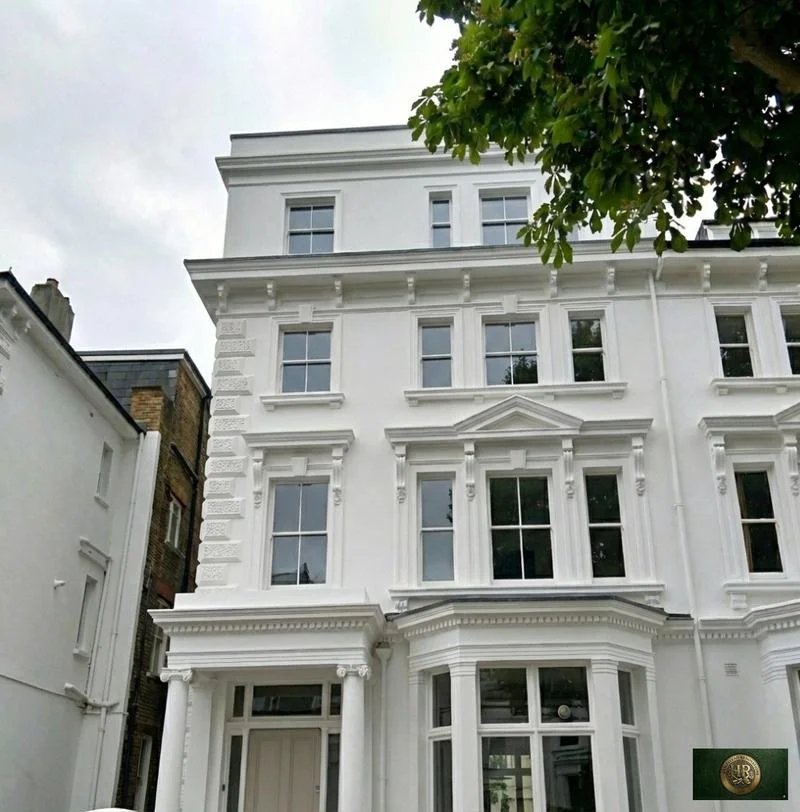
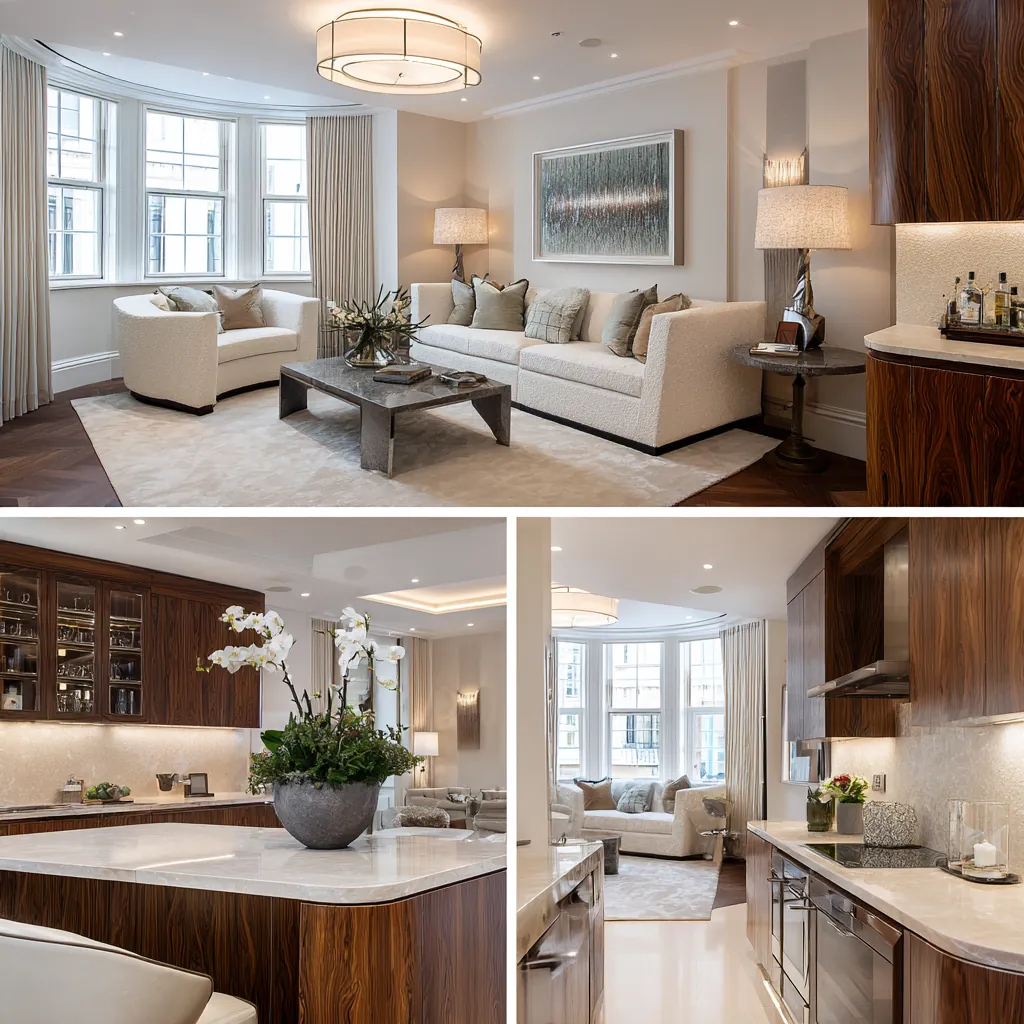
Explore a whole house in Belsize Park, an apartment on Chesterfield Street in Mayfair and a bathroom in Pimlico. Use these examples to discuss the scale of work and finishes you have in mind for your own home.

More London project records: Carlton Lodge, Belgravia · King’s Road, Chelsea.

Our in-house architects, designers and structural engineers
Structural
Engineering Calculations
Planning
Applications & Consents
Building Control
Compliance Support
Leasehold
Licence for Alteration
£5M
public liability, £10M employers' liability and contractors' all risks cover

Local knowledge with a purpose

Understand the building before changing it

An Upper Street address, a terrace by the New River Walk and a flat above a shop can need very different renovation briefs. Understand both the building and its surroundings before choosing a layout or specification.

The Angel and Upper Street (North) conservation guidelines describe a mix of older buildings, narrow plots, commercial frontages and residential uses. A home behind or above a shop may share an entrance or services; establish the lawful use, access rights and existing arrangements rather than treating every N1 property as a detached house.

The Angel conservation design guidelines · Upper Street North conservation design guidelines · Islington permitted development and Article 4 directions

Duncan Terrace/Colebrooke Row has its own conservation area and design guidelines. The terraces and landscape around the New River Walk give a different context from the shopping streets. Record surviving windows, railings, stairs, plasterwork and fireplaces, and check individual listing before proposing their alteration.

Duncan Terrace and Colebrooke Row design guidelines · Historic England: listed-building consent

Chapel Market/Penton Street is another separately mapped conservation area. Buildings near the canal or in other parts of Islington need their own designation and planning-history checks. Existing conversion, extension or basement work does not by itself show what can be altered now.

Chapel Market/Penton Street conservation design guidelines (CA33) · Islington conservation-area register and map · Current Islington Local Plan and policies map

The first local check

Start with the full address and the existing use

Confirm the local authority, search the property on the council map, and open the relevant conservation guideline, listing entry, Article 4 direction and planning history. Angel and Islington is the service area; an N1 postcode does not establish one consent route for every home.

Find the council for the property · Islington conservation-area register and map · Islington permitted development and Article 4 directions · Historic England: listed-building consent

Separate checks, one coordinated brief

Planning, listed buildings, building control and leases

One approval does not settle every requirement. Identify the applicable routes before ordering work, and record who will prepare submissions, arrange inspections and provide the relevant completion information.

Planning and permitted development

What part of the proposal is development?

Ordinary internal alterations generally do not need planning permission. Extensions, changes of use, new external openings and other development need a separate assessment. Householder permitted development rights have limits and conditions and do not extend to flats; check local directions and previous conditions against the actual proposal.

When planning permission is required · Householder permitted development technical guidance · Islington permitted development and Article 4 directions

Listed buildings and retained character

Will the work affect special interest?

Check the individual listing. Listed-building consent is required for work affecting a listed building’s special architectural or historic interest, including relevant internal changes. Conservation-area designation is a different control. Avoid assuming that a new bathroom, replacement window or removal of internal detail is exempt or always needs the same consent.

Historic England: listed-building consent · Islington conservation-area register and map

Building Regulations and completion

What must be checked and recorded?

Structural alterations, drainage, ventilation, electrical work and other parts of a refurbishment can engage Building Regulations. Establish the approval, competent-person and inspection routes applicable to the scope, and agree who supplies the completion records. A planning decision does not settle these separate requirements.

When Building Regulations approval is needed

Lease permission and Party Wall work

Which private rights and notices apply?

Read the lease and obtain any required written landlord consent for flat alterations. Confirm rights over shared services and common areas. Separately check whether work to shared walls, boundaries or nearby excavation engages the Party Wall Act. A Licence to Alter or Party Wall award is not automatically required for every bathroom refit.

LEASE: alterations and home improvements · Party-wall work requiring notice

Local facts that affect the brief

Apply the controls to the work you actually need

Separate mapped conservation areas

The Angel is not one blanket conservation designation

The council lists The Angel (CA18), Upper Street (North) (CA19), Duncan Terrace/Colebrooke Row (CA3) and Chapel Market/Penton Street (CA33) as distinct conservation areas. Check the property boundary and the applicable design guideline; a nearby street name does not establish that the whole home or proposal falls within one area.

Islington conservation-area register and map · The Angel conservation design guidelines · Upper Street North conservation design guidelines · Duncan Terrace and Colebrooke Row design guidelines · Chapel Market/Penton Street conservation design guidelines (CA33)

Property, work and direction must match

Read the actual Article 4 direction

Islington’s conservation-area directions can remove particular permitted development rights, including specified minor external alterations. The council also has separate Class MA directions affecting commercial-to-residential changes of use, including a Camden Passage direction. These are different controls: use the map and operative document to identify the property and the development right withdrawn.

Islington permitted development and Article 4 directions · Camden Passage Class MA Article 4 direction and schedule

Adopted 28 September 2023

Use the current Islington Local Plan

The adopted Local Plan brings together Strategic and Development Management Policies, Site Allocations and the Bunhill and Clerkenwell Area Action Plan. The council identifies the previous plan documents as an archive for reference. Use the current policies and map for the address, alongside relevant conservation guidance and the complete proposal.

Current Islington Local Plan and policies map

The council adopted its Climate Action SPD on 25 September 2025, replacing the earlier Environmental Design SPD. Read this current guidance and the council’s Retrofit Handbook when considering energy improvements, alongside the heritage and consent checks for the individual home.

Climate Action SPD adoption statement · Islington Retrofit Handbook

January 2016 SPD remains published council guidance

Separate existing lower-ground rooms from a new basement

Islington says planning permission is usually required to construct a basement. Its Basement Development SPD concerns excavation to create new or additional basement space. A bathroom refit within existing accommodation differs from lowering a floor, extending underground or forming a lightwell. Establish the structural, ground, drainage, tree and neighbour information the particular proposal needs before assuming feasibility.

Islington basement development guidance · Basement Development SPD January 2016 · When Building Regulations approval is needed · Party-wall work requiring notice

Identify the applicable controls before committing to external materials, windows, roof plant or excavation. A conversation or pre-application response is not the same as a granted permission or required private consent.

Islington permitted development and Article 4 directions · Historic England: listed-building consent · LEASE: alterations and home improvements
Local guidance checked . The linked sources help you prepare a brief; requirements depend on the address, building and complete proposal.

From retained details to shared services

Period fabric, bathroom details and the wider building

Retained fabric and window decisions

Survey existing windows, doors, plasterwork, floorboards and joinery before deciding what to repair or replace. Use the relevant conservation guidelines and listing information to coordinate proposed changes. A matching appearance alone does not settle the consent question.

The Angel conservation design guidelines · Duncan Terrace and Colebrooke Row design guidelines · Historic England: listed-building consent
Bathroom moisture and service routes

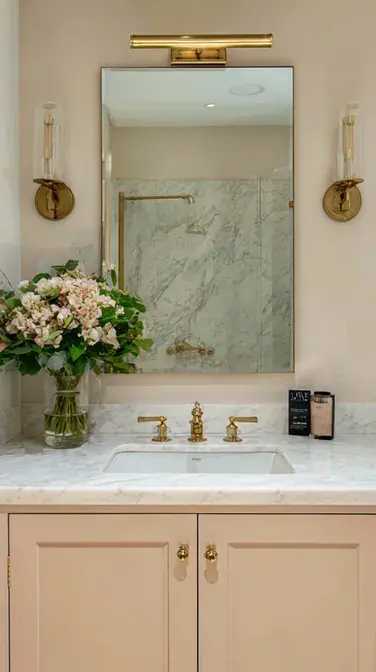
Set out the waste route, water supply, waterproofing and extraction before choosing tiles and fittings. Plan service access and avoid concealing unresolved leaks. Moving a bathroom in a flat needs a check of shared connections and any required landlord permission.

When Building Regulations approval is needed · LEASE: alterations and home improvements

Floors, sound and shared structure

Check the existing floor build-up before specifying stone, tiles or timber in a flat. Coordinate acoustic requirements, lease conditions and any structural assessment with the proposed finish. Approved Document E applies to relevant building work; it does not establish one floor specification for every existing apartment.

GOV.UK: Approved Document E, resistance to sound · When Building Regulations approval is needed · LEASE: alterations and home improvements

Trees and garden work

Identify protected trees and conservation-area tree controls before pruning, excavation or material storage. Notice and consent rules have exceptions and depend on the tree and proposal. Plan root protection and permeable surfaces with the drainage strategy; front-garden paving has its own permitted development conditions.

Tree preservation orders and conservation-area trees · GOV.UK: householder guidance, front-garden surfaces (Class F)

Lower-ground drainage and investigations

Check existing drainage, ground levels and moisture before fitting out a lower-ground room. For excavation, use the council’s basement guidance to identify site-specific ground, flood, tree and structural evidence. A dry-looking cellar or neighbouring basement does not prove that a new excavation is suitable.

Islington basement development guidance · Basement Development SPD January 2016 · Check long-term flood risk in England

Comfort, energy and ventilation together

Consider heating, insulation, ventilation and moisture as a whole-building package. In a period home, retain the details that matter and assess how proposed changes affect existing fabric. Check roof plant, external grilles and window changes against local planning controls instead of treating them as purely internal upgrades.

Historic England: a whole-building approach · When Building Regulations approval is needed · Islington permitted development and Article 4 directions

A practical plan for the street and building

Working hours, deliveries and shared access

Deliveries, skips and street occupation

Plan the actual delivery route and lawful unloading, skips and scaffolding. Islington directs red-route obstruction applications to TfL, naming Upper Street and City Road as examples; check the authority for the exact frontage. Council parking-bay suspensions and highway licences are separate arrangements. Keep entrances and escape routes usable, and establish rights before using a pavement, market space or canal path.

Islington highway licences and red routes · Islington skip licence · Suspend an Islington parking bay · LEASE: alterations and home improvements

Noisy work, neighbours and occupation

Islington’s published building-site noise guidance sets normal working hours of 8am–6pm Monday to Friday and 8am–1pm Saturday, with prior approval needed outside these hours. Check any tighter site or building conditions. Agree protection, service isolation and neighbour communication, and temporary facilities if the home remains occupied.

Islington construction pollution and noisy hours · LEASE: alterations and home improvements

A clear scope before a price

Plan your renovation budget and quotation

Build the quotation around the rooms, retained fabric and outside work that your property actually needs. Resolve the important unknowns before comparing prices.

Survey, condition and investigations

Separate known repairs from questions that need opening-up or specialist assessment.

  • Measured layout and condition record
  • Moisture, structure, services and retained features
  • Ground, drainage or tree information where relevant

Rooms, fittings and coordinated services

Describe the house, flat or bathroom scope room by room so quotations address the same work.

  • Layout choices, quantities and finishes
  • Water, drainage, heating, ventilation and electrical scope
  • Joinery, maintenance access and client-supplied fittings

Permissions, gardens and site arrangements

Identify the applicable professional input, outside work and practical site costs.

  • Council, lease and qualifying Party Wall requirements
  • Tree protection, drainage and garden reinstatement where needed
  • Deliveries, occupation, waste and common-area protection

A written quotation and a workable sequence

Make responsibilities and unresolved decisions visible before agreeing the contract.

  • Allowances, exclusions and VAT treatment
  • Procurement, specification deadlines and change control
  • Inspection, completion and handover information

Ask for quantities, professional fees, permissions, site facilities, VAT and unknown conditions to be explained. An N1 address does not establish a fixed percentage premium or programme. Agree the sequence after necessary investigations and approvals; a standalone bathroom requires its own room-specific quotation.

From an idea to a workable scope

Prepare your brief and renovation budget

  1. Explain the home and the work you need

    Send the full address, house or flat type, rooms to change and features to retain. Include photographs of the existing layout, stair or entrance access and any known service or moisture problems.

  2. Gather the relevant property records

    Share available drawings, the lease, managing-agent requirements, listing information and previous planning or building-control decisions. Note shared drainage, restricted delivery access or garden trees where relevant.

  3. Choose priorities and investigate unknowns

    Separate repairs, layout changes, heating and electrical upgrades, bathrooms and finishes. Agree what needs investigation before fixing quantities, specifications and the quotation.

  4. Agree the sequence through to handover

    Identify who handles each required approval and inspection. Plan ordering, protection, neighbour contact, occupation and service isolation before construction, then agree the completion information to be handed over.

Ready to take the next step? Send the property address and a short outline of what you want to change.

Discuss your Angel and Islington project

Our Hampstead base, serving Angel & Islington

Talk to our Finchley Road studio

Our studio is in Hampstead on Finchley Road, at NW3 6DN. We serve Angel and Islington from this office. Bring us the practical questions about your house, flat or bathroom and the result you want to achieve.

Contact the studio to discuss your brief and arrange the next step. If you already have drawings, a lease or planning correspondence, tell us what is available.

Book a feasibility visit
Hampstead Renovations
Unit 3 Palace Court
250 Finchley Road
London NW3 6DN

020 7101 3168
contact@hampsteadrenovations.co.uk

Find our studio on Google Maps

Questions before you begin

Renovating in Angel and Islington: practical answers

Can I book a standalone bathroom renovation in Angel and Islington?

Yes. We can discuss a family bathroom, en-suite or wet room as a focused project, as well as bathrooms within a larger refurbishment. Send the room dimensions and existing layout, and identify the water, drainage and extract routes. Tell us if it is your only bathroom so temporary arrangements can be discussed.

Does The Angel Conservation Area cover every Angel or Islington home?

No. The Angel, Upper Street (North), Duncan Terrace/Colebrooke Row and Chapel Market/Penton Street are separate mapped conservation areas. Check the complete address and applicable guideline on the council map. A neighbourhood name or an N1 postcode does not establish the designation.

Islington conservation-area register and map

Do Article 4 directions mean every alteration needs planning permission?

No. Read the direction for the property and the specific development right it withdraws. Conservation-area directions and Class MA commercial-to-residential directions control different work. Check any previous planning conditions too; do not infer a rule for an internal bathroom refit from a nearby change-of-use direction.

Islington permitted development and Article 4 directions

Does an internal refurbishment need planning permission?

Ordinary internal alterations generally do not need planning permission. Relevant work affecting a listed building’s special interest may need listed-building consent. Building Regulations, lease permissions and qualifying Party Wall notices are separate checks. External work and changes of use need their own assessment.

When planning permission is required · Historic England: listed-building consent · When Building Regulations approval is needed · LEASE: alterations and home improvements · Party-wall work requiring notice

Can my flat use the same permitted development rights as a house?

Householder permitted development rights do not extend to flats. Assess external alterations, extensions and other development against the applicable planning route. For internal work, also check the lease, shared structure and services, and the relevant Building Regulations requirements.

Householder permitted development technical guidance · LEASE: alterations and home improvements · When Building Regulations approval is needed

Which Local Plan should I use for an Islington renovation?

Islington adopted its current Local Plan on 28 September 2023. Start with its current policies and map, then the relevant conservation guidelines, listing and operative directions. The council keeps previous Local Plan documents in an archive for reference; they should not be mistaken for the current adopted plan.

Current Islington Local Plan and policies map

Is an existing cellar refit the same as basement construction?

No. Refitting an existing lower-ground room differs from excavation, deepening, enlargement or a new lightwell. Islington’s published Basement Development SPD concerns new or additional basement space. Establish the planning route and necessary site-specific investigations before assuming that excavation or a new bathroom layout is feasible.

Islington basement development guidance · Basement Development SPD January 2016 · When Building Regulations approval is needed

What should I check before moving a bathroom in a converted flat?

Identify shared stacks, waste falls, water pressure and the extract route. Check floor construction, acoustics and service access, and read the lease for any required written landlord permission. Coordinate service isolation and protection of common areas with the relevant building manager.

LEASE: alterations and home improvements · When Building Regulations approval is needed · GOV.UK: Approved Document E, resistance to sound

What hours apply to noisy building work in Islington?

The council’s published building-site noise guidance gives normal hours of 8am–6pm Monday to Friday and 8am–1pm Saturday, with prior approval needed outside those hours. Confirm any tighter building or site conditions before programming work, and plan deliveries and neighbour communication separately.

Islington construction pollution and noisy hours

Where is your studio and how do I start a quotation?

Our Hampstead studio is at Unit 3 Palace Court, 250 Finchley Road, London NW3 6DN. We serve Angel and Islington from this office. Send the full address, rooms to change, available drawings or lease information and budget priorities so we can discuss the scope and next steps.

Client Reviews
“

I would like to thank Ross and his team for their consistent commitment to quality and their unerring reliability. They delivered our property to specification and on time, proving to be an extremely effective, experienced, and proactive contractor.

JW
James WardInvestment Director, Belgravia
“

We have worked with Ross and his company many times. They are extremely professional and hardworking individuals who can work under any circumstances. There was no variation to the works.

CR
Cirus RehmanFinance Director, Grosvenor Street, Mayfair
“

A company where you get value for your money while at the same time achieving excellent quality. Their work is carried out on time and within budget. We've worked with them on multiple projects and they never disappoint.

BI
Brian InghamDirector, Green Evolution Limited
Independent
Surveying
Hampstead Renovations operates alongside Hampstead Chartered Surveyors & Building Consultancy — a firm providing chartered building surveying, fire safety and project advisory services, under shared directorship. Both practices are based in Hampstead NW3 6DN, giving our clients local professional oversight from survey through to handover.
Design-Build in Angel, Islington

Looking for a Local Builder in Angel, Islington?

One team, one contract — from feasibility drawing to handover photograph. Our in-house architects, designers and structural engineers, surveying support through Hampstead Chartered Surveyors & Building Consultancy, and our own build teams, all under a fixed-price design-build contract.

View Our Angel, Islington Builders Page
Prime North London overview
Property Refurbishment Company in Prime North London →

See how Angel & Islington fits within our wider Prime North London refurbishment service — house, flat and apartment refurbishment, extensions, lofts, basements and listed work under one team.

Full Service Directory

Services relevant to Angel, N1

Explore 8 service routes for Angel properties, grouped by project type and delivered by the same design-build team.

Loft Conversions

Loft Conversions in Angel →

Extensions

House Extensions in Angel →

Basements

Basement Conversions in Angel →

Refurbishment

House Refurbishment in Angel →

Kitchens

Kitchen Renovation in Angel →

Bathrooms

Bathroom Renovation in Angel →

Interiors & Joinery

Bespoke Joinery in Angel →

Book a feasibility visit

We reply within one working day, Monday to Friday, 8am to 6pm.

Chat with us!