Flat
refurbishment
in Highbury, N5
Architects, Engineers, Surveyors & Builders Under One Roof.
One Studio. One Contract. One Team.
Independent surveying by our sister practice, Hampstead Chartered Surveyors (RICS Firm No. 923064)For flat refurbishment around Highbury Fields mansion blocks, Aberdeen Park conversions in Highbury, plan the rooms alongside the building they belong to. Consider layout changes, services and finishes together with the lease, shared access and any retained features.
Flat Refurbishment in Highbury: What You Need to Know
For a flat in Highbury, read the lease and identify any required freeholder or managing-agent consent before the works are programmed. Review floor and ceiling construction, shared service routes, fire safety and any applicable acoustic requirements alongside the layout. Agree common-area protection, access and working hours with the building's management.
Start with the address and the exact alterations proposed, then confirm the relevant requirements with Islington. Conservation-area status, listing and lease conditions are different checks; internal work should not be assumed exempt simply because it is not visible from the street.
Desirable residential area in Islington centred around Highbury Fields. Conservation area with handsome Victorian terraces, good schools and a village-like atmosphere around Highbury Barn.
Highbury gathers around the green expanse of Highbury Fields, and its stock is a confident mix. Georgian and early-Victorian terraces face the Fields along Highbury Place, larger Victorian villas stand around Aberdeen Park, and Edwardian mansion blocks line Highbury Grove. Much of it lies within conservation areas that Islington protects closely, so the character of a street sets the terms for any external work.
The flats are mostly Edwardian mansion-block apartments and period conversions, held on leases where acoustic separation and freeholder consent are part of the job. Roof rules here are unusually specific: in the Highbury Fields Conservation Area the council sets roof policy street by street, barring roof extensions and dormers on most of Highbury Park, Highbury Terrace and Leigh Road and requiring existing mansards on parts of Highbury Place and Terrace to remain unaltered. We confirm the exact rule for a building before drawing anything at roof level.
A full two-bedroom flat refurbishment runs £60,000 to £110,000 excluding VAT, and each Highbury flat is priced up from that band to its own block, lease and access. Leasehold approvals, acoustic upgrades and the limits of the established N5 streets weigh heavier than size in the figure, and the flats we refurbish lie along Highbury Place, Highbury Fields, Aberdeen Park and Highbury Grove.
Flat Refurbishment in Highbury: Applied to the Local Stock
Highbury sits in the London Borough of Islington, gathered around the green expanse of Highbury Fields. The Highbury Fields Conservation Area (CA5) takes in some of the finest Georgian terraces in the borough fronting Highbury Fields and the distinguished Victorian villas north of the Fields from Highbury Hill to Aubert Park, together with the old village centre of Highbury Barn; an Article 4 Direction applies to the conservation area. Islington's register also designates Highbury New Park (CA15) and Aberdeen Park (CA27) as conservation areas; Highbury New Park was laid out in the 1850s as a fashionable development of grand detached and semi-detached houses, and no new or altered dormer windows are allowed on front or side roof slopes of properties in that area.
Within the Highbury Fields Conservation Area the council applies street-by-street roof policies: no roof extensions or dormers are permitted on most of Highbury Park, Highbury Terrace and Leigh Road, existing mansards on parts of Highbury Place and Highbury Terrace must remain unaltered, and traditional roof extensions may be permitted only on scheduled properties.
Sources: Islington Council, Highbury Fields (CA05) Conservation Area Design Guidelines (January 2002) (2026); Islington Council, Highbury New Park (CA15) Conservation Area Design Guidelines (January 2002) (2026)
What a Flat Refurbishment Involves
Refurbishing a flat means renovating inside a building you share — so the job is as much about leases, neighbours and building rules as it is about kitchens and finishes. We plan every project around the consents your lease demands and the protocols your block expects, then deliver the technical work under one fixed-price contract. A typical scope covers the elements below.
- Licence to Alter — lease review, application pack and freeholder’s surveyor queries handled on your behalf
- Acoustic build-up — separating floors and walls upgraded to meet Building Regulations Part E and any stricter freeholder schedule
- Wet-room tanking — certified waterproofing beneath every bathroom, flood-tested before tiling and covered by a 12-month defects period
- Rewire & replumb — new circuits, pipework and heating, coordinated with the building’s risers and stacks
- Layout changes — internal openings engineered, approved by building control and cleared with the freeholder where the lease allows
- Kitchens & bathrooms — designed, supplied and fitted to the specification tier you select
- Period detail — cornicing, sash windows and fireplaces retained and repaired in conversion flats
- Block protocols — lift protection, booked deliveries, restricted noisy hours and daily cleaning of communal areas
How We Run Your Project
Six stages, with the consent requirements and their effect on the programme considered before work starts.
- Survey & lease review — we measure the flat, inspect the services and read your lease to identify exactly which consents apply.
- Design & consents — our architects develop the layout while the Licence to Alter application runs in parallel, not afterwards.
- Fixed-price contract — an itemised specification agreed in full, with the acoustic and tanking details written in.
- Strip-out & first fix — soft strip, structural openings, cabling, pipework and the acoustic carcass, all removed and delivered through agreed routes.
- Second fix & finishes — kitchen, bathrooms, joinery, flooring and decoration.
- Testing & handover — snagging, certification and reinstatement of any communal areas before the keys come back to you.
Read the full flat refurbishment guide for flat typologies, specification tiers and the Licence to Alter process in detail.
Read the lease and identify any required freeholder consent or Licence to Alter for the proposed work before it is programmed. Planning permission, listed-building consent and Building Regulations are separate checks. Flats do not share the householder permitted-development rights available to houses, but that does not mean every external repair needs an application: like-for-like window replacement may not need planning permission, subject to the property and local requirements. Check the actual alteration, including any effect on a listed building's special interest. Our planning guide library explains the separate approval routes.
Why Hampstead Renovations
Flat refurbishment rewards a team that already knows what freeholders and managing agents will ask for. Design is led by our in-house RIBA Chartered Architects, lease and party-structure matters are supported by RICS surveying through our sister company, Hampstead Chartered Surveyors, and the build is carried out by our own long-standing teams. Every contract is fixed-price on JCT terms, backed by £10M public liability insurance — the level major London freeholders require — plus a 12-month defects period. Enquire before 2pm on a weekday and we will call you back the same day.
What does a flat refurbishment cost in Highbury?
A flat refurbishment in Highbury runs £900–£1,700/sqm excluding VAT, and a full two-bedroom refurbishment typically lands between £60,000 and £110,000. Most programmes take 16–32 weeks on site. A written scope and site assessment are needed before any project price can be fixed.
| Scope of work | Guide rate | Typical total |
|---|---|---|
| Full flat refurbishment (2-bed) | £900–£1,700/sqm | £60,000–£110,000 |
| Typical programme | 16–32 weeks on site | |
Guide rates exclude VAT and are set by depth of work, not by property type. Compare scopes in our London refurbishment cost-per-square-metre guide.
Flat Refurbishment in Highbury: Questions
What kinds of flats do you refurbish in Highbury?
Chiefly the Edwardian mansion-block flats and period conversions gathered around Highbury Fields and Highbury Grove, held on leases where acoustic separation and freeholder consent sit alongside the finish.
Can I alter the roof of a Highbury flat?
It depends closely on the street. In the Highbury Fields Conservation Area the council applies roof policies road by road, with no roof extensions or dormers on most of Highbury Park, Highbury Terrace and Leigh Road, and existing mansards on parts of Highbury Place and Terrace required to stay unaltered, so we check the exact street rule first.
Which Highbury buildings and streets do you work in?
The park-facing Georgian and early-Victorian terraces of Highbury Place and Highbury Fields, the larger Victorian villas around Aberdeen Park, and the Edwardian mansion blocks along Highbury Grove.
How much does a flat refurbishment cost in Highbury?
A full two-bedroom flat refurbishment runs £60,000 to £110,000 excluding VAT, and each Highbury flat is priced up from that band to its own block, lease and access.
Does Highbury's conservation status affect a flat refurbishment?
It can. The Highbury Fields, Highbury New Park and Aberdeen Park conservation areas all carry close controls, with Article 4 directions and, in Highbury New Park, no new or altered dormers on front or side roof slopes, so external change is scrutinised even where interior work is not.
Relevant Completed Flat Refurbishment Projects
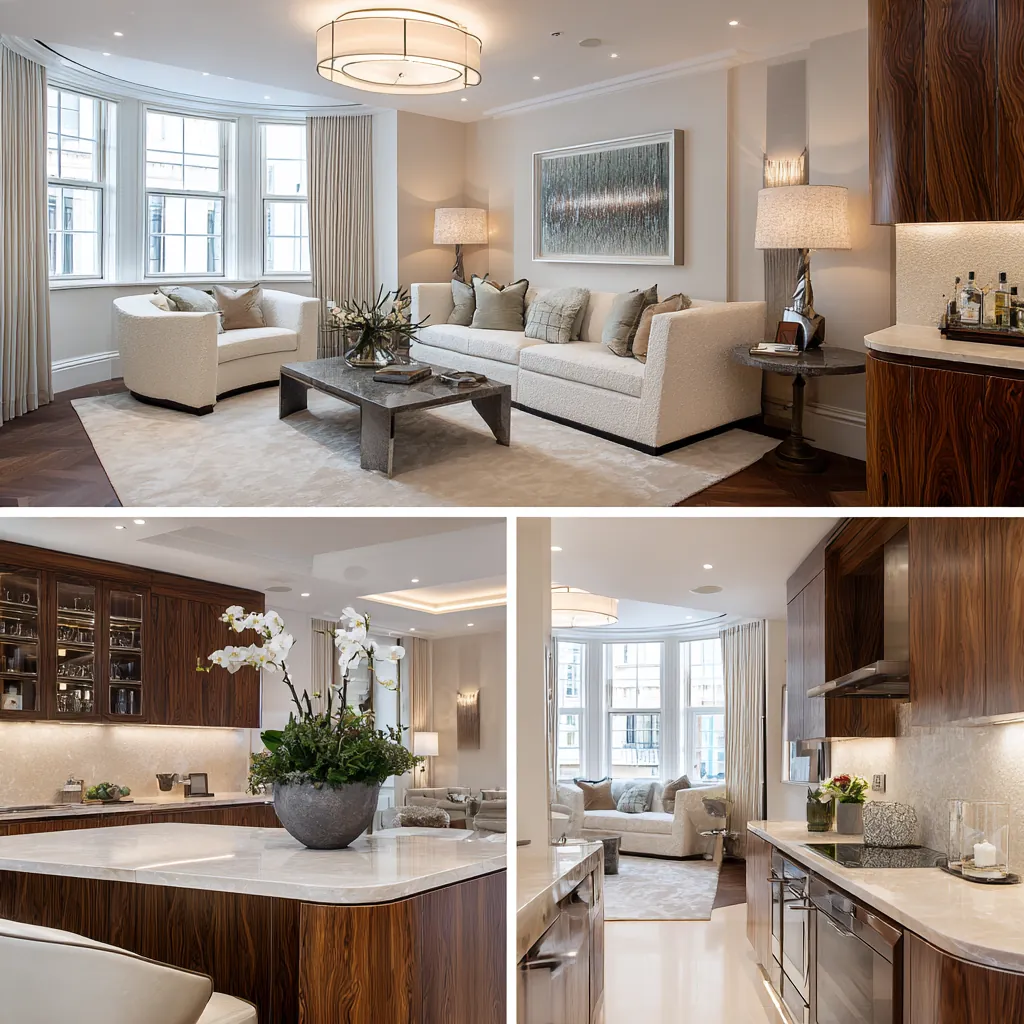
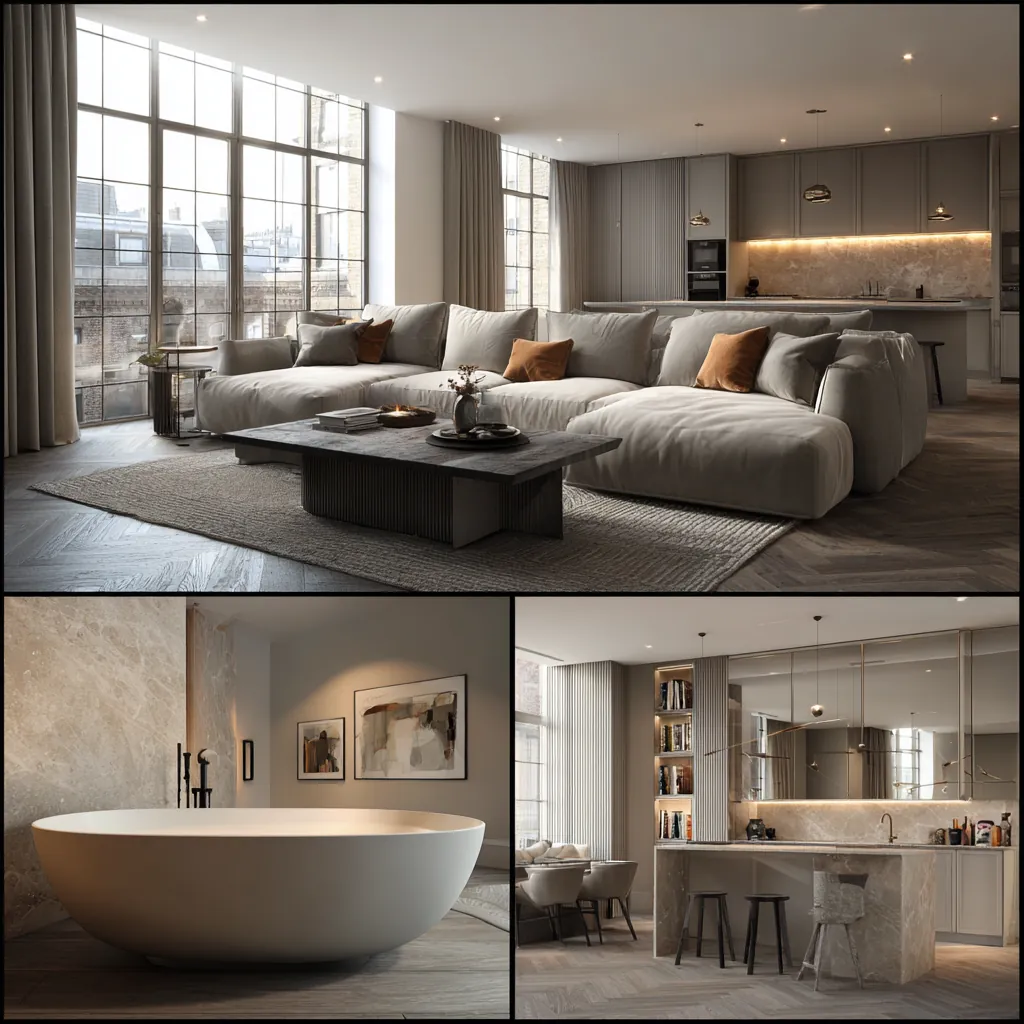
Guides & Local Reading
Flat Refurbishment in Nearby Areas
More Services in Highbury
Book a Free Consultation
Visit our studio or invite us to survey your home. We’ll assess scope, discuss design possibilities and provide an honest budget framework — completely free.
Free Consultation
We survey your property, discuss your vision and provide a clear budget framework.
Highbury history & architecture
Background on the streets, buildings and conservation history of Highbury: The History of Arsenal Stadium (former) · Highbury Park History · Guide to Renovating a Highbury Flat · The Early History of Highbury · From Rural Lands to N5 Suburbia · The Great Estates of Highbury