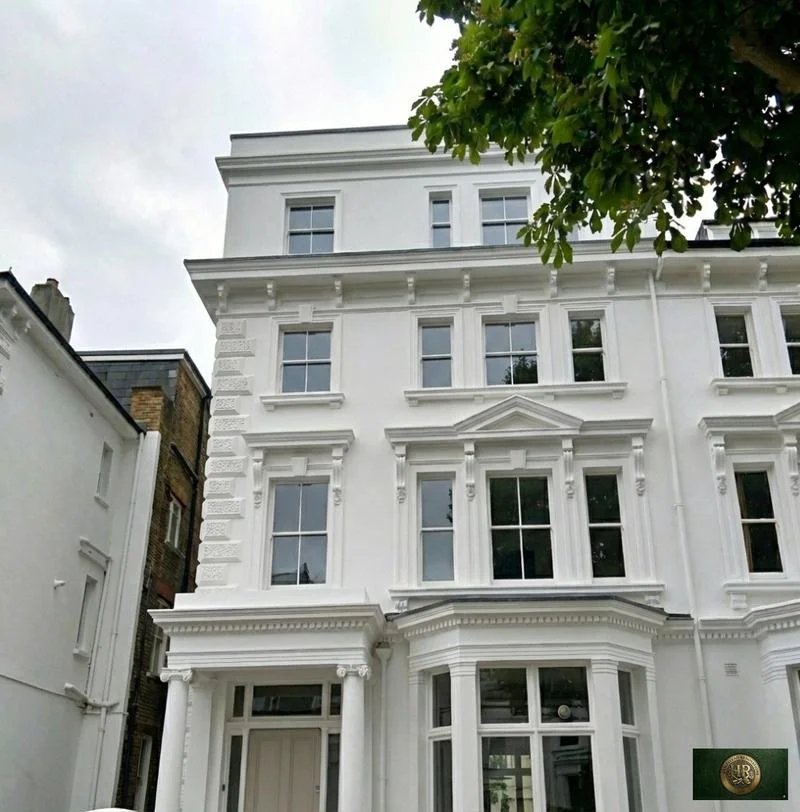
Extensions Planned Around North London Homes
Across North London, the most successful extensions are the ones that solve how the house actually works: cramped kitchens, disconnected dining rooms, dark rear corners and circulation that no longer matches family life.
The technical work sits behind the beautiful glazing and joinery. In North London, conservation area rooflines, Article 4 restrictions, party wall complexity and borough-by-borough planning nuance can alter roof forms, glazing strategy, footprint and how openings are stitched into the existing structure.
We handle the full sequence — architecture, planning, structural coordination and construction — across Hampstead, Highgate, Primrose Hill, and Belsize Park and the wider North London market, so rear, side-return and wraparound projects stay commercially and technically aligned.
North of the centre, the rules for a rear or side addition depend on which council the house sits in: Camden, Islington, Haringey, Barnet or Westminster. A council boundary can even run through one neighbourhood. Haringey and Camden share the administration of the Highgate Conservation Area, and Regent's Park addresses divide between Camden and Westminster.
Hampstead Renovations designs and builds extensions here under one appointment, with our own architects and structural engineers, from a studio at Unit 3 Palace Court, 250 Finchley Road, NW3. Below we compare what each council asks of depth, height and side additions, show where a trust or landlord consent sits on top of planning, and explain how we take a scheme from first survey to handover.
Sources: Camden Council: Pre-planning application advice for homeowners, Islington Council, Conservation areas register, Haringey Council - Crouch End Conservation Area Character Appraisal (No. 5), Barnet Council - Hampstead Garden Suburb Conservation Area, Area 1 (Central Square) Character Appraisal (+ HGS Trust), Westminster City Council — Maida Vale Conservation Area information leaflet (2004), Haringey Council - List of conservation areas in Haringey (+ Camden Highgate CA appraisal page), Camden Council - Regent's Park Conservation Area Appraisal and Management Strategy (+ Crown Estate residential page)
First, Find Out Which Council Decides
In Highgate the first job is to confirm whose controls apply. Haringey designated its part of the Highgate Conservation Area in 1967, Camden adopted its own appraisal for its part in 2007, and Camden publishes a map of the line between them.
Around Regent's Park, many terraces and villas are Crown Estate property, let on Crown leases that bring a separate consent process alongside planning.
Whatever the borough, a conservation area narrows householder permitted development. Government guidance excludes cladding, building out past a side wall, and rear additions taller than a single storey. Rights can also be withdrawn through an Article 4 Direction, or through a condition on a previous planning permission for the property.
Flats have no householder permitted development at all, since the national definition of a dwellinghouse leaves them out. Most flats are also leasehold, and the lease says whether you need permission before making alterations.
Sources: Camden Council - Highgate Conservation Area appraisal and management strategy (+ Haringey CA register), Haringey Council - List of conservation areas in Haringey (+ Camden Highgate CA appraisal page), Camden Council - Regent's Park Conservation Area Appraisal and Management Strategy (+ Crown Estate residential page), MHCLG: Permitted development rights for householders, Technical Guidance (September 2019), GOV.UK - Leasehold property
Islington's Rules for Terraced Houses
Islington's January 2017 Urban Design Guide wants rear additions to stay subordinate to the host house, sitting at least one full storey under the eaves. It will normally resist a full-width addition taller than one storey, or a half-width one taller than two, unless the applicant shows no harm to the building or the area around it.
In conservation areas the guide will not normally allow an extension of more than two storeys in total. Canonbury's own guidance normally limits full-width rear additions to one storey, and Canonbury is also covered by an Article 4 Direction that takes away selected permitted development rights.
On a terraced house the guide suggests putting the addition on the staircase side. That keeps the rhythm of the back elevation and lets the principal rooms keep their original windows.
Lower floors get more latitude. Where it fits neatly and leaves a usable garden, Islington normally sees scope for a ground or lower ground floor extension within the lightwell or past the existing back addition, and it encourages contemporary design there unless conservation guidelines call for a match.
Depth is tested with the 45 degree rule. If the centre of a neighbour's main rear window falls inside a 45 degree angle drawn from the end of the proposed extension, on plan and on elevation, the depth is likely to be judged to harm the neighbour's amenity.
On corner plots, Islington asks that the gap at the corner return of a Victorian or Edwardian terrace normally stays open, because it lets light and air reach the backs of the houses.
Sources: Islington Council: Urban Design Guide Supplementary Planning Document (January 2017), Islington Council, Canonbury (CA08) Conservation Area Design Guidelines (January 2002)
Camden: Advice Levels, Gardens and the Ground Below
Camden offers homeowners pre-application advice at two levels. The lower one takes a single storey rear extension; two storey rear additions, more than one extension, basements and remodelling a whole house sit in the higher one.
Its Home Improvements guidance looks for an addition that stays subordinate in footprint, scale and detailing, uses sympathetic materials and still leaves a garden of reasonable size.
Digging down beneath the extension changes the route. Since 1 June 2017 a Camden Article 4 Direction has required planning permission for every basement or lightwell dug anywhere in the borough.
Some streets carry their own guidance: in Dartmouth Park, Laurier Road and Boscastle Road have had specific guidance on roof and rear extensions.
Trees count too. Camden wants notice in advance of work on any conservation-area tree with a trunk diameter greater than 75mm when measured 1.5 metres above the ground, so we settle the footprint around existing trees before drawing anything else.
Sources: Camden Council: Pre-planning application advice for homeowners, Camden Planning Guidance: Home Improvements (January 2021), Camden Planning Guidance: Basements (January 2021), Dartmouth Park Conservation Area Appraisal and Management Plan (adopted 22 January 2009), Camden Council, Camden Council: Conservation areas
Hampstead Garden Suburb and the Haringey Side
Hampstead Garden Suburb is in Barnet and lies almost wholly within one conservation area, with around 500 individually listed buildings.
Most of the Suburb also sits under a Scheme of Management run by the Hampstead Garden Suburb Trust. The scheme dates from the 1967 Leasehold Reform Act and gives the Trust control over how buildings and landscapes look, so external alterations need its approval on top of Barnet's decision.
For an extension in the Suburb we prepare one drawing package for the council and the Trust together, so neither body is looking at a different scheme.
In Crouch End, Haringey's 2010 character appraisal found no Article 4 Directions in force within the conservation area when it was written, though permitted development is already narrower inside any conservation area.
Sources: Barnet Council - Hampstead Garden Suburb Conservation Area, Area 1 (Central Square) Character Appraisal (+ HGS Trust), Hampstead Garden Suburb Trust - Your Property, Hampstead Garden Suburb Trust - Your Property / Scheme of Management, Hampstead Garden Suburb Trust - Scheme of Management, Haringey Council - Crouch End Conservation Area Character Appraisal (No. 5)
St John's Wood and Maida Vale: Keeping the Gaps Open
Westminster's 2008 St John's Wood audit finds mostly two- or three-storey houses above basements, on big plots with roomy front and back gardens and wide spaces between neighbours. It singles out side extensions that blocked those gaps and lost glimpses of greenery as especially harmful, and it noted a then-recent trend for extensions built below gardens.
Maida Vale is in Westminster too, much of it inside its own conservation area, and Westminster has taken away certain permitted development rights in eight conservation areas, so even a minor alteration needs checking against the address.
On a detached or semi-detached villa we usually start at the back, where an addition can sit below the main eaves and leave the side gap clear.
Sources: Westminster City Council: St John's Wood Conservation Area Audit SPD, Westminster City Council — Maida Vale Conservation Area information leaflet (2004), Westminster City Council: Article 4 Directions in Westminster
How We Deliver a North London Extension
Every scheme follows the same order of work, adjusted for the council and the consents involved.
- A measured survey of the house, the garden levels, drains, trees and both neighbours' rear windows.
- A planning route agreed before design starts: permitted development confirmed by a Lawful Development Certificate, prior approval for a deeper single storey addition, or a full householder application.
- Structural design by our own engineers for the new opening in the rear wall, the foundations and any steelwork, issued alongside the planning drawings.
- Party wall notices wherever the work is on or at the boundary, on a party wall, or digs below and near a neighbour's foundations, the three triggers GOV.UK lists.
- A site plan set to the council's rules. In Camden, authorisation is not required for noisy work from 8am until 6pm on weekdays and from 8am until 1pm on Saturdays, and a skip licence has to be requested by the skip firm itself.
- Electrical and gas work is carried out by appropriately registered engineers.
Sources: MHCLG: Permitted development rights for householders, Technical Guidance (September 2019), Planning Portal: Extensions, Prior approval, GOV.UK - Party walls and building work, Camden Council: noisy building works, Camden Council: skip licence
Questions about house extensions in North London
Does a single-storey rear extension in North London need planning permission?
Not always. A house can extend under permitted development within the national limits, but flats have no such rights, and an Article 4 Direction or a past planning condition can remove them. A Lawful Development Certificate confirms the position before you build.
What height of rear extension will Islington accept?
Islington normally resists a full-width rear extension of more than one storey, or a half-width one of more than two, and in conservation areas it will not normally permit more than two storeys in total. It also wants rear additions at least one full storey below the eaves.
What extra consent applies in Hampstead Garden Suburb?
Most of the Suburb falls under the Trust's Scheme of Management, so external alterations need the Trust's approval in addition to Barnet's planning decision.
Is Highgate in Camden or Haringey?
Both councils administer parts of the Highgate Conservation Area and each has published its own appraisal. Camden also maps the line between the two, so we confirm the authority for each address.
Can I build into the side passage of a Victorian terrace?
In a conservation area that falls outside permitted development, because government guidance excludes extensions past a side wall. With an application, Islington for one normally sees scope for a ground floor extension within the lightwell, where it fits neatly and leaves a usable garden.
Will my neighbours be consulted?
For a deeper single storey rear addition under prior approval, the council consults the adjoining neighbours and, if they object, weighs the effect on their amenity. Party wall notices are a separate duty where the work touches the boundary, a shared wall or the ground near their foundations.
Sources: legislation.gov.uk - Town and Country Planning (General Permitted Development) (England) Order 2015, Schedule 2 Part 1 Class A, MHCLG: Permitted development rights for householders, Technical Guidance (September 2019), Islington Council: Urban Design Guide Supplementary Planning Document (January 2017), Hampstead Garden Suburb Trust - Your Property / Scheme of Management, Haringey Council - List of conservation areas in Haringey (+ Camden Highgate CA appraisal page), Planning Portal: Extensions, Prior approval, GOV.UK - Party walls and building work
Sources
- Camden Council: Pre-planning application advice for homeowners
- Islington Council, Conservation areas register
- Haringey Council - Crouch End Conservation Area Character Appraisal (No. 5)
- Barnet Council - Hampstead Garden Suburb Conservation Area, Area 1 (Central Square) Character Appraisal (+ HGS Trust)
- Westminster City Council — Maida Vale Conservation Area information leaflet (2004)
- Haringey Council - List of conservation areas in Haringey (+ Camden Highgate CA appraisal page)
- Camden Council - Regent's Park Conservation Area Appraisal and Management Strategy (+ Crown Estate residential page)
- Camden Council - Highgate Conservation Area appraisal and management strategy (+ Haringey CA register)
- MHCLG: Permitted development rights for householders, Technical Guidance (September 2019)
- GOV.UK - Leasehold property
- Islington Council: Urban Design Guide Supplementary Planning Document (January 2017)
- Islington Council, Canonbury (CA08) Conservation Area Design Guidelines (January 2002)
- Camden Planning Guidance: Home Improvements (January 2021)
- Camden Planning Guidance: Basements (January 2021)
- Dartmouth Park Conservation Area Appraisal and Management Plan (adopted 22 January 2009), Camden Council
- Camden Council: Conservation areas
- Hampstead Garden Suburb Trust - Your Property
- Hampstead Garden Suburb Trust - Scheme of Management
- Westminster City Council: St John's Wood Conservation Area Audit SPD
- Westminster City Council: Article 4 Directions in Westminster
- Planning Portal: Extensions, Prior approval
- GOV.UK - Party walls and building work
- Camden Council: noisy building works
- Camden Council: skip licence
- legislation.gov.uk - Town and Country Planning (General Permitted Development) (England) Order 2015, Schedule 2 Part 1 Class A
Ready to Start Your North London House Extensions?
Book a consultation to discuss your north london project. We will assess feasibility, planning context, likely budget and the most efficient route from design to construction.
Extension Consultation
We visit your property, measure the site and provide a clear assessment of what's achievable.
Book a feasibility visitHouse Extensions by area in North London
Area-by-area guides covering the local planning picture, typical properties and costs:
Completed renovation project examples