Our Italian collection
Wine Cellars, Wine Rooms and Cigar Rooms in London
A wine cellar or wine wall in the dining room, a walk-in wine room behind a run of joinery, or a slim cabinet on a shallow wall: these requests now sit naturally inside a London refurbishment, not as an afterthought bought off the shop floor.
Reviewed
Hampstead Renovations designs and builds that work as part of the house. We specify and supply our Italian collection from our partner in Italy: climate-controlled wine cellars, wine cabinets and cigar humidors. The cabinets are made in Italy, at Rivoli, and the collection’s flagship store is in Milan. We build the joinery, services and finishes around them, so the cabinet belongs to the room.
The wine fridges in this collection have been chosen by the Italian Sommelier Association (AIS). That is a mark of the range, not a substitute for a careful brief: bottle count, depth, noise, finishes, and how the cabinet meets the rest of the joinery.
Wine cellar typologies for London homes
These are the ways a climate-controlled wine cellar is planned into a London house. A refrigerated cabinet, wine wall or walk-in room can sit above ground. Making a lower-ground space dry and usable is a different job, described on our cellar conversion page. A full lower-ground conversion, including tanking and structure, is set out under basement conversions. The two pieces of work are complementary; they are not the same job.
Wine wall
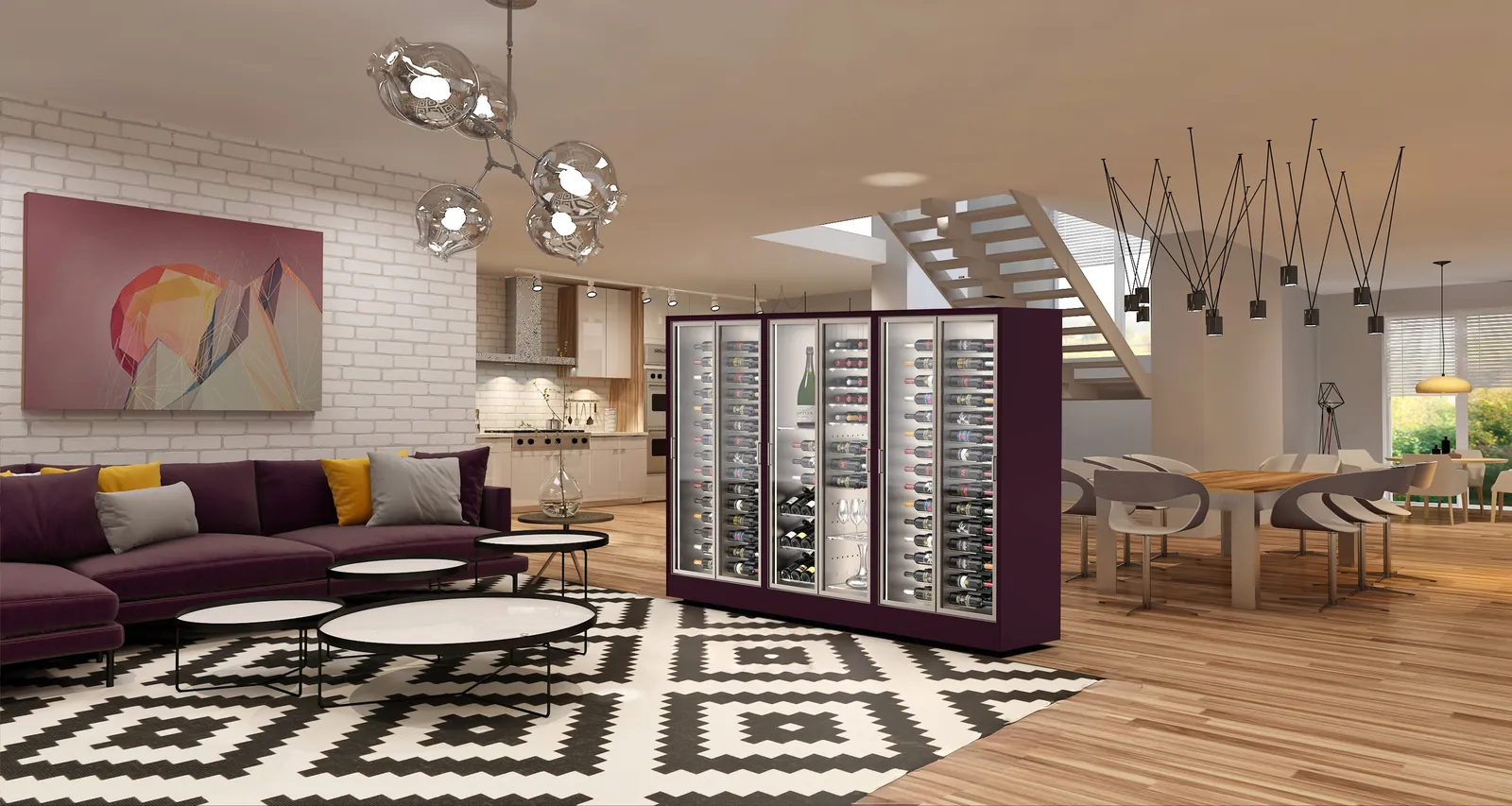
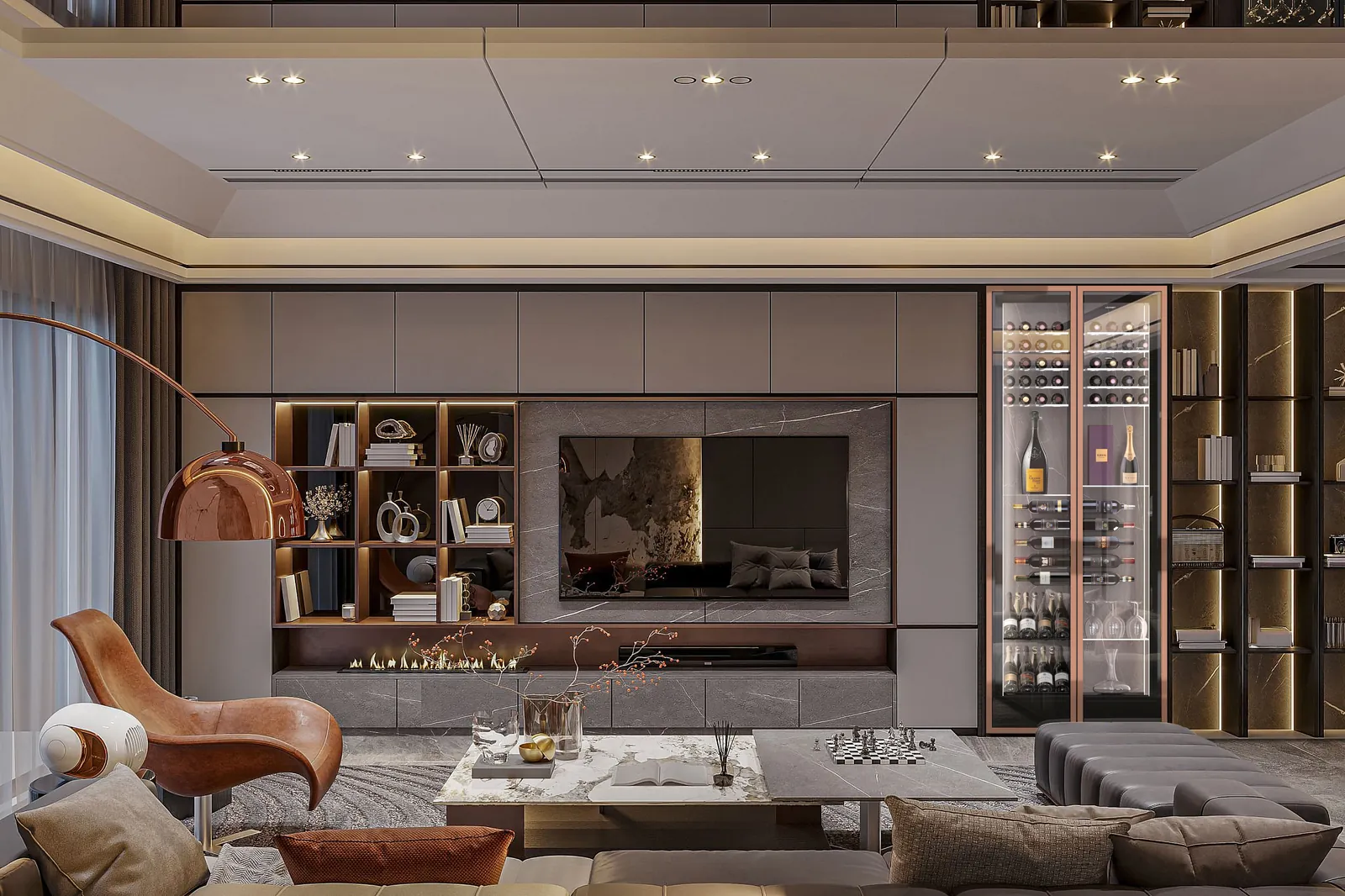
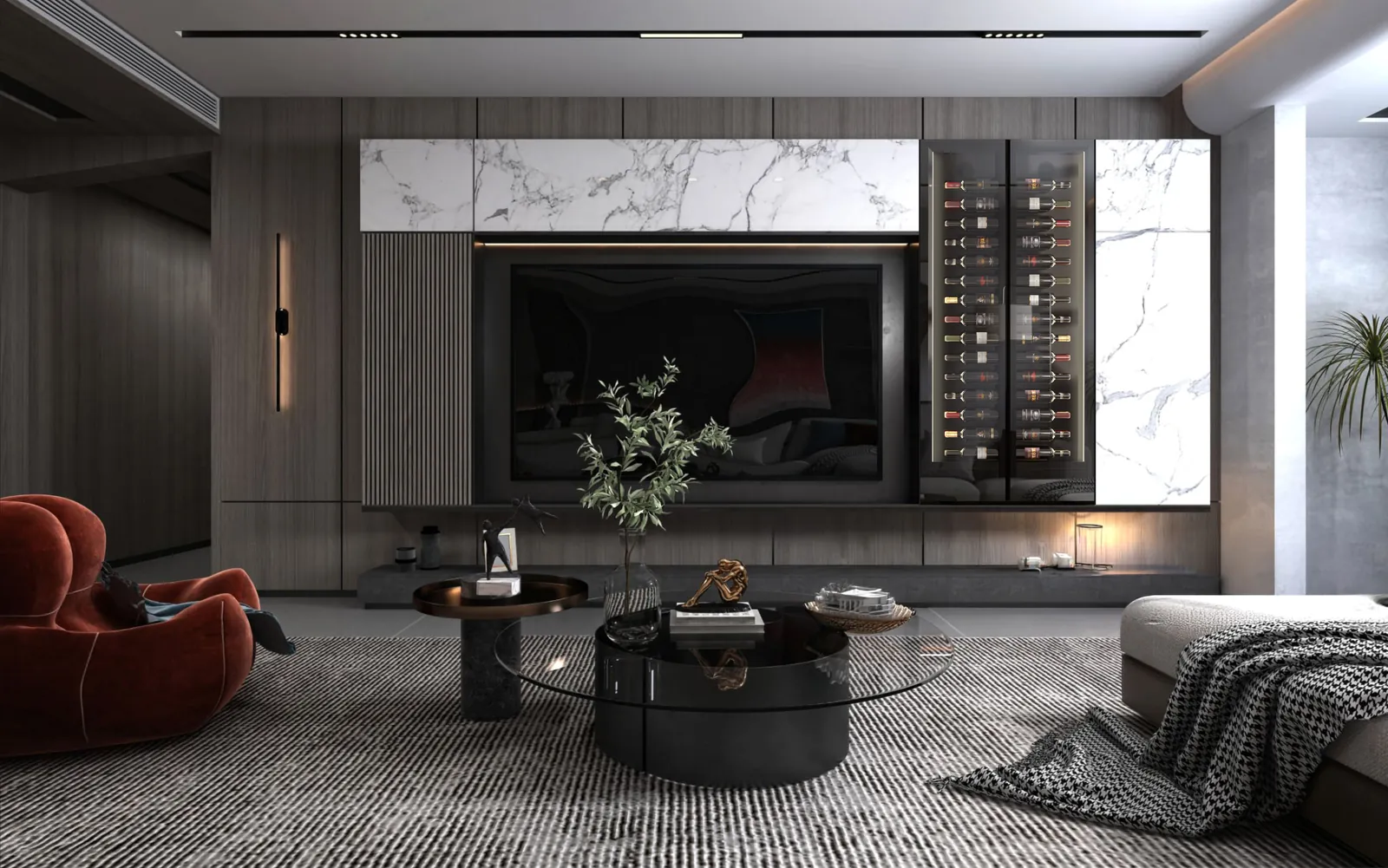
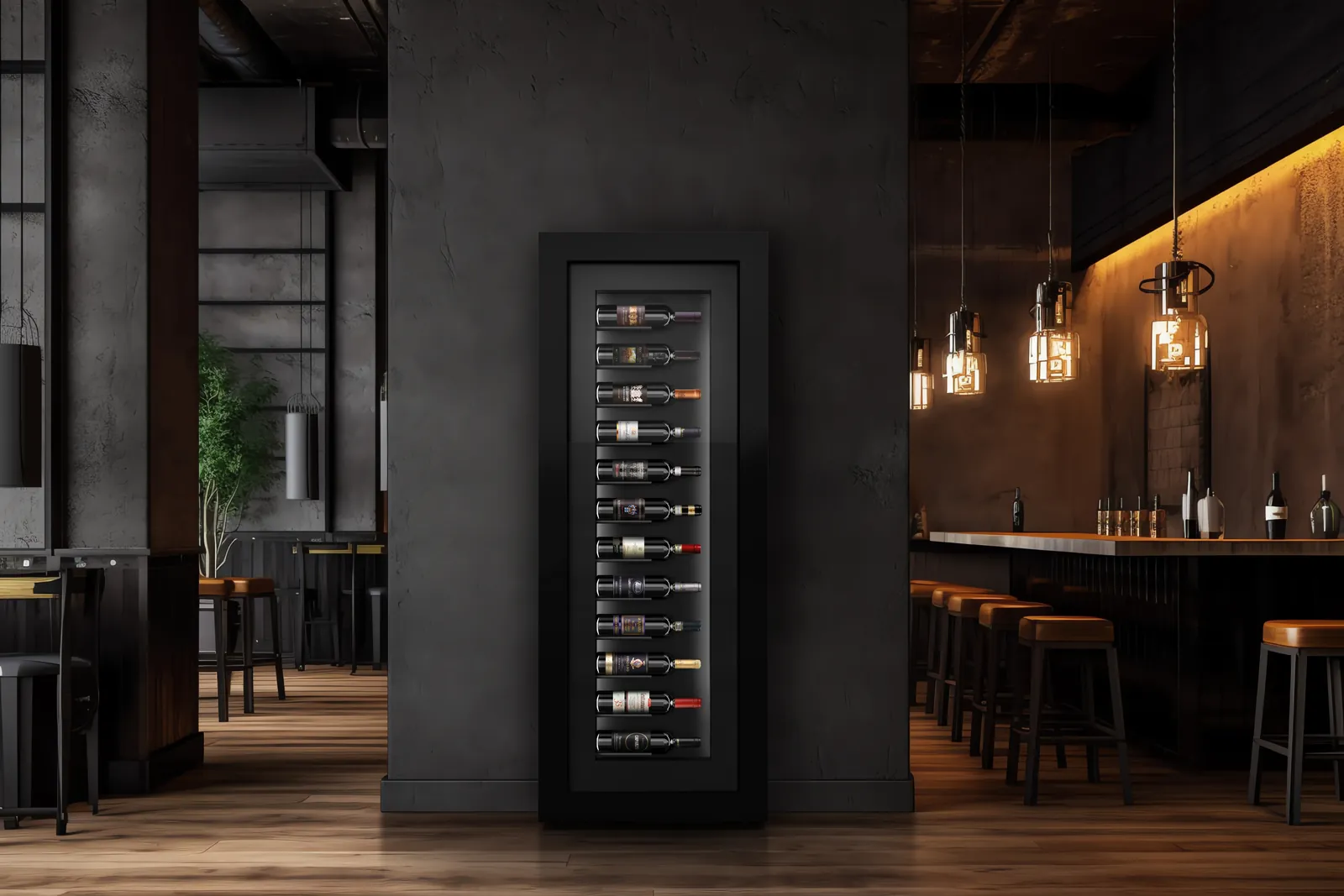
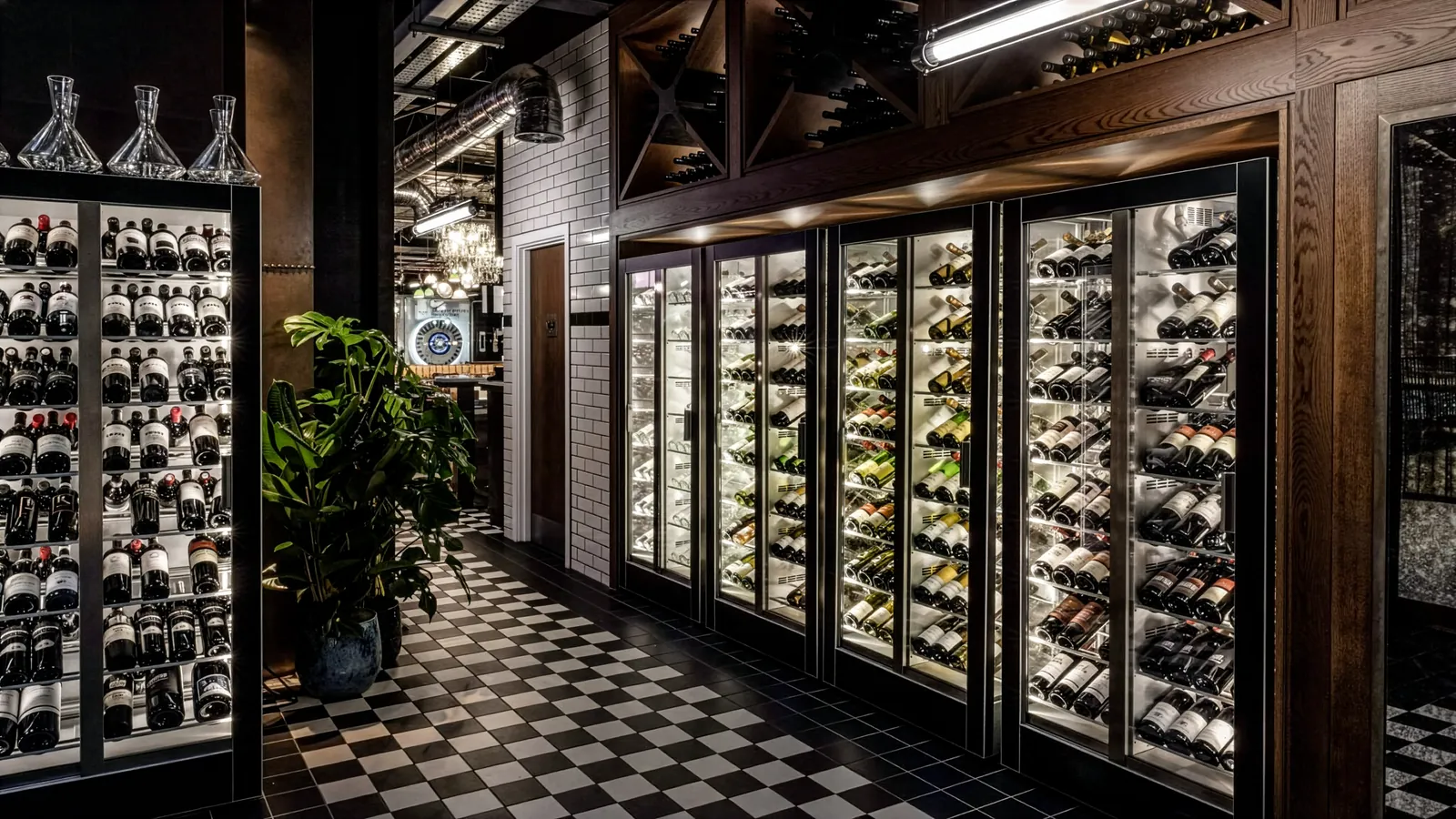
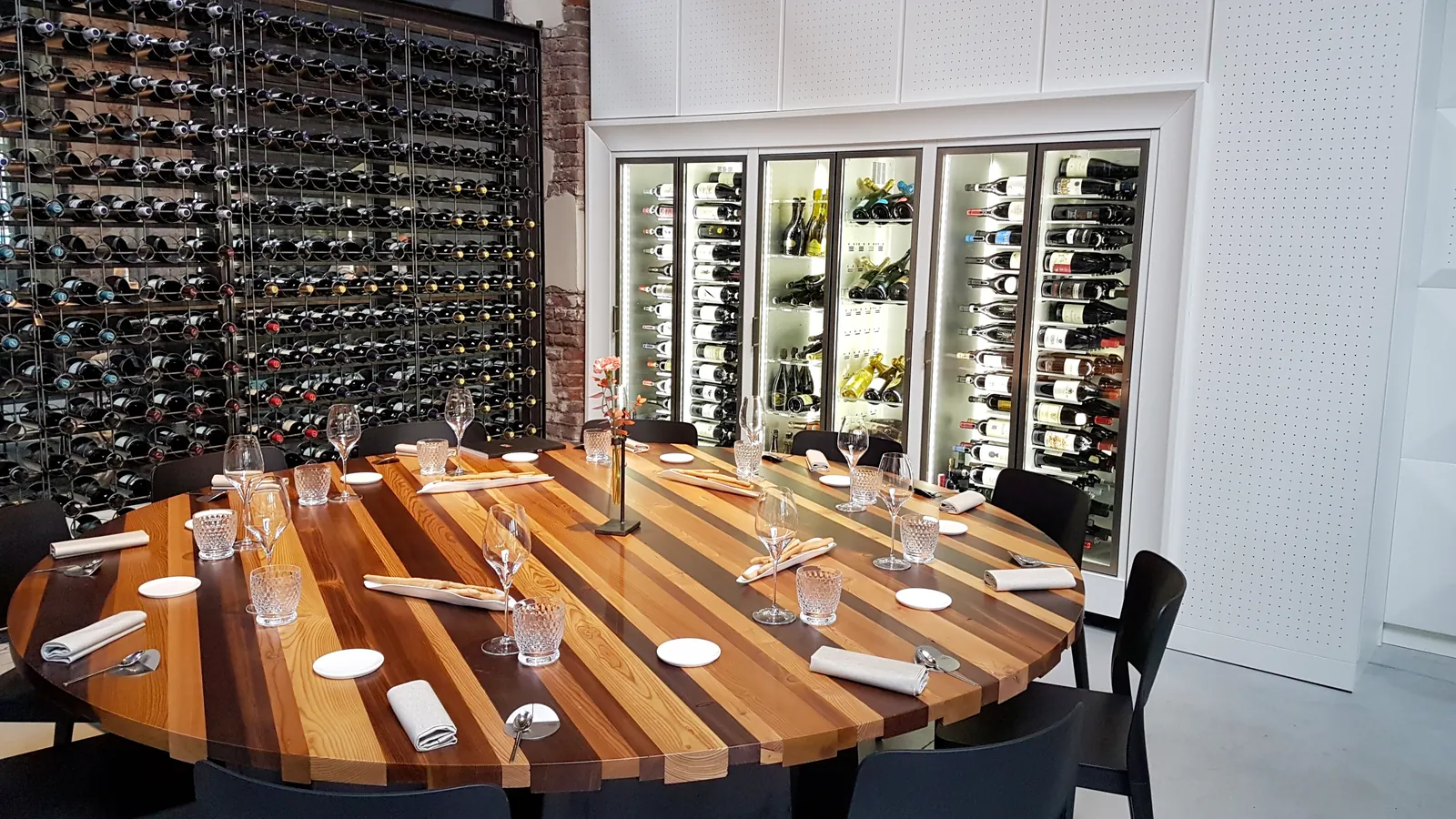
A wine wall is a run of climate-controlled cabinets, built into a kitchen, dining room, hallway or living-room wall, with the joinery, lighting and services designed as one piece of work. The London reference in this collection is Bread Street Kitchen & Bar, where the cabinets run as a climate-controlled wine wall. A wall-hung cabinet, such as Quadro Vino, is a shallower object: a refrigerated frame for a small number of bottles, hung like a picture.
Walk-in wine room design
A walk-in wine room is a dedicated space — a small room of its own, or a walk-in composition of cabinets and, where useful, HPL wine racking in a finish that can be coordinated with the interior. Arka is the tall modular system for that room: linear runs, a central island, or a room with a door of its own. In the catalogue, Arka modules are shown at 2,500 mm high, in widths of 1,000 mm or 500 mm, and at depths of 587 mm with central refrigeration or 400 mm with the condenser at the rear.
Climate-controlled wine cellar and cellar conversion
A climate-controlled wine cellar is the refrigerated cabinet or room, specified from our Italian collection from our partner in Italy. It does not, by itself, waterproof a basement. Where the space is an existing cellar that still needs to be made dry and usable, that conversion comes first. Cabinets go into a converted basement only once the waterproofing, ventilation and access are right.
Tight spaces, under-stair and shallow walls
Quadro Vino is a wall-hung refrigerated frame, 170 mm deep — about 17 cm — in models n. 12, n. 30, n. 40 and n. 52. It uses a thermoelectric system. Emme 12 holds 12 bottles in a slim cabinet 273 mm deep — about 27 cm — 1,696 mm high and 650 mm wide, with a stated range of +5 to +18 °C. Arka, Nova, Teca and Mod also come in reduced-depth versions: Arka at 400 mm beside the 587 mm central-refrigeration depth, Nova at 397 mm as well as 551 mm and 587 mm, and shallower Wine Living cabinets for living-room joinery, which is typically less deep than a kitchen run. These are the families we look at for a shallow alcove, a tight run, or the depth available under a stair. The clear depth is confirmed on survey before anything is ordered.
Before a cabinet is ordered we record the clear depth of the wall, the door swing, where condensate can drain, and a power supply that the refrigeration can use without sharing a circuit that already runs hot. Ventilation to the condenser, whether it sits in the cabinet or at the rear, has to remain possible after the joinery is closed.
How the cabinets keep wine
The figures in this section are the published specification of the Italian collection we specify and supply.
On the larger collections, a patented central refrigeration system is built into the middle of the cabinet, so that each bottle sits at the same distance from the cold source. It is described as static refrigeration, intended for long-term storage. Shallower models in the same families place a static condenser at the rear of the cabinet instead.
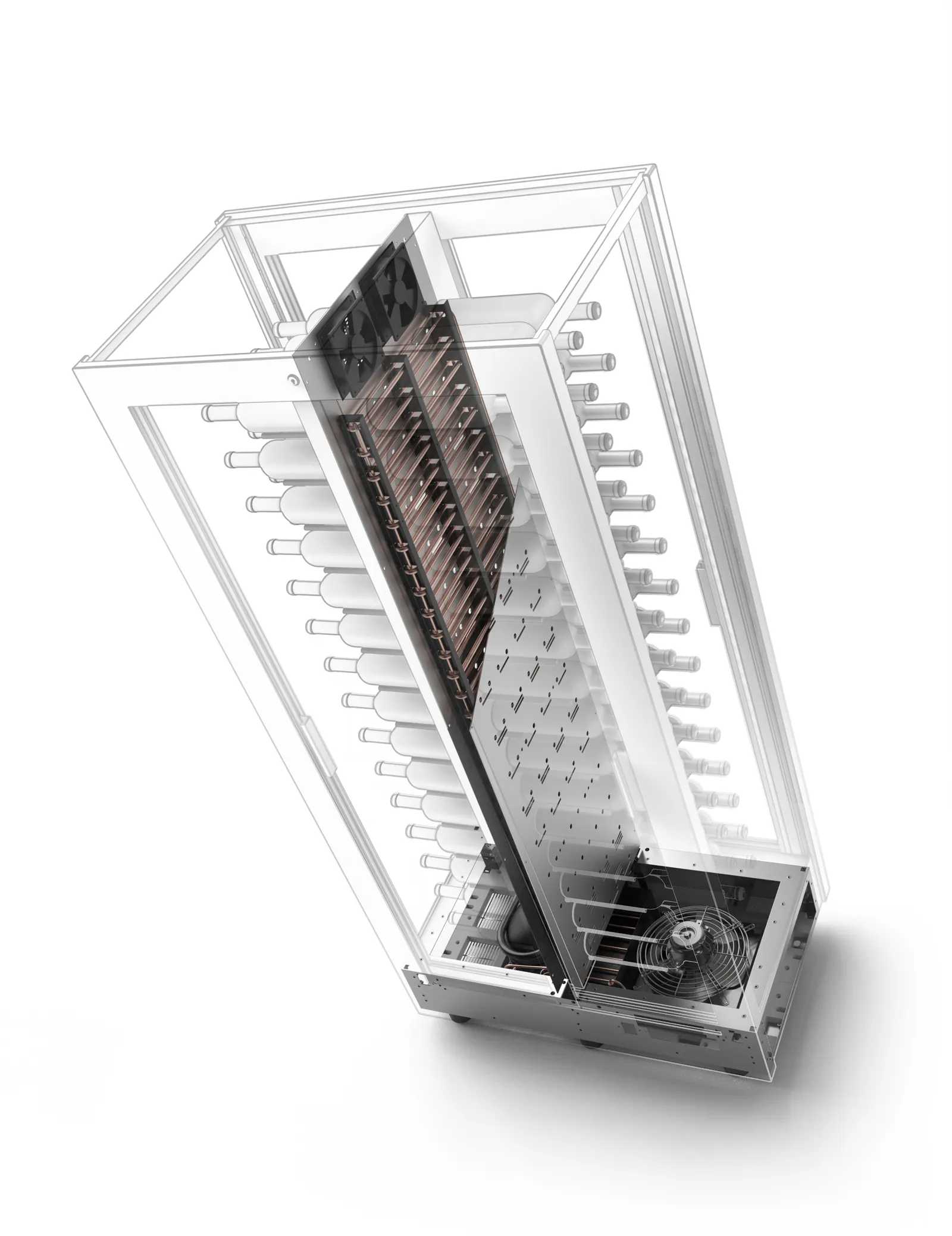
A multi-temperature function can manage up to seven different temperatures in the same fridge. Bottles can be stored horizontally with the label facing outwards; in layouts designed for that display, the labels of up to 60 bottles can be seen at once.
Where a quiet room or a larger wine room needs the compressor away from the cabinet, that arrangement can be drawn into the services. None of this replaces a measured survey. Depth, ventilation, power, condensate, door swings and the junction with the joinery all need to be drawn before anything is ordered.
Collections we specify for London rooms
The range is modular and made to order, with finishes chosen to sit beside kitchen cabinetry, painted joinery, metal, stone or timber. The notes below are a guide; the final choice is made with our Italian partner’s technical support and with our drawings.
Arka and Nova — full-height cabinets and wine rooms
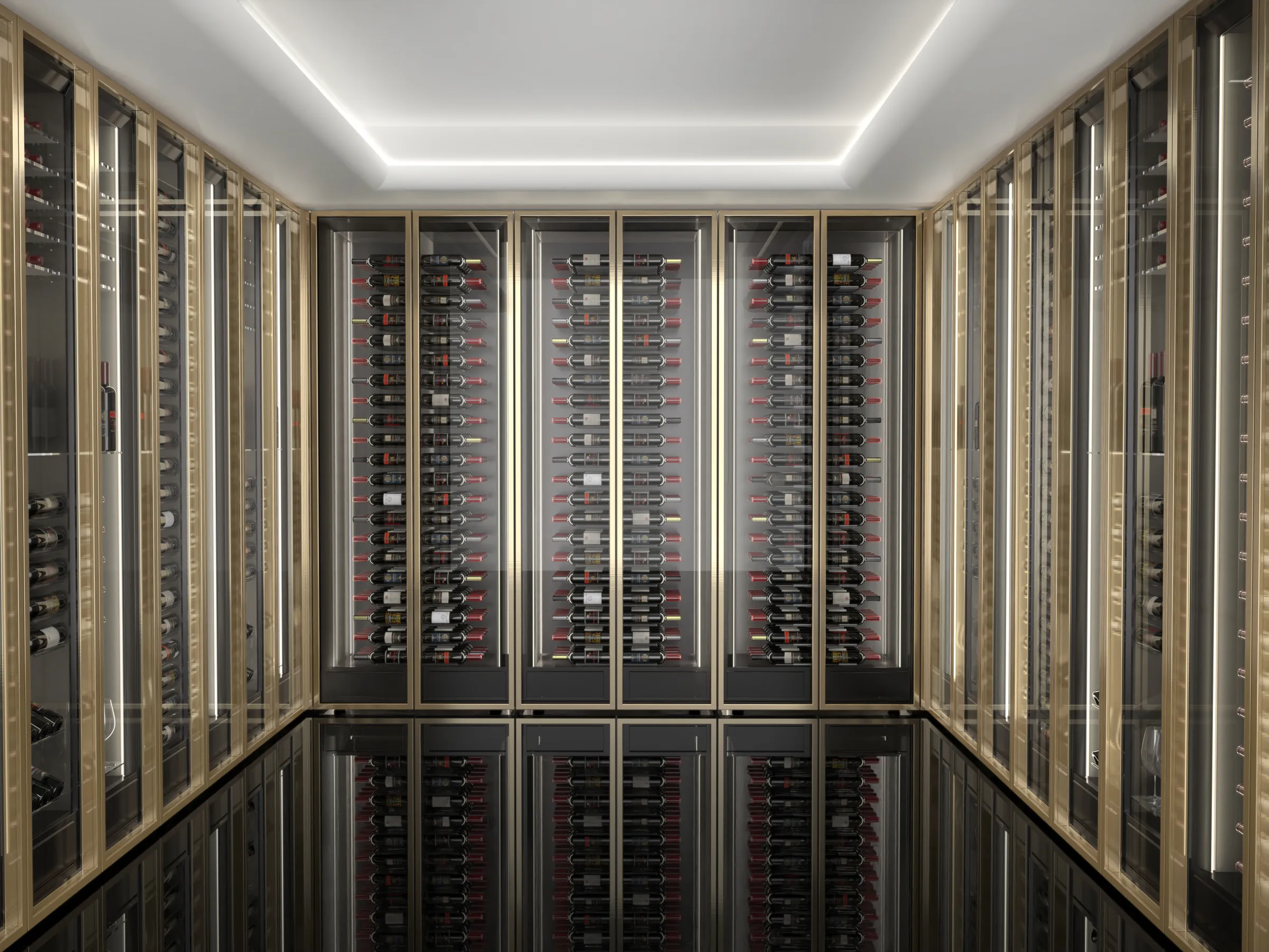
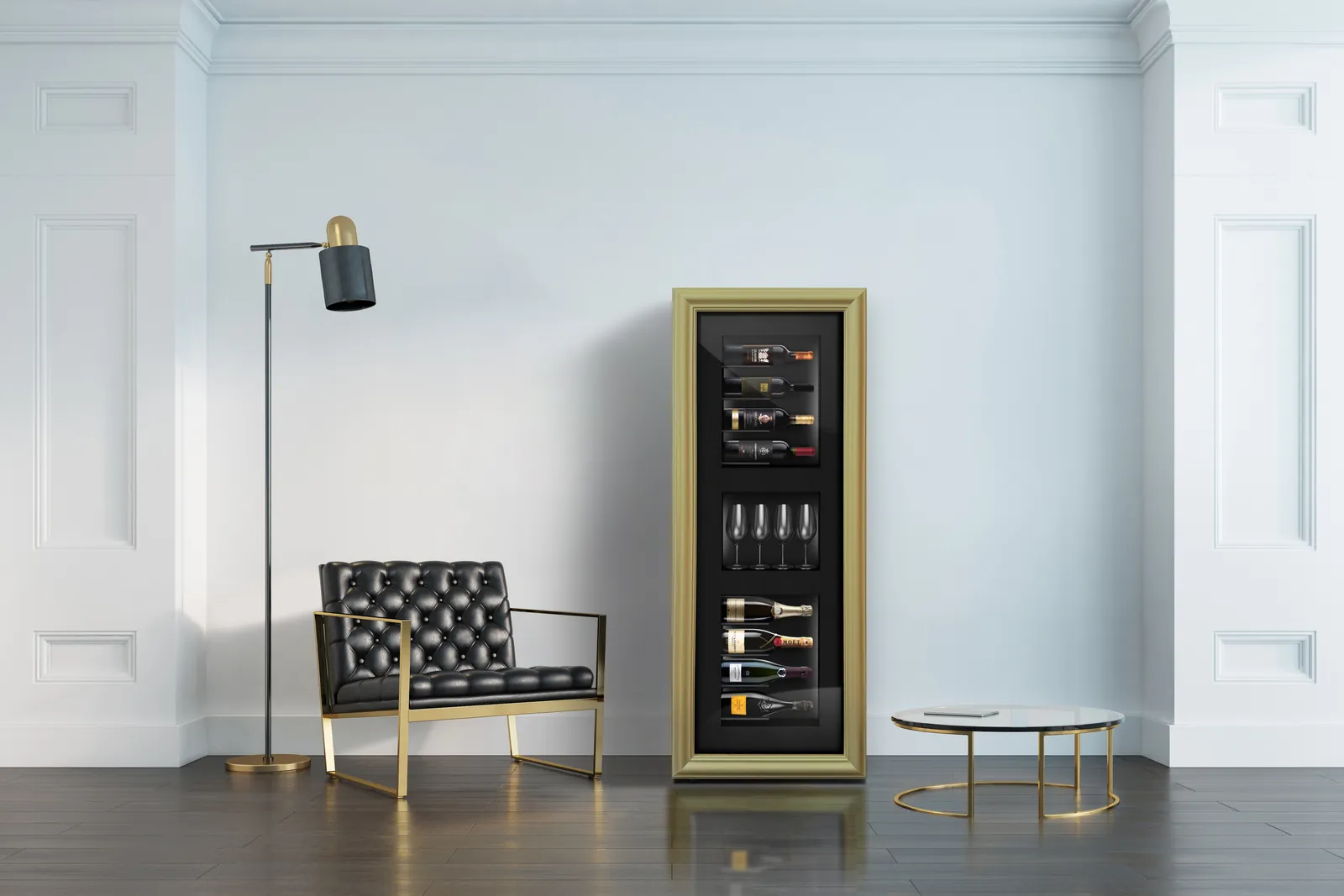
Arka is the tall, modular system for a wine room or a long wall: linear runs, central islands, or a room with a door of its own. Cabinets come in two depths. The standard depth uses central refrigeration; a reduced-depth version places the condenser at the rear. In the catalogue, modules are shown at 2,500 mm high, in widths of 1,000 mm or 500 mm, and at depths of 587 mm or 400 mm. Printed examples include 1,000 × 587 × 2,500 mm and 1,000 × 400 × 2,500 mm. Door profiles include steel, gold, bronze and black; interiors can be silver anodised or black-painted aluminium, with further options in leather, marble and wood. Interior layouts are horizontal bottles or a mixed layout. The gold-framed Arka room at the top of this page is that full-height composition.
Nova is a contemporary cabinet, used freestanding or built in, with central refrigeration, optimised insulation and energy-efficient glass. Several refrigerated modules are specified at +4 to +18 °C, at a height of 1,900 mm, with depths including 551 mm, 587 mm and a reduced 397 mm. One printed module is shown at +14 to +16 °C. Non-refrigerated open modules, with doors or drawers, can complete a run of joinery. Shelves are adjustable every 5 cm, and the catalogue illustrates horizontal and reclined bottles.
Teca and Mod — glass cabinets, islands and rooms that also serve food
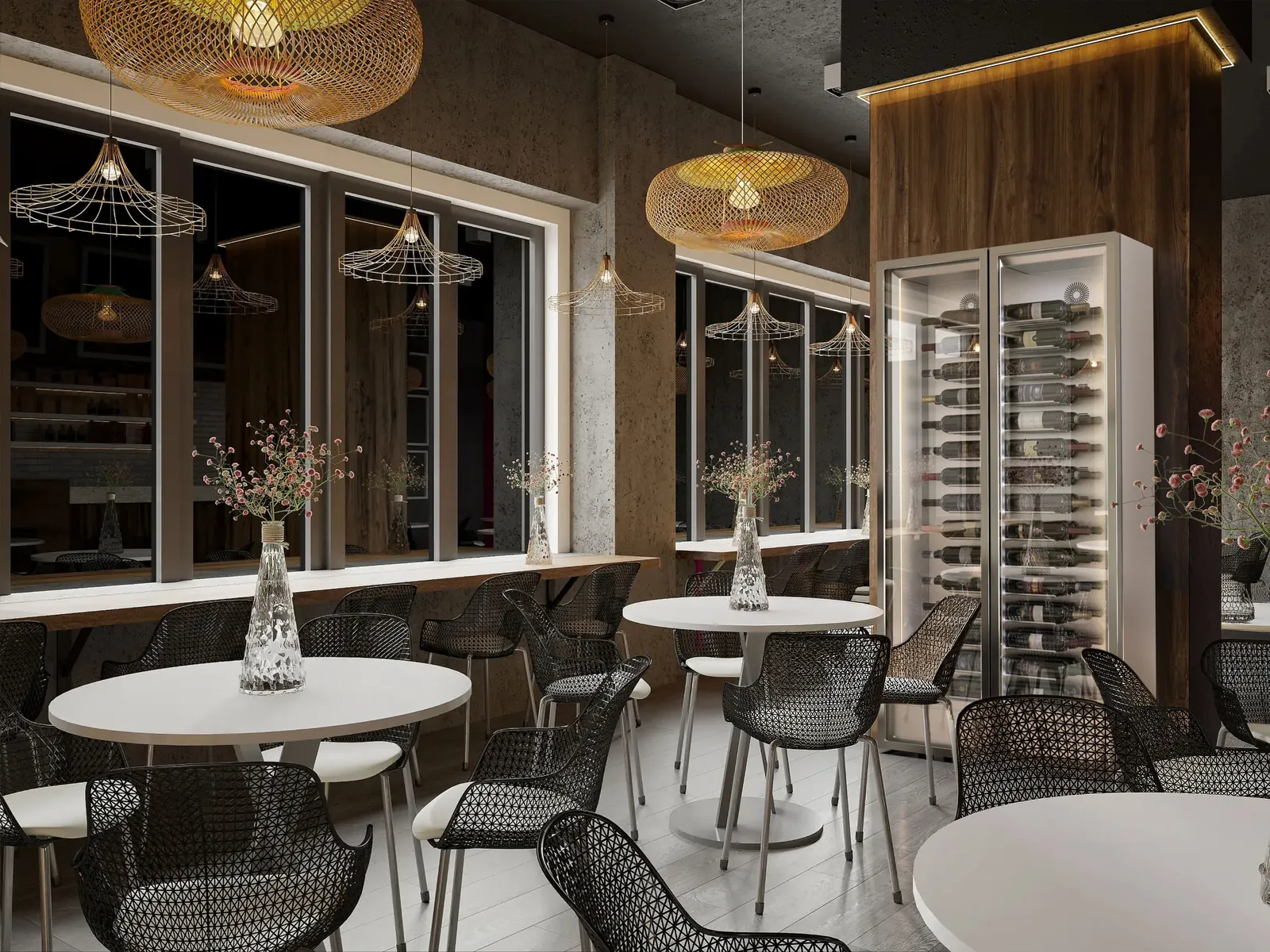
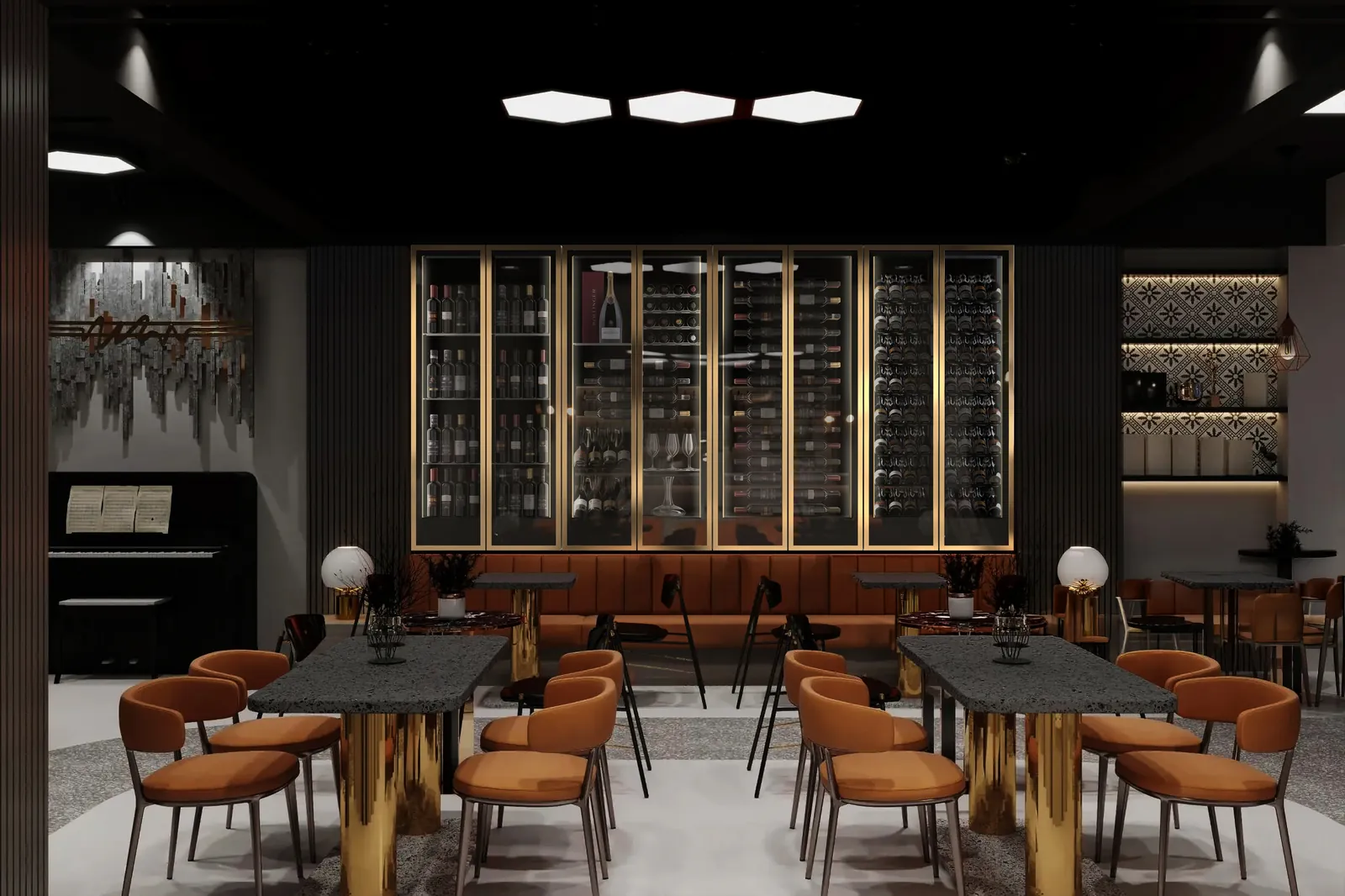
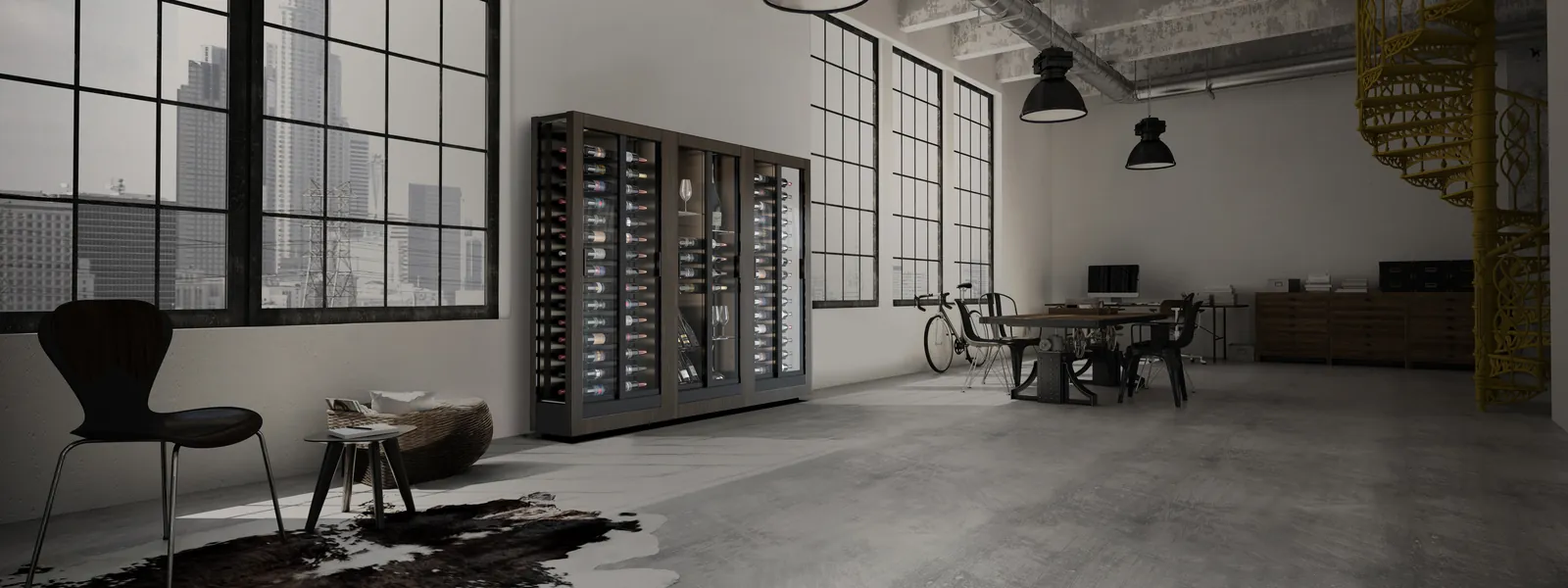
Teca is a glass cabinet with sliding doors, used as a central island, against a wall, or recessed into joinery. It is available in standard and reduced depth, with layouts for horizontal, reclined, vertical or mixed bottles, and a multi-temperature function for mixed collections. The standard depth uses the central cooling system; the reduced depth places the static condenser in the back panel. Temperature can be set for white and red wine. Interior finishes are silver anodised or black-painted aluminium.
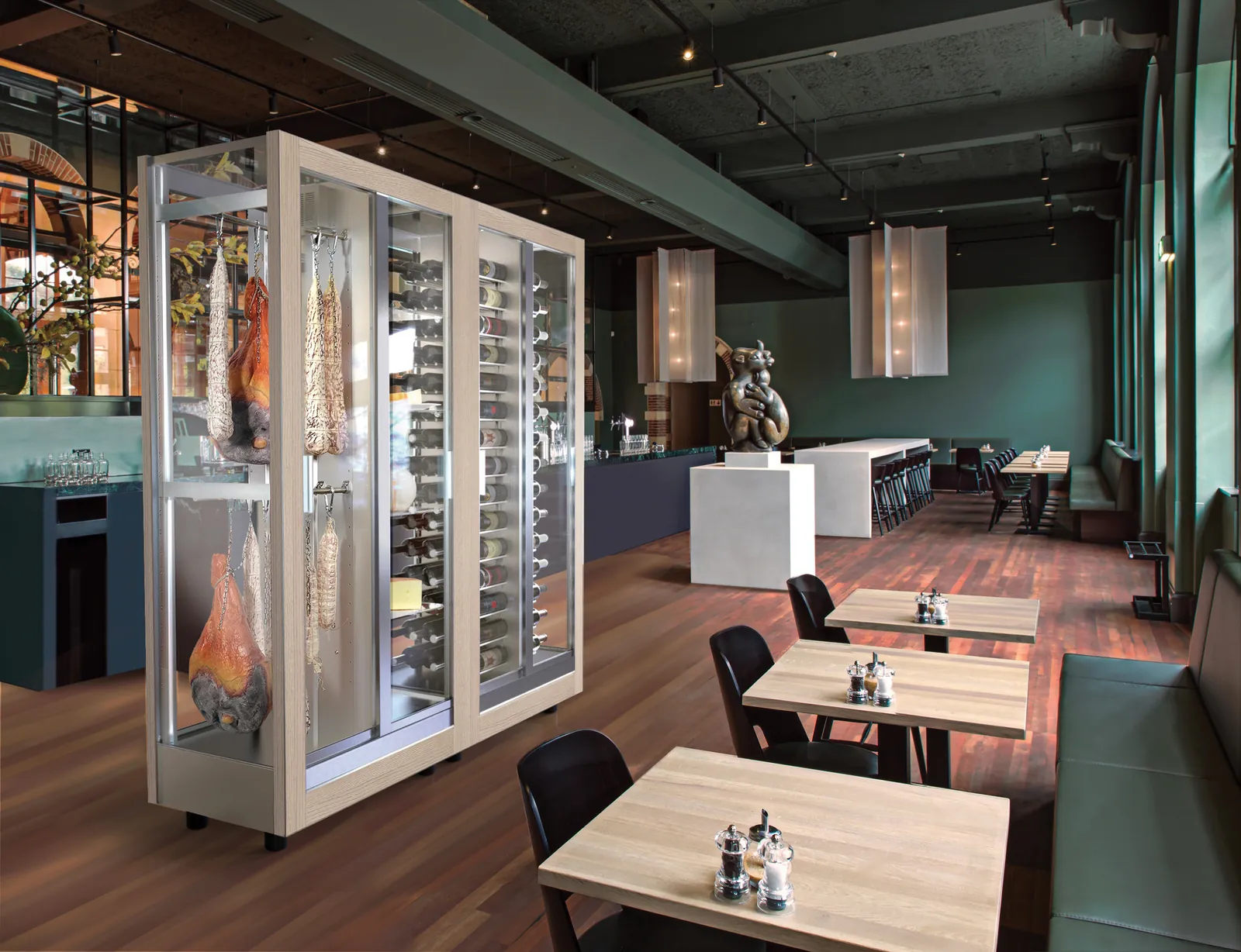
Mod also displays cured meats and other fine foods beside wine, which is why it often suits a kitchen renovation, a pantry or an entertaining room. It comes in three heights and two depths, as a wall piece, a built-in, or a double-sided unit that can stand in an opening. Exterior finishes include linear frames, moulded frames and fit cladding. The standard depth uses central refrigeration; the slim depth places the condenser in the back panel. Temperature and multi-temperature use follow Teca.
Wine Living — cabinets designed for living-room joinery
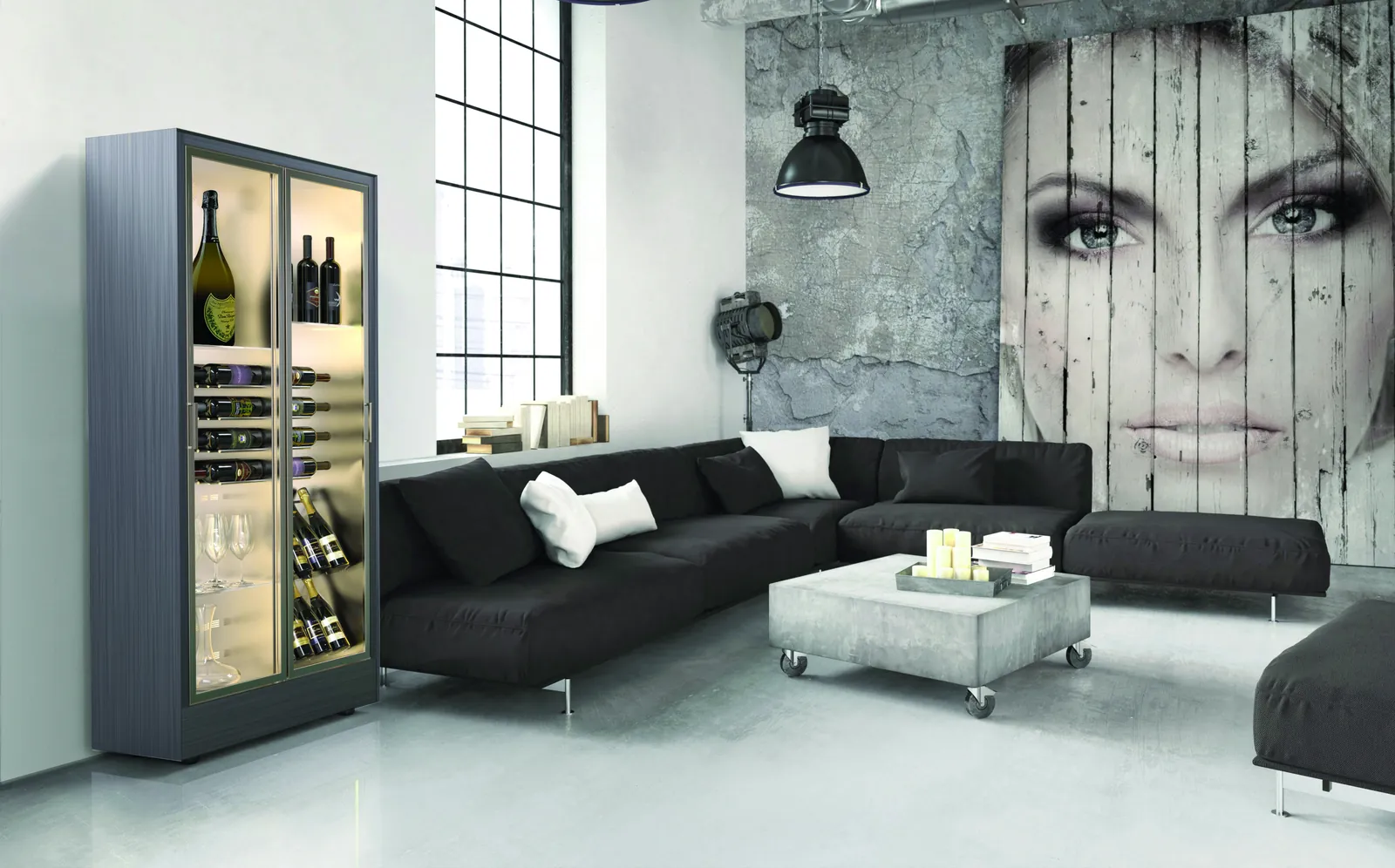
Wine Living is the project for putting Arka, Nova and Mod into the living space. The shallower versions are made to fit living-room cabinetry, which is typically less deep than a kitchen run. This is usually where our bespoke joinery and our Italian partner’s technical team meet: we design the wall, the services and the finishes; they confirm the cabinet, the ventilation and the installation details. An Arka example in this range is printed at 1,000 × 587 × 2,500 mm.
Quadro Vino and Emme 12 — shallow walls and tight spaces
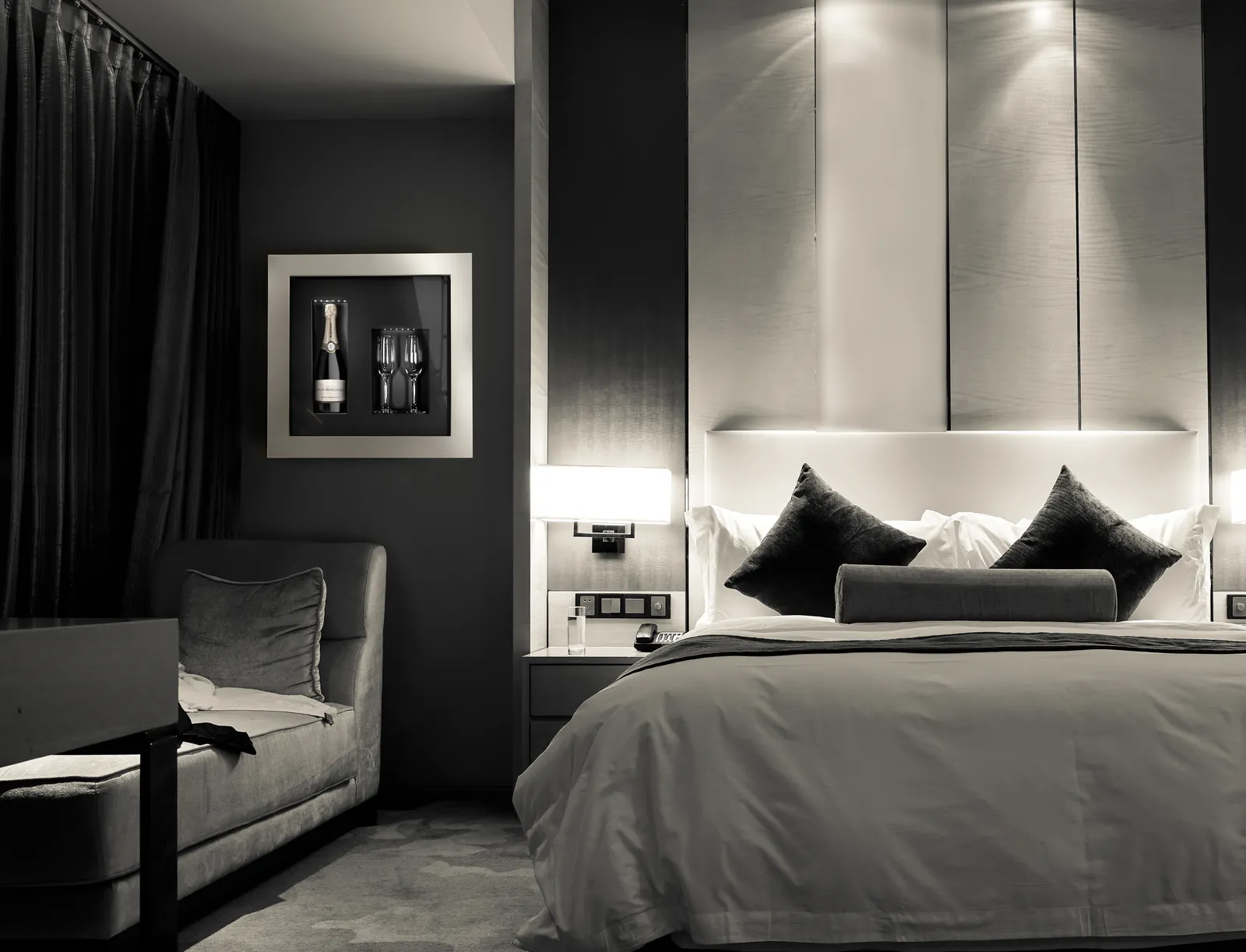
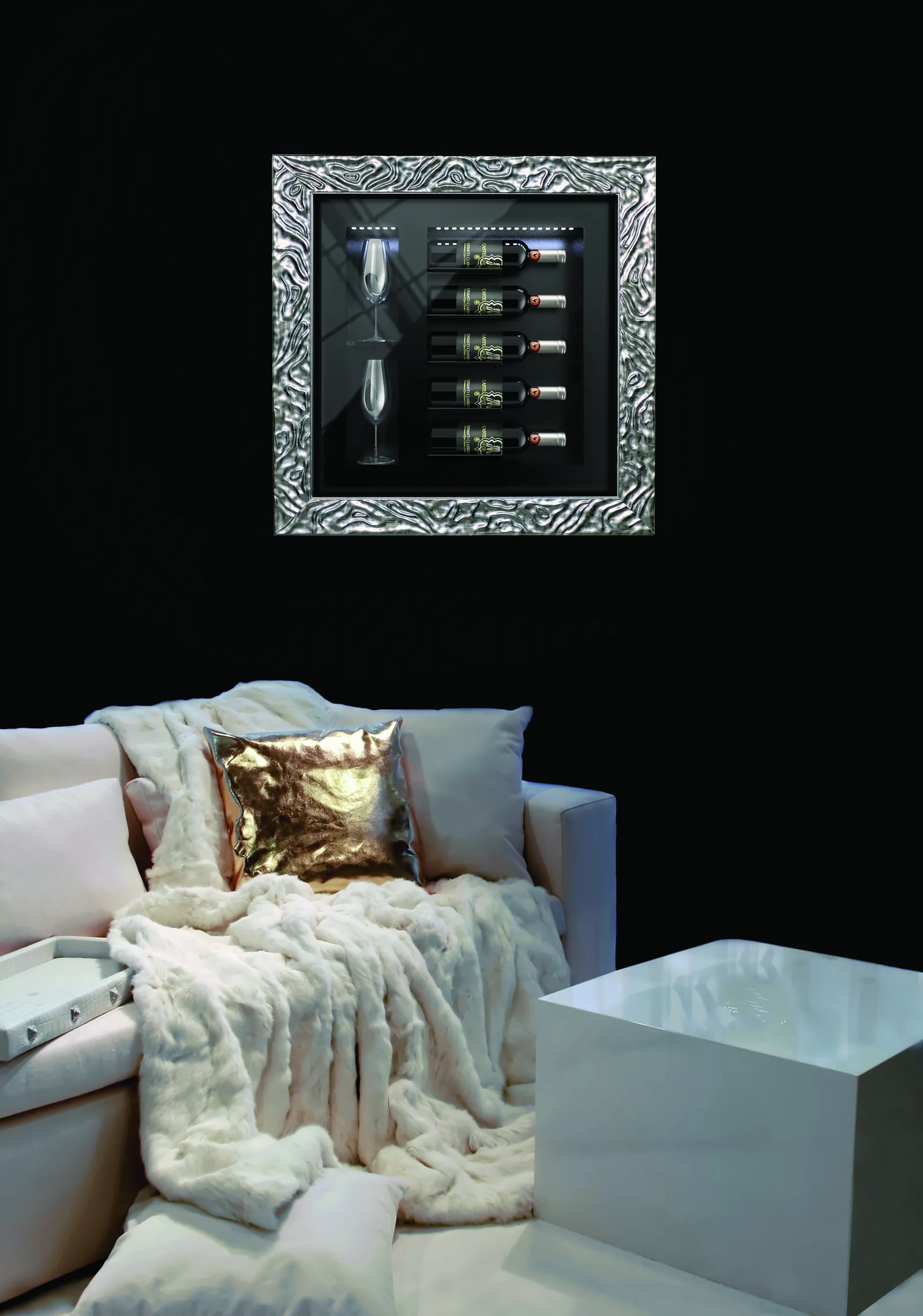
Quadro Vino is a wall-hung refrigerated frame, 170 mm deep, in models n. 12, n. 30, n. 40 and n. 52. Printed temperature ranges vary by model — for example +4 to +10 °C on n. 12, +8 to +14 °C on n. 30, and +12 to +18 °C on n. 40. It uses a thermoelectric system, not the central refrigeration of the larger cabinets. Frames are offered in Linear, Classic and Dune profiles, including any RAL colour on request; the inner panel can be metal or eco leather. It is fixed to the wall with the brackets supplied for the load.
Emme 12 holds 12 bottles in a slim cabinet 273 mm deep, 1,696 mm high and 650 mm wide, with a stated range of +5 to +18 °C, so that white and red wine can be kept in the same piece. It follows the look of Quadro Vino, with replaceable frames, but uses professional refrigeration. The collection describes it as the slimmest wine cabinet in the range. These two families are often the right answer in a London flat or a shallow alcove, where a full-depth wine room will not go.
Cigar rooms and humidors
The same Italian collection includes climate-controlled cigar humidors in the same design language as the wine cabinets, so a wine wall and a humidor can be specified together. The humidor range reworks Nova, Teca, Mod and Quadro. Temperature and humidity are actively controlled. These are storage humidors, built into the joinery rather than left as a freestanding box.
In the cigar catalogue, examples include Nova 16 at 920 × 397 × 1,900 mm and Teca 16 at 868 × 391 × 1,865 mm, both at +19 to +20 °C and 65 to 72% relative humidity. Wall-hung Quadro Sigari models QS60 and QS78 use the same humidity and the same +19 to +20 °C, at 170 mm deep. QS60 has a 600 × 600 mm face and QS78 a 780 × 780 mm face. Frames are Linear, Classic and Dune, including any RAL colour on request. Published guidance is that many premium cigars are kept at around 18–21 °C and 65–72% relative humidity; the setting for a particular collection is confirmed when the unit is specified.
A small cigar room and a storage cabinet are not the same thing. The cabinet holds its own temperature and humidity, at the published +19 to +20 °C and 65 to 72% relative humidity on the models above. A room that people sit in is a small, well-ventilated space, with the humidor built into the joinery; ventilation of that room is separate from the climate inside the cabinet. We design the joinery, the lighting and the services as part of the same brief as the wine work, where both are required. There is no separate humidor photograph in the approved set, so the cigar work is specified from the drawings and the published sizes above.
Special pieces
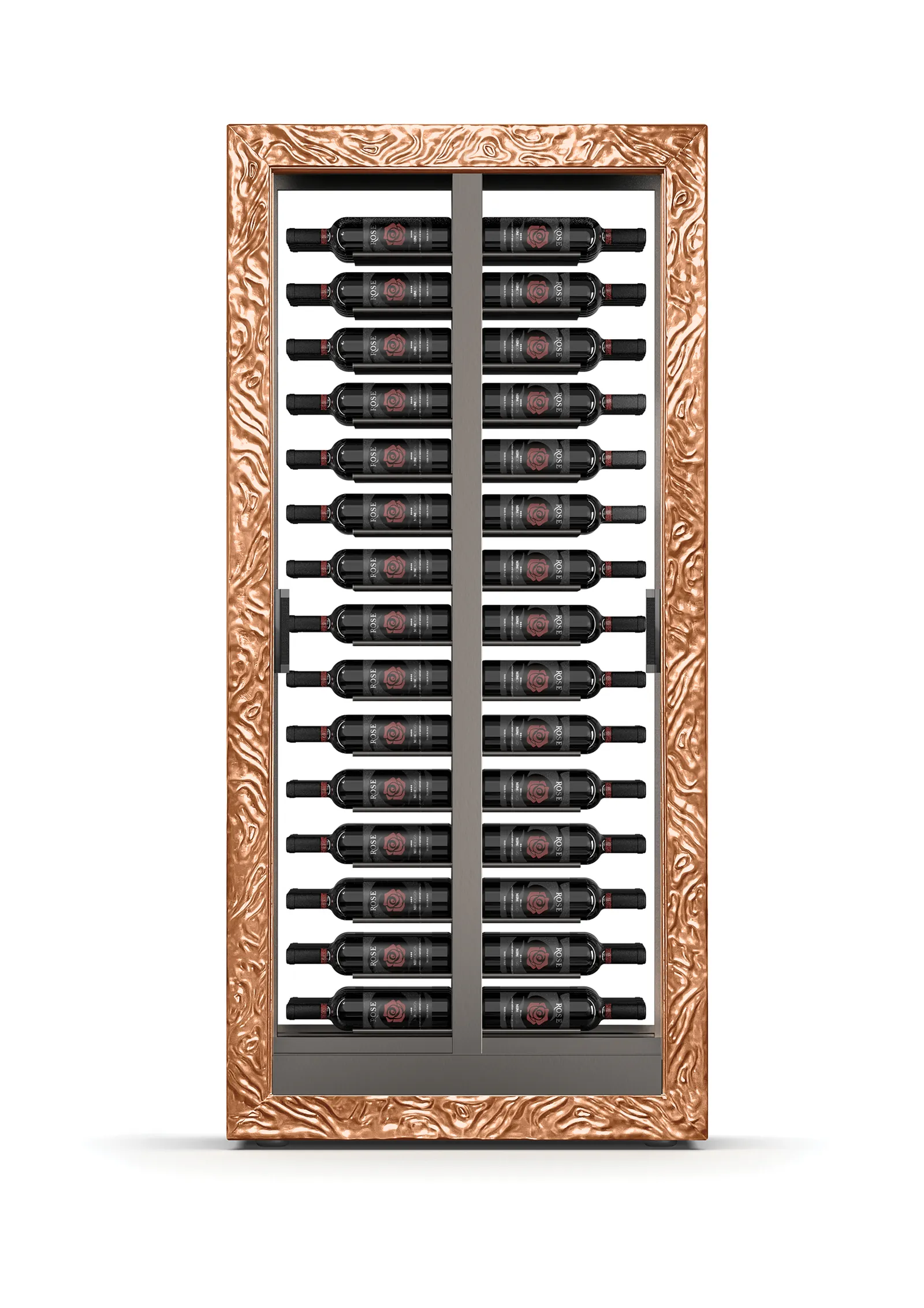
Our Italian partner also produces more decorative collections, including Rinascimento and numbered or special pieces such as Teca Rose and the Wine of the Champions cabinet. These are maker’s pieces, specified only where the brief calls for them.
How we design and fit the work
We take a measured brief — what is to be stored, which room it lives in, how deep the wall really is, and whether the work sits inside a wider kitchen or house refurbishment. We then agree the model, depth, layout and finishes with you, and with our Italian partner’s technical team where the installation needs it. The surrounding joinery is drawn to those dimensions, including ventilation, power, lighting and access for maintenance.
Installation is carried out as part of our design-and-build work, not as a separate visit bolted on at the end. If the wine wall is part of a larger project, it is programmed with the kitchen, the electrical first and second fix, and the decoration, so the cabinet is not waiting on a wall that is not ready.
We do not publish prices on this page. A quotation follows a defined specification: the cabinet, the joinery, the services, and any making-good. Contact Hampstead Renovations to specify and supply the cabinet with the joinery around it.
Settings for the collection
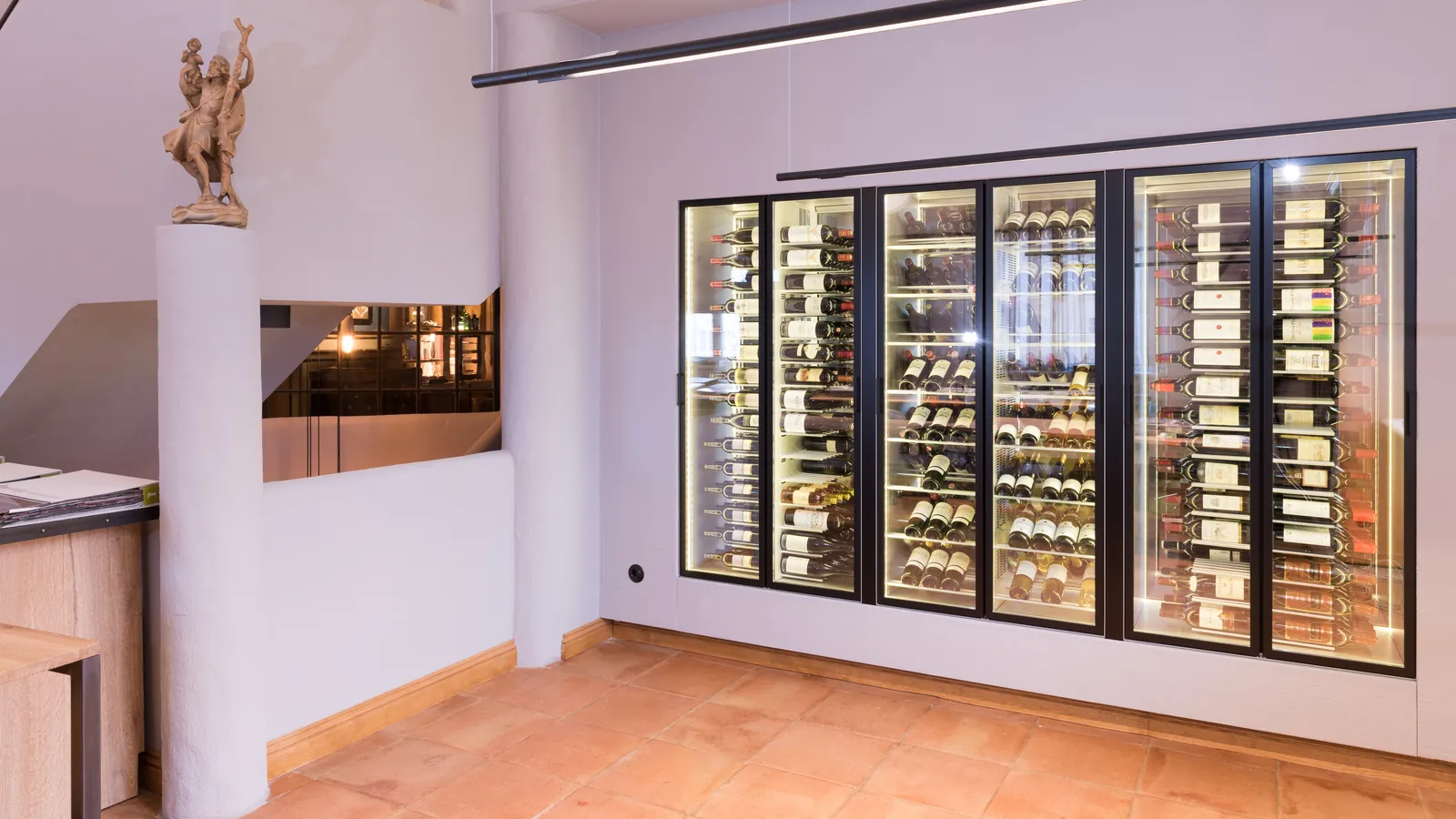
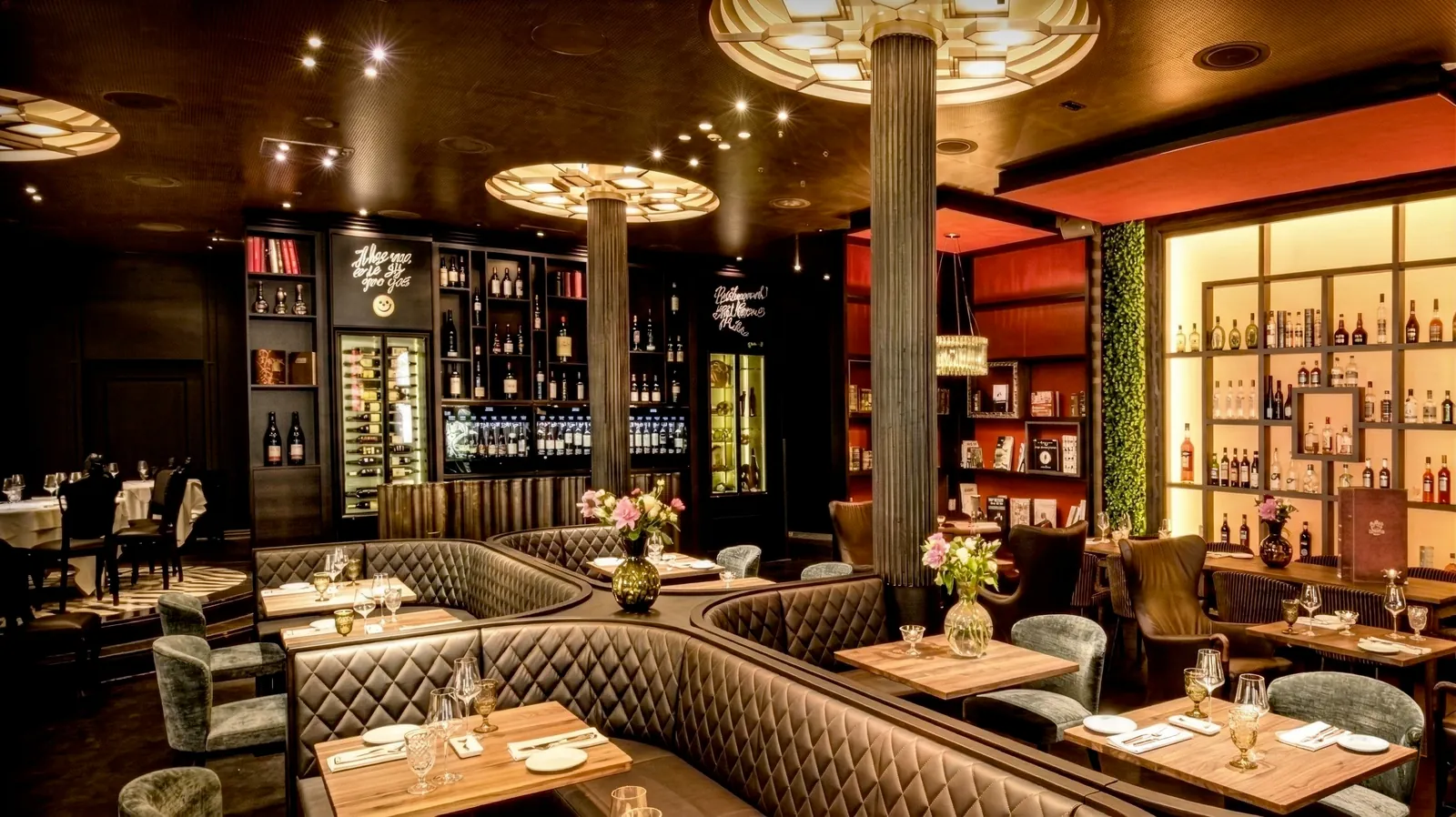
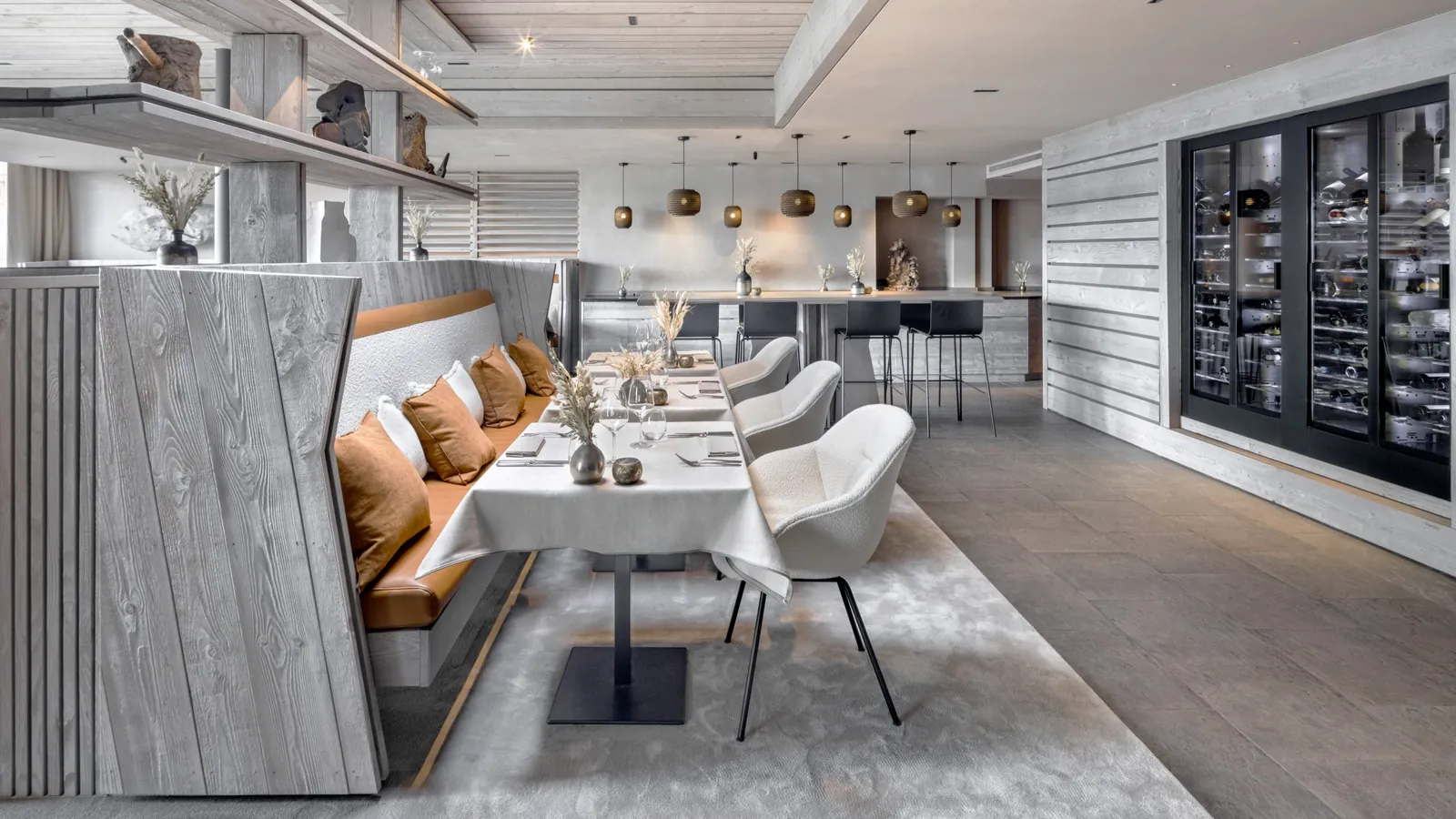
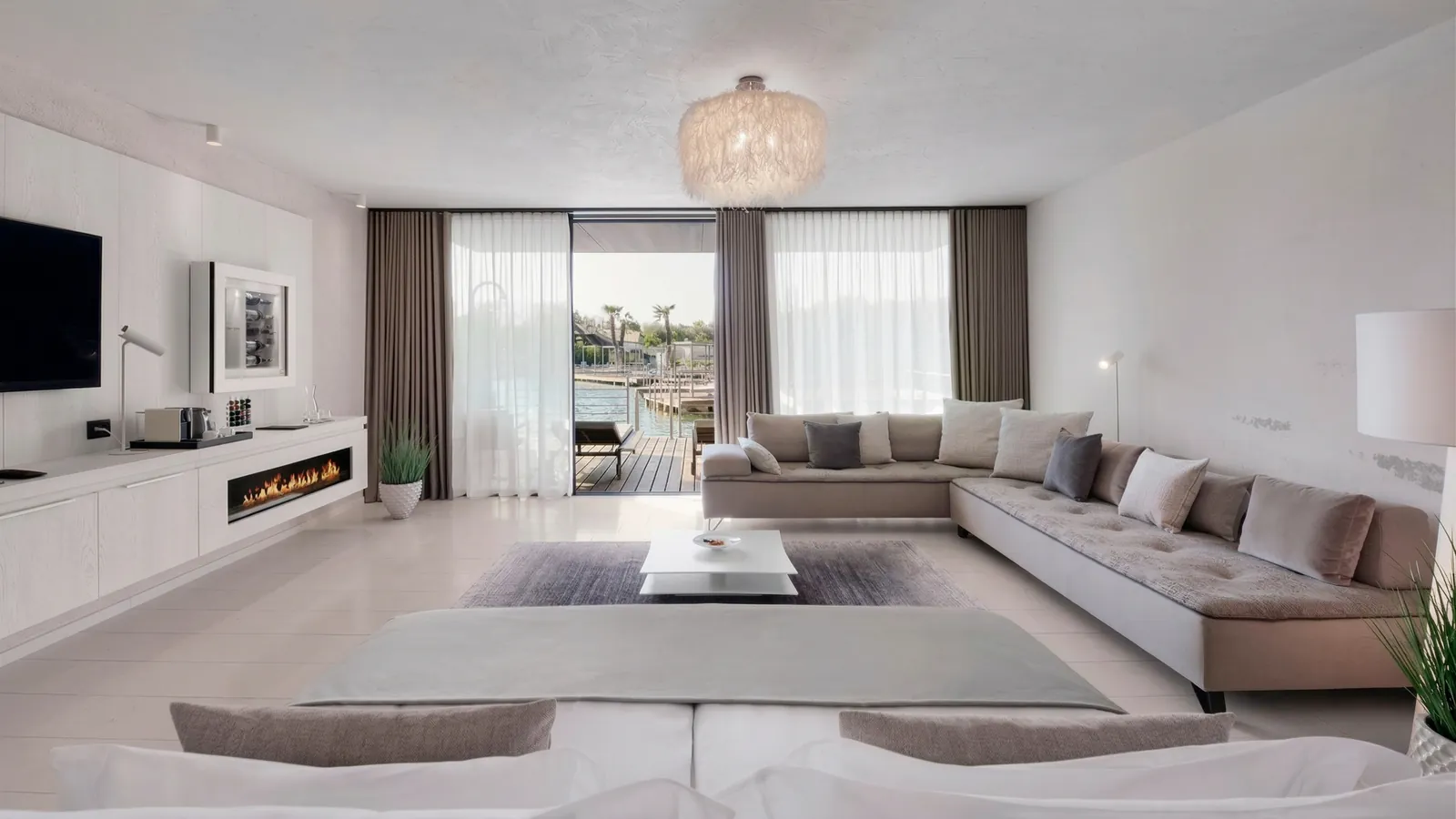
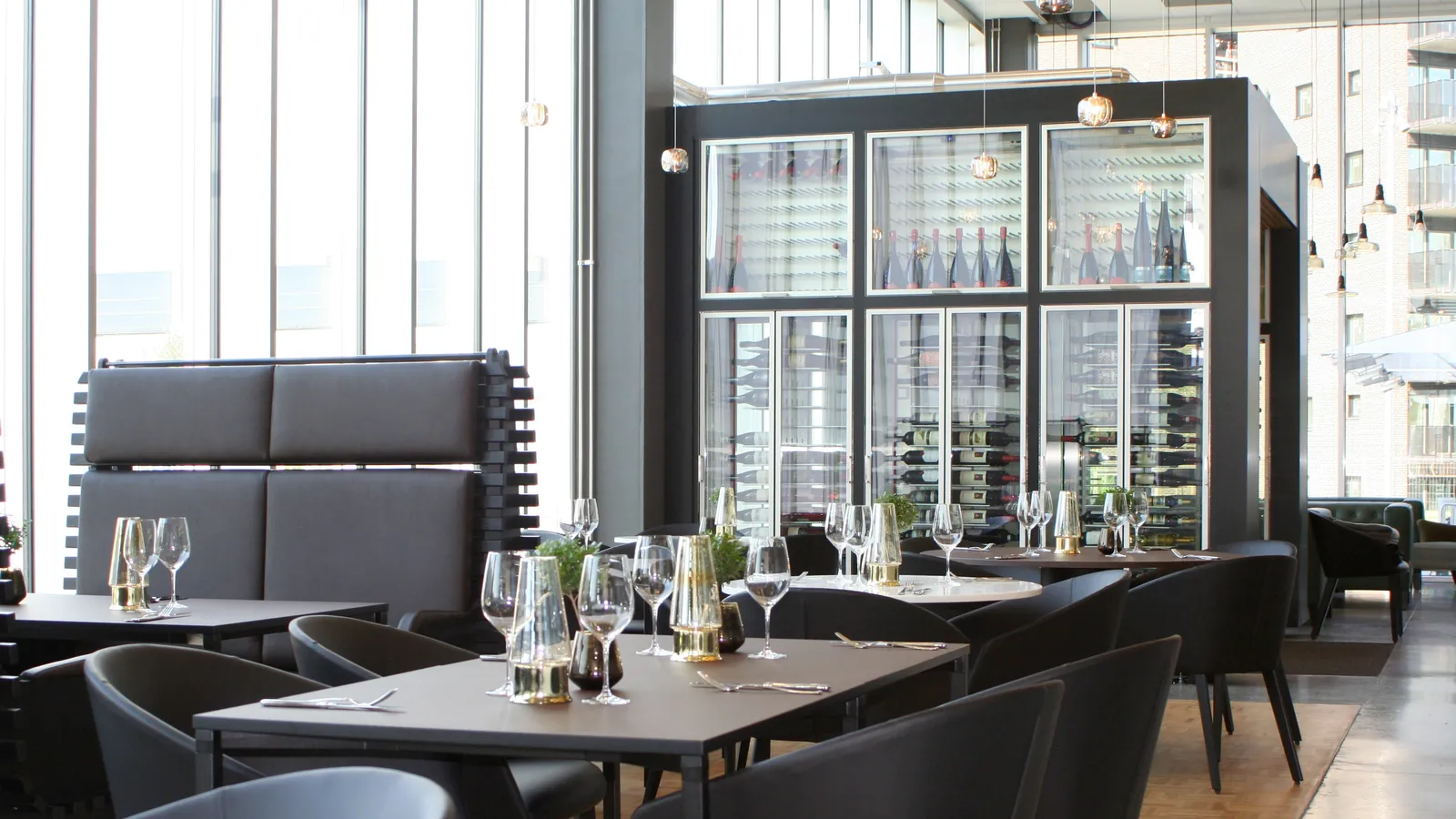
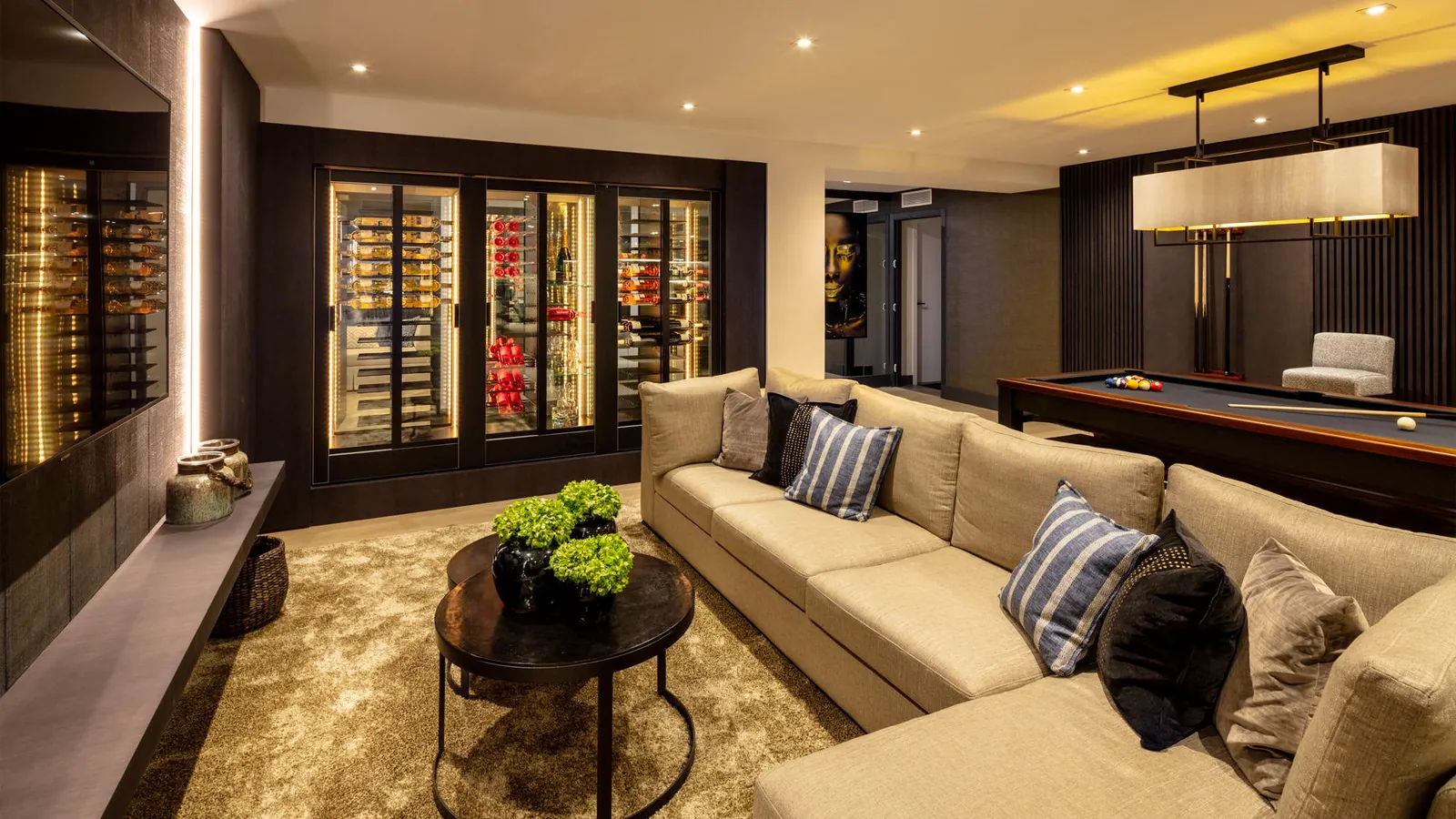
The photographs in this section show the collection in rooms and hospitality settings. The London reference is Bread Street Kitchen & Bar, where the cabinets run as a climate-controlled wine wall in the restaurant. The same approved set includes a built-in wine wall in a private showroom, and hospitality settings such as Carlton Restaurant & Bar in Zurich, Hotel Art de Vivre in Crans-Montana, Quellenhof Luxury Resorts in Lazise, Snodo OGR in Turin, The Local in Oslo, and Villa Karma in Puerto Banús.
Frequently asked questions
Can you build a wine wall in a London kitchen or dining room?
Yes. We specify a cabinet from our Italian collection to the available depth and design it into the kitchen, dining-room or entertaining-space joinery.
How is this different from converting a cellar into a wine store?
A cellar conversion makes an existing lower-ground space dry and usable. A wine wall or climate-controlled wine room uses a refrigerated cabinet and can sit above ground as well.
What is the difference between a wine wall and a walk-in wine room?
A wine wall is a run of climate-controlled cabinets built into a kitchen, dining room, hallway or living-room wall. A walk-in wine room is a dedicated space, or a walk-in composition of cabinets and, where useful, HPL wine racking. Arka is the tall modular system for that room: catalogue modules are 2,500 mm high, 1,000 mm or 500 mm wide, and 587 mm or 400 mm deep.
Can a wine cellar be above ground?
Yes. A climate-controlled wine cellar uses refrigerated cabinets and can sit above ground, in a kitchen, dining room or living room, as well as in a lower-ground room. A cellar conversion makes an existing lower-ground space dry and usable. A full lower-ground conversion, including tanking and structure, is set out under basement conversions.
How much depth do the cabinets need?
Quadro Vino is about 17 cm deep and hangs on the wall. Emme 12 is a 12-bottle cabinet about 27 cm deep. Arka, Nova, Teca and Mod also come in reduced-depth versions, including living-room depths under Wine Living, as well as deeper cabinets for a full wine room. We confirm the depth on survey.
Can a wine cabinet and a cigar humidor be specified together?
Yes. Humidor versions of several wine collections are made in the same range, including a wall-hung Quadro Sigari, with active temperature and humidity control. The two can share a run of joinery, or sit in adjoining rooms, with matching finishes.
Can the cabinets be built into our joinery?
Yes. That is the usual way we use them. We draw the joinery to the cabinet and coordinate ventilation, power and access with our Italian partner’s technical guidance.
Does the compressor have to sit inside the cabinet?
Not always. On the larger collections a patented central refrigeration system is built into the middle of the cabinet, and shallower models in the same families place a static condenser at the rear. Where a quiet room or a larger wine room needs the compressor away from the cabinet, that arrangement can be drawn into the services. Quadro Vino uses a thermoelectric system, not that central refrigeration. Ventilation to the condenser has to remain possible after the joinery is closed.
Do planning permission and Building Regulations apply to a fitted cabinet in the same way as a basement conversion?
A fitted wine cabinet or wine wall is joinery and refrigeration inside an existing room. A basement or cellar conversion that changes structure, waterproofing or how a lower-ground space is used is a different project, described on our cellar conversion and basement conversions pages. What is required depends on the building, including whether it is listed or a flat, and on the borough. This page does not say whether a particular address needs planning permission or Building Regulations approval.
Have these wine cabinets been chosen by the Italian Sommelier Association?
Yes. The wine fridges in our Italian collection have been chosen as the cabinets of the Italian Sommelier Association (AIS).
Contact Hampstead Renovations
If you are planning a wine cellar, a wine wall, a walk-in wine room or a cigar humidor as part of a London refurbishment, the useful first step is a measured brief and a look at the room. Bring photographs and a sense of how many bottles or boxes you need to keep. We will tell you what will fit, which family in our Italian collection is appropriate, and how the cabinet should be built into the house.
Book a feasibility visit — or discuss bespoke joinery for the surrounding work. Contact Hampstead Renovations to specify and supply the cabinet with the joinery.