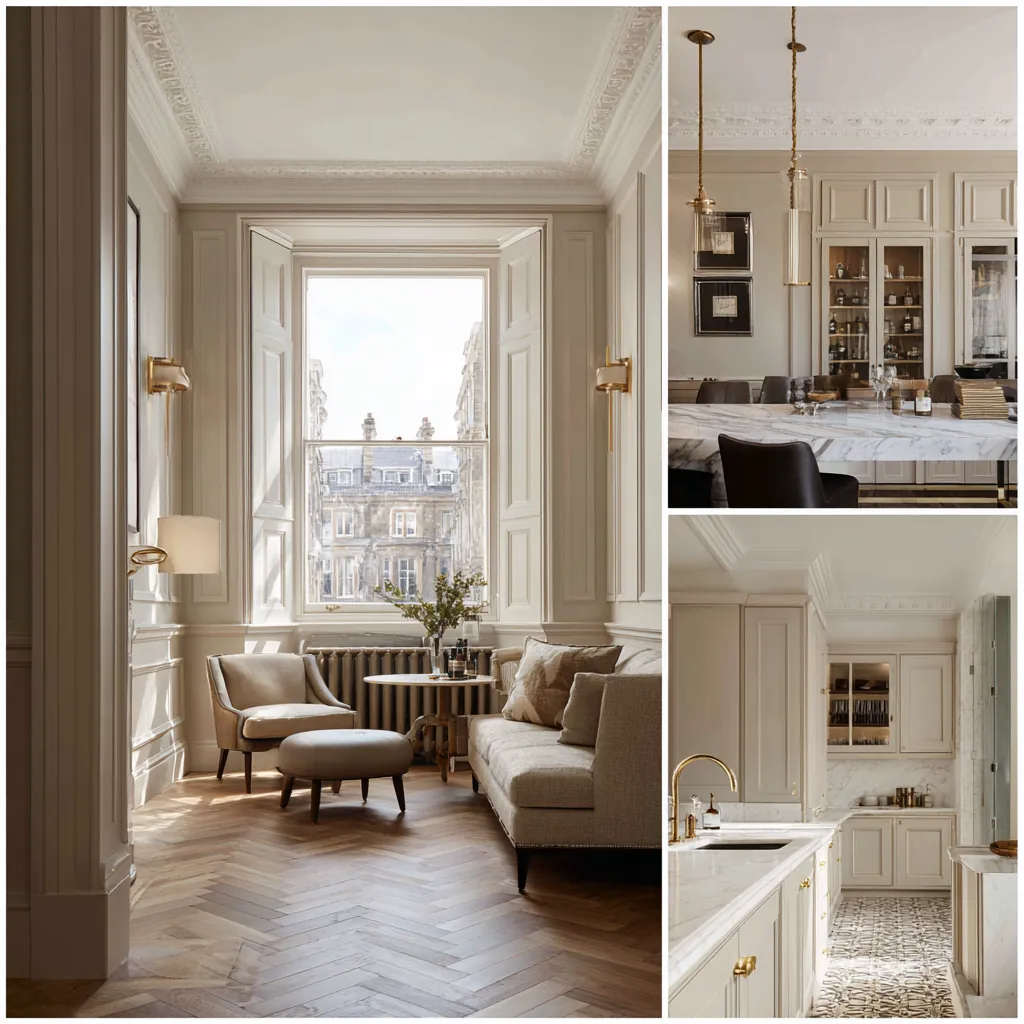
Read the existing surfaces
Walk around each room in different light and note cracks, stains, flaking areas and earlier repairs. Their appearance helps identify where investigation or preparation is needed, but it does not by itself explain the cause. We distinguish a decorative defect from a condition that may require another trade's attention. Painting over an active leak or unresolved movement would conceal evidence without addressing the underlying problem.
Existing coatings also influence the proposed method. We inspect accessible surfaces and discuss suitable preparation or testing where the material is uncertain. A smooth appearance does not necessarily mean the coating beneath it is sound. The agreed scope should identify what is being retained, what needs removal and how repaired areas will be brought into the finished scheme, rather than describing every surface simply as ready for paint.
Protect details before preparation begins
Little Venice's historic setting includes the stucco houses and villas described in Westminster's Maida Vale material. Within an individual home, decorative features may come from different periods of alteration. We record the mouldings, timber details and finishes that you want to retain before agreeing how adjacent work will proceed. Their profiles and condition matter when deciding what preparation is appropriate.
Heavy coating build-up can obscure detail, while aggressive preparation can damage it. Where a feature warrants specialist assessment, that need is identified before a method is selected. Floors, shutters, glazing, ironmongery and fittings are included in the protection plan. The record should also make clear which items will be removed for decoration and how they will be reinstated, so protection is a planned part of the work rather than an improvised covering.
Judge colour in the room where it will be used
Consider samples on the actual surfaces and view them through the day. Window orientation, artificial lighting and adjoining finishes can change how a colour reads. We discuss whether the intention is to emphasise mouldings, make a room feel quieter or connect several spaces. A colour chosen from a small isolated swatch may behave differently when it covers a broad wall beside existing flooring or furniture.
Sheen and texture matter alongside colour. A highly reflective surface may emphasise imperfections that a different finish would soften, while frequently handled joinery needs a finish suited to its use. The selection should account for cleaning and maintenance as well as the desired appearance. We document the agreed products and locations so that wall, ceiling and woodwork decisions remain consistent when several rooms are being decorated together.
Coordinate decoration with other work
If the project also includes joinery, electrical or plumbing changes, the affected surfaces need a coordinated plan. New fittings should not be set out after the surrounding finish has been completed without considering the consequences. We identify where preparation depends on another task and which details need to be inspected before they are covered. This makes it easier to resolve a junction properly instead of repeatedly patching the same area.
Occupied rooms require practical arrangements for furniture and belongings. Discuss items that cannot easily be moved and spaces that need to remain accessible. In an apartment, the route through common parts and any relevant management requirements also form part of the preparation. Protection should extend to the actual movement of people and materials, not stop at the doorway of the room being decorated.
Treat exterior work as its own enquiry
Work to a visible external surface can raise different questions from repainting a bedroom. Westminster's current conservation information helps establish the property's context before changes are proposed. We identify the surfaces concerned, their condition and the intended appearance, then determine what further assessment or consent advice is needed. A familiar colour on a nearby house is not treated as approval for a different building.
Access and preparation also need to be considered for exterior work. The method must suit the substrate and the location, with damaged fabric assessed before a new coating is specified. At completion, retain the finish schedule and care information for both internal and external work. A final inspection should look at edges, repaired patches and the operation of decorated doors or windows, alongside the overall consistency of the finish.
Sources: Westminster: conservation areas
Before work begins
Painting & decorating in Little Venice: questions
Can staining just be covered by a new paint system?
The cause needs to be understood first. A historic mark left after a completed repair is different from an active moisture problem. We review the available history and identify any investigation needed before specifying preparation and coatings, so decoration does not conceal a defect that still requires attention.
How should I choose a colour for a tall reception room?
Try samples on the relevant surfaces and consider them beside the room's retained materials, with both daylight and artificial lighting. Think about which architectural features should stand out. The relationship between ceiling, walls and woodwork is usually more useful to assess than an isolated colour name.
Can mouldings retain their detail after redecorating?
That depends on their condition and the method selected. We inspect coating build-up and the underlying feature before agreeing preparation. Where a significant or delicate detail needs specialist input, that assessment should guide the treatment rather than assuming that vigorous sanding or another heavy coat is appropriate.
What should be agreed before decorating an occupied flat?
Identify the rooms in use, furniture and belongings requiring protection, access arrangements and any building-management guidance. Also explain which fittings are being replaced by others. A clear scope allows preparation and reinstatement to be coordinated around the apartment's actual use and shared circulation.
What records should I keep after the work?
Keep the finish names, product references, locations and relevant care advice together. Photographs can help show how features and repairs looked at completion. These records make later maintenance more informed and reduce the risk of an apparently matching product being applied without understanding the original finish or preparation.
Official sources
Westminster: resident magazine location reference · Westminster: Little Venice library location · Westminster: Maida Vale conservation-area leaflet · Westminster: conservation areas
Sources checked on the dates recorded in the source register, most recently 8 November 2026. Maps, list entries and directions must be checked for the individual property and proposed work.