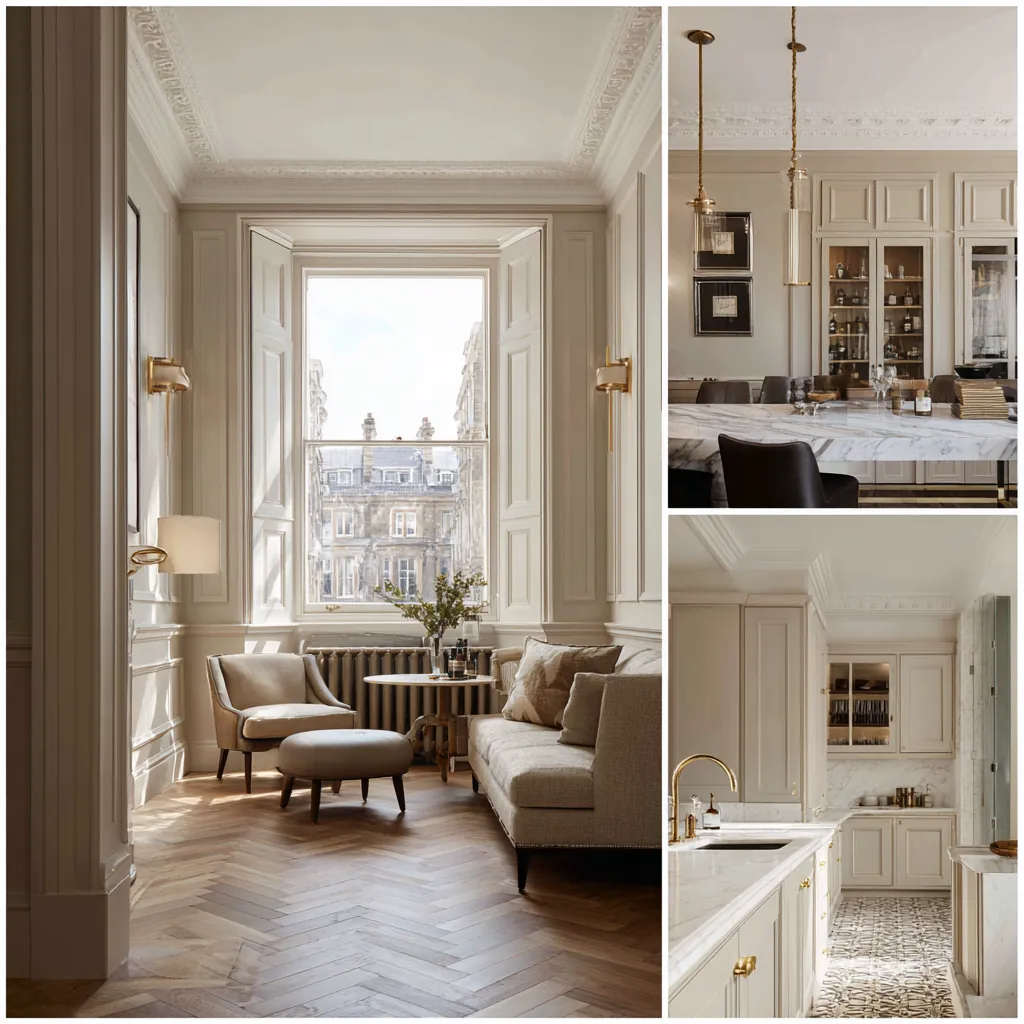
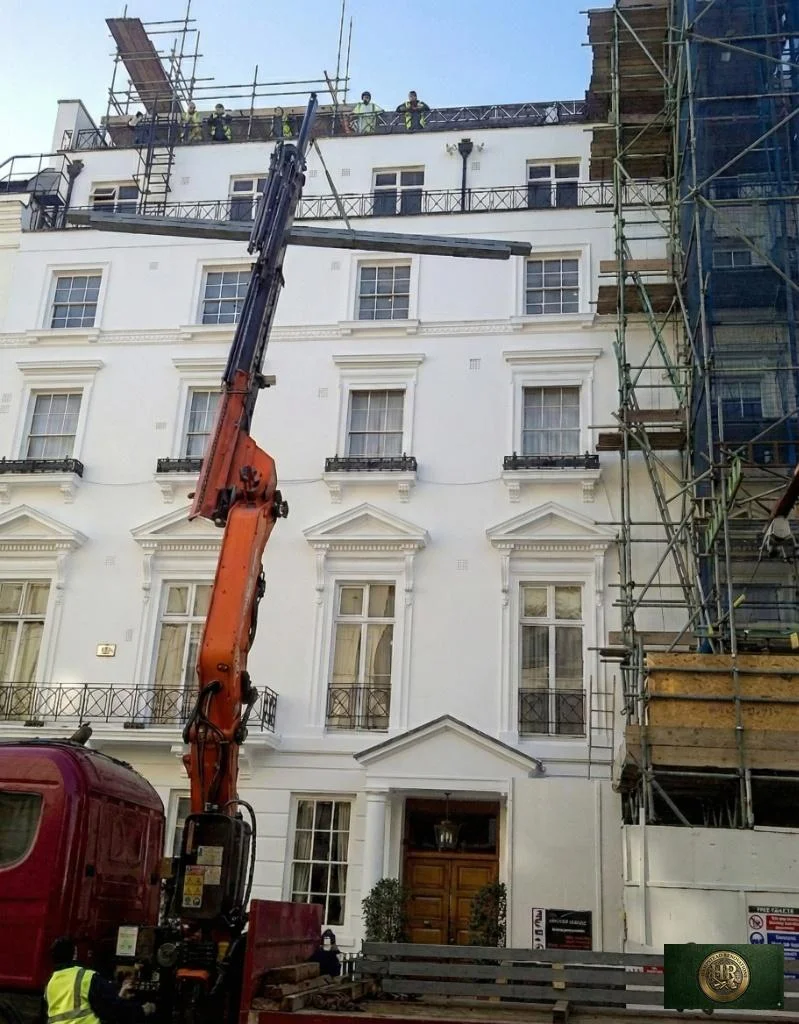
Record the fabric before deciding on treatment
An initial record identifies the features affected by the proposed work and the signs of damage or change. Photographs should show their wider setting as well as close details. We note earlier repairs, visible alterations and uncertainties about materials or construction. This provides a useful starting point for specialist assessment where needed, without attempting to diagnose concealed conditions from appearance alone.
The homeowner's priorities are considered alongside that record. Explain the practical problem: a difficult window, recurring moisture, a damaged moulding or a room arrangement that no longer works. Describing the problem clearly allows different responses to be considered. A request to replace something may turn out to be a request for better operation or repair, but that possibility needs assessment rather than an assurance made before the feature has been inspected.
Use Little Venice's published character carefully
Westminster's Maida Vale leaflet describes the stucco houses, villas and canal setting associated with Little Venice. It is useful evidence about the historic townscape, while the council's current conservation information helps locate the particular property within the relevant mapped context. Neither source should be stretched into a claim that every building or interior detail has the same status, age or significance.
For the home itself, the assessment considers the fabric and the records appropriate to it. A later addition can still affect how a room or elevation is understood, and an apparently old feature may have been substantially altered. We keep those distinctions visible in the design discussion. The aim is to understand the actual building rather than to impose a simplified picture of what a Little Venice house ought to look like.
Sources: Westminster: Maida Vale conservation-area leaflet · Westminster: conservation areas
Compare repair and replacement on evidence
The condition of an element informs the available options. We identify where a specialist needs to assess whether repair is practical and what treatment would be appropriate. The proposed method should explain the affected area, intended materials and important junctions with retained fabric. A broad instruction to restore a feature is insufficient if different people could interpret it as repair, partial renewal or complete replacement.
Samples or trial areas can help resolve questions about finish and method where they are appropriate and authorised. Their purpose and acceptance criteria should be clear before wider work follows. We record the agreed treatment and any observations that affect it. This approach keeps an informed decision connected to the actual fabric, rather than allowing a successful-looking small sample to justify unrelated work elsewhere without review.
Accommodate modern use with considered details
Heating, lighting, ventilation and storage can affect historic surfaces even when the main room arrangement remains. We coordinate their positions and routes with the retention brief. A service penetration or cabinet fixing may be small on a drawing but significant at a delicate detail. The relevant design information should therefore show how new installations meet the building, not only where the visible equipment will sit.
Comfort improvements also need a coordinated assessment of the existing construction. The relationship between materials, moisture and ventilation should be considered by the appropriate advisers for the work proposed. We avoid treating a modern product as a universal answer for an older wall or floor. The method should describe why the chosen arrangement suits the assessed conditions and how important parts can be inspected or maintained afterwards.
Carry the agreed approach into the work
The project record brings together surveys, specialist advice, relevant decisions and the approved scope. Requirements affecting historic fabric should be reflected in the information used by the people carrying out the work. If opening-up reveals something unexpected, it should trigger the appropriate review before the method is changed. The discovery is documented so that subsequent decisions have a clear basis.
At completion, retain photographs and information about the treatments and materials actually used. Explain any care requirements and identify remaining items requiring attention. A useful handover makes future maintenance more informed without claiming that every underlying uncertainty has disappeared. Book a feasibility visit with photographs, available records and a description of the practical issues you want to resolve; these help define the assessment and design work appropriate to the home.
Before work begins
Heritage restoration in Little Venice: questions
Does a period appearance establish that a house is listed?
No. The individual property's relevant records need to be checked. Appearance can help identify questions for assessment, but it is not a substitute for confirming designation and understanding the building. We keep that distinction clear before describing the consent route or the treatment of a particular feature.
Can a damaged feature always be repaired?
Its material, condition and intended function need assessment before that can be answered. A suitable specialist can advise on the available treatments and their limits. We avoid promising repair or assuming replacement from a photograph alone, and record the evidence supporting the chosen approach.
How can new services be introduced carefully?
Plan their positions and routes against the retention record before installation. The drawings should identify sensitive junctions, fixings and penetrations, with specialist input where appropriate. Coordinating those details early helps avoid treating important fabric as a convenient surface to cut once equipment locations have already been fixed.
What happens if concealed historic detail is discovered?
The finding should be recorded and assessed before affected work continues under an unchanged assumption. We identify who needs to review it and how the design or method may be affected. The response depends on the discovery and the agreed scope, rather than a general rule that every concealed feature can be removed or exposed.
Which documents help at the first heritage discussion?
Existing surveys, photographs, past decisions and records of earlier repairs are useful. Explain what you know and which points are uncertain, and describe the difficulties you want the work to address. That combination helps focus the enquiry on the building's actual fabric and the evidence needed for informed decisions.
Official sources
Westminster: resident magazine location reference · Westminster: Little Venice library location · Westminster: Maida Vale conservation-area leaflet · Westminster: conservation areas
Sources checked on the dates recorded in the source register, most recently 8 November 2026. Maps, list entries and directions must be checked for the individual property and proposed work.