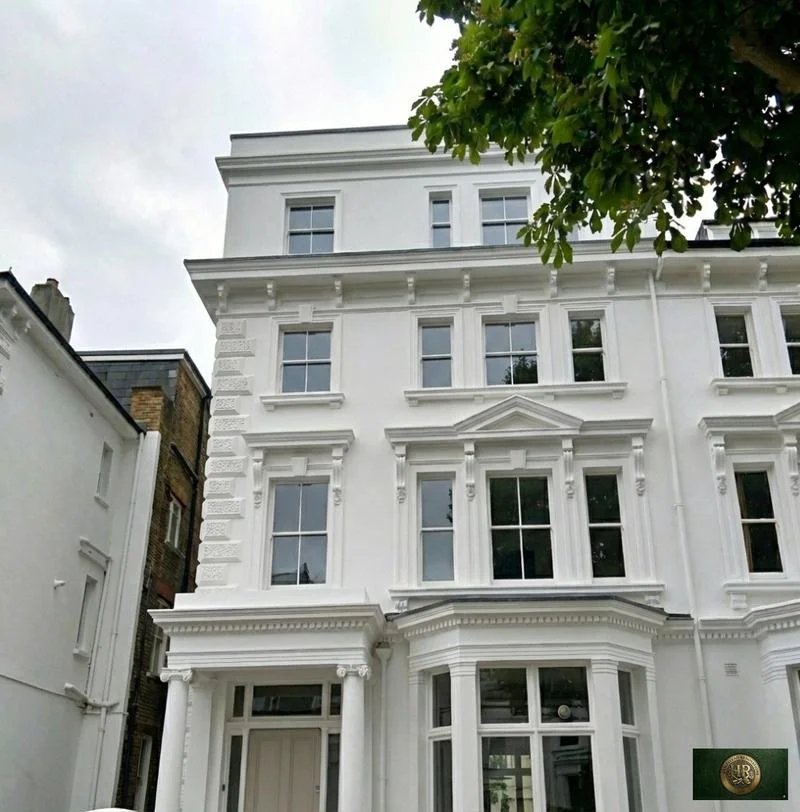
Record what survives before choosing a treatment
Photographs should show a feature's setting and its close details. We note visible damage, earlier repair and signs of alteration, distinguishing observation from a diagnosis that requires specialist input. The record identifies what the proposed work would affect. This is more useful than a broad instruction to restore a room without explaining whether the concern is condition, operation or appearance.
Explain the practical difficulty alongside the feature. A window that is awkward to use, a surface repeatedly affected by moisture or a damaged timber element can require different responses. We identify the assessment needed before choosing between repair, partial renewal or replacement. The treatment should answer an understood problem rather than follow an assumption that an old component is automatically beyond use.
Read the local character at the right scale
Wapping Wall's council appraisal describes the historic wharves and warehouses contributing to that designated area's character. Other Wapping properties need their own contextual review through the council's mapping and records. We use published character material to inform questions about the particular building, without claiming that every dwelling shares the same industrial origin or heritage status.
An adapted building may contain fabric from several episodes of change. A later insertion can influence how the home works, while an apparently original detail may have been altered or replaced. The assessment distinguishes those conditions where the evidence allows. This helps the design respond to the building that exists, rather than imposing a simplified historic image that the actual fabric does not support.
Sources: Tower Hamlets: Wapping Wall appraisal · Tower Hamlets: conservation areas
Compare interventions through their effects
The proposed method describes which material would be affected, what would remain and how the junction between them would be treated. Appropriate specialist advice informs the choice where condition or significance requires it. A concise repair description can be more useful than an ambitious label if it explains the actual intervention and the reasons for selecting it.
Where a sample or trial area is appropriate, agree its purpose and the basis for reviewing it before wider treatment follows. Record the observations and any changes to the method. A successful appearance in a small area should not become permission for unrelated work on different material. The decision remains tied to the assessed conditions and the scope that has been reviewed.
Introduce modern requirements with considered routes
Lighting, heating, ventilation and communications equipment can affect historic surfaces through fixings and penetrations. We coordinate their routes with the retention record while locations remain flexible. The design should show sensitive junctions and identify where further advice is required. A small fitting on an elevation may still have a significant consequence for the material behind it.
Comfort improvements also need an understanding of the existing construction. The relevant advisers consider materials, moisture behaviour and ventilation as connected matters for the proposed work. We avoid treating a contemporary product as a universal remedy for an older wall or floor. The agreed approach should explain why the system suits the assessed conditions and how its important parts can be inspected or maintained.
Keep the agreed method connected to the work
Surveys, specialist recommendations, relevant decisions and the work description should refer to the same proposal. If opening-up reveals an unexpected feature or condition, the affected work is reviewed through the appropriate process before an altered method is adopted. The finding and subsequent decision are recorded so that later choices have a clear basis.
Completion records include relevant photographs, materials and care information. They should distinguish the treatment carried out from issues still requiring attention. Book a feasibility visit with available surveys, past decisions and photographs, together with the practical outcome you hope to achieve. This helps define an enquiry grounded in the home's actual fabric rather than in an untested assumption about what restoration ought to involve.
Before work begins
Heritage restoration in Wapping: questions
Is every warehouse-looking home in Wapping a listed building?
No status should be inferred from appearance alone. The individual property's relevant records need to be checked, with the fabric and proposed work assessed on their own circumstances. Published character material provides context but does not replace confirmation of the designation or the requirements affecting a particular alteration.
Can a damaged historic element be retained?
Its condition, material and intended function require assessment before a reliable answer can be given. A suitable specialist can identify the available treatments and their limits. We record the basis for the selected approach rather than promising repair or assuming replacement from a general description or photograph.
How can new services avoid unnecessary disturbance?
Their positions and routes are considered against the retention record before installation details are fixed. The drawings identify important penetrations and fixings, with appropriate advice where necessary. Coordinating these interfaces early allows alternatives to be assessed while the design remains flexible.
What happens when a concealed feature is discovered?
The finding should be documented and assessed before affected work proceeds under the previous assumption. We identify who needs to review it and how the scope or detail may change. The response follows the actual discovery and the relevant advice, rather than a blanket decision to remove or expose everything found.
What should be kept for future maintenance?
Retain relevant photographs, treatment descriptions, product information and care guidance, along with the decisions that explain important choices. This record helps future work understand what was repaired or introduced. It also prevents a later maintenance task from relying on an inaccurate assumption about the material beneath the visible finish.
Official sources
Tower Hamlets: John Orwell Sports Centre in Wapping · Tower Hamlets: Wapping Wall appraisal · Tower Hamlets: conservation areas
Sources checked on the dates recorded in the source register, most recently 8 November 2026. Maps, list entries and directions must be checked for the individual property and proposed work.