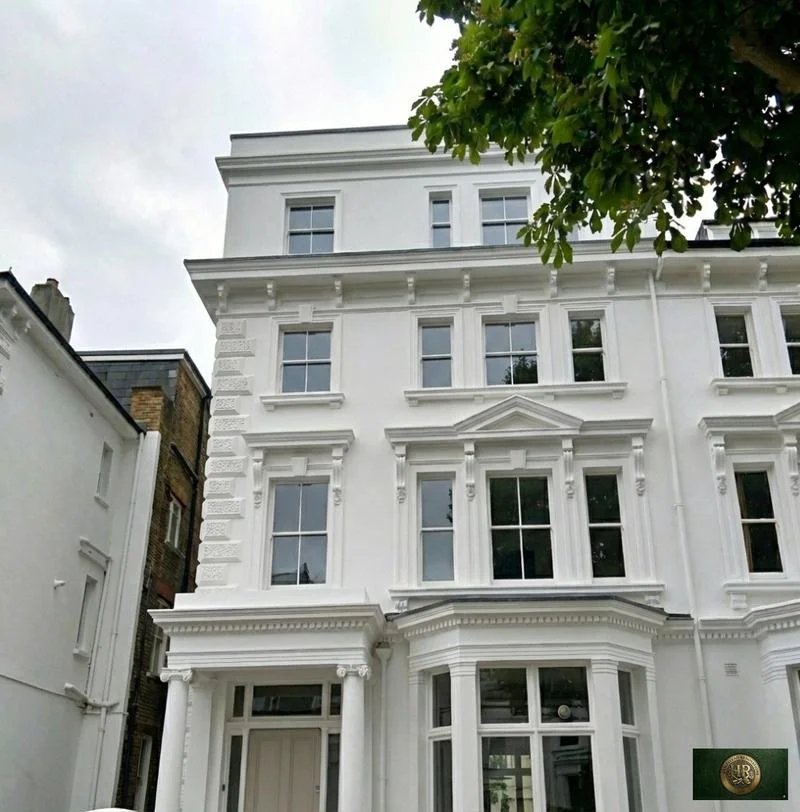
Record the feature and the problem it presents
Describe the practical issue rather than beginning with an assumed remedy. A window may be difficult to operate, a moulding may be damaged or a wall may show recurring moisture. Photographs should include both the detail and its surrounding context. We identify the affected material and any visible history of repair, then establish where a specialist needs to assess the condition more closely.
That record also captures what the homeowner values about the building. Proportion, texture and the way a feature relates to the room can be important even when the element needs attention. Recording those qualities helps compare possible treatments. The question is not simply whether a replacement could look similar, but what approach is justified by the actual fabric, its condition and the purpose of the work.
Use the relevant Kingston heritage information
The council publishes distinct conservation-area records and a heritage map, including information for Kingston Old Town and other designated settings. Those sources help locate a property and identify the context requiring consideration. They do not establish that every interior feature in a wider neighbourhood has the same age, status or significance. The building's own evidence remains essential to the assessment.
Earlier alterations may have changed how a room or elevation is understood. We review available records and note uncertainties about what survives. An apparently traditional detail should not automatically be described as original, and a later intervention should not be dismissed without assessment. Keeping those distinctions clear helps the homeowner understand why a proposed treatment is appropriate rather than relying on a simplified image of a historic house.
Sources: Kingston: conservation-area list
Compare repair options before specifying replacement
Suitable specialists can assess the condition and explain the available treatments for the affected material. The proposed method should identify its extent, relevant products and the junction with retained work. A broad instruction to restore a feature can be ambiguous: it may mean limited repair to one person and wholesale replacement to another. The agreed scope should remove that ambiguity before work is carried out.
Where a trial or sample is appropriate, define what it is intended to demonstrate and how the result will be reviewed. A successful appearance is only part of the assessment; compatibility with the underlying material also matters. The accepted method and any limitations are recorded so that subsequent work follows an informed decision rather than an informal assumption based on a small area.
Introduce new requirements with careful junctions
Modern use can involve heating, lighting, storage and ventilation close to retained fabric. We coordinate their positions before routes and fixing points become difficult to change. A small service penetration can be significant when it affects a delicate detail. The construction information should show how new installations meet the building instead of recording only the visible position of the finished equipment.
Comfort improvements need a considered relationship with the existing construction. Appropriate advisers review the proposed materials and environmental strategy for the actual conditions. We avoid presenting a modern product as a universal solution for an older wall or floor. The method should explain the intended performance, important interfaces and access for later inspection or maintenance, with uncertainties kept visible until they are resolved.
Keep decisions and records connected to the work
Relevant advice, property records and approvals are brought into a clear work description. Requirements affecting the fabric should be reflected in the information used by the people carrying out the treatment. If opening-up reveals an unexpected detail or condition, the finding is documented and reviewed before the method changes. A site discovery should not silently replace an agreed approach with an unrecorded alternative.
At completion, retain photographs, treatment records and care information with the property documents. Explain any remaining matters needing attention and the practical limits of the work undertaken. Book a feasibility visit with available surveys, photographs and a description of the problems you want to address. This allows the first discussion to define the appropriate assessment and repair questions rather than promising an outcome before the fabric has been understood.
Before work begins
Heritage restoration in Kingston upon Thames: questions
Does a traditional appearance prove that a feature is original?
No. Its history and construction need assessment alongside available records. Later alterations can imitate earlier details, and older fabric may have been substantially changed. We distinguish observation from interpretation so that decisions are not based solely on the impression created by the present appearance.
Is repair always preferable to replacement?
The condition, significance and intended function of the element need consideration. A suitable specialist can explain the available treatments and their limitations. We do not promise repair or assume replacement from a general description; the chosen method should be supported by an assessment of the actual feature.
How are new services planned around retained fabric?
Their routes and fixing points are considered with the retention record before installation. The drawings identify important junctions and any need for specialist review. This allows the design to address sensitive details deliberately instead of treating the building as a surface to cut once equipment positions have already been fixed.
What happens if concealed features are discovered?
The finding should be recorded and the affected work reviewed with the appropriate advisers. Its significance and consequences depend on the particular discovery. We identify the decision needed before continuing, rather than assuming that every concealed feature should automatically be removed, exposed or left unchanged.
What should a heritage enquiry include?
Provide photographs, surveys or earlier repair records where available, and explain which aspects of the home you want to retain. Describe practical defects and uncertainties honestly. That information helps focus the initial visit on the evidence required for a considered treatment strategy.
Official sources
Royal Borough of Kingston: council venue locations · Kingston: conservation-area list
Sources checked on the dates recorded in the source register, most recently 8 November 2026. Maps, list entries and directions must be checked for the individual property and proposed work.