Identify what each surface needs
Walls and ceilings that look similar may have different underlying conditions. Record loose material, staining, cracks, previous repairs and changes in texture before choosing a finish. Where a defect suggests an unresolved building problem, the appropriate investigation comes before decorating. A fresh coating should not be presented as a remedy for a source of moisture or movement that has not been understood.
The specification should explain which surfaces are being repaired, lined or prepared for direct decoration. It should also distinguish local treatment from broader work across a wall or ceiling. Discuss the expected appearance under the room's actual light, particularly where existing surfaces are irregular. Clear expectations help avoid treating every retained wall as though it were newly constructed.
Read the details before stripping back
Doors, skirtings, cornices and window surrounds contribute differently to an interior. We record their condition and discuss the extent of preparation that is appropriate for the proposed finish. Layers of previous coating can obscure a profile, but removal methods need to suit the material and the feature. Specialist advice may be necessary where the age or composition of existing finishes is uncertain.
Existing fittings and adjacent materials need consideration as well. Hinges, handles, glazing and stone should not be treated as part of an undifferentiated painted surface. The scope identifies items to remove, protect or carefully work around. This allows the visible edges to be planned without relying on later cleaning to recover details that should have been protected from the beginning.
Connect colour to the room's fixed elements
Start with features that will remain: flooring, substantial furniture, fireplaces and fitted joinery. Colour samples can then be considered in relation to those elements. We encourage viewing samples on more than one surface within the room, because the same colour can read differently beside a window or in a shaded corner. The aim is a coherent room rather than an isolated favourite swatch.
Consider how connected spaces are seen together. A hall colour may appear beside several doorways, while a stairwell carries a finish through changing light. Record the intended boundaries between colours and finishes on a room schedule. This makes the proposal easier to review and helps prevent ambiguous transitions around archways, reveals or decorative mouldings during the work.
Treat external character as a separate question
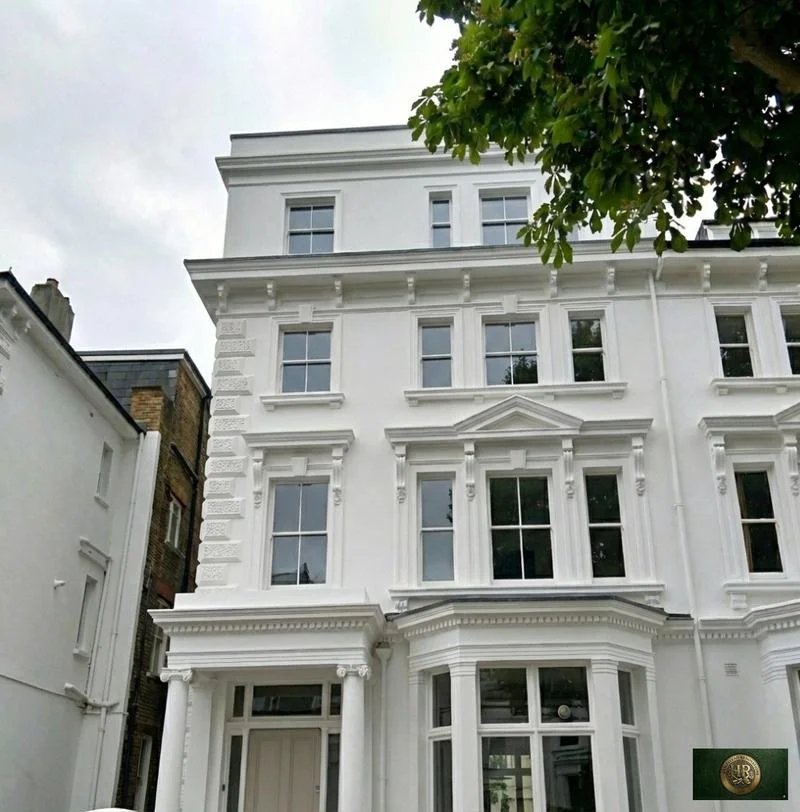
Richmond's Kew Green appraisal discusses the contribution of building fronts and their boundaries. For a property within that mapped context, external decoration needs consideration beyond an interior colour preference. We identify the specific elements included in the enquiry and check the appropriate property information before assuming that a visible alteration can proceed in the same way as ordinary internal redecoration.
The exterior scope should distinguish timber, metalwork, rendered surfaces and other materials. Their condition and existing treatments affect the preparation required. Where an element needs repair, that repair should be described before the decorative finish is selected. Photographs and sample proposals can support the relevant advice without suggesting that every Kew house has identical features or controls.
Protect rooms and coordinate adjacent work
Agree which furniture and belongings will be removed and which need protection in place. Access, storage and working positions should be considered before materials arrive. Retained floors, stairs and fixtures need suitable protection throughout the relevant activity, including movement between rooms. The arrangements should be realistic for the household rather than assuming that an occupied home is an empty shell.
Decoration also depends on completion of connected work. New joinery, electrical fittings and repairs may affect finished surfaces. We identify these interfaces so preparation and coatings are coordinated with the wider scope. Where only part of a room is being altered, the specification should explain how the junction with retained decoration will be assessed and treated.
Review the finish and keep a usable record
A finish review should consider agreed surfaces, edges and junctions in a consistent way. Sample approval provides a reference for colour and sheen, while the written scope records the preparation and extent of work. If a concealed condition changes the proposed treatment, that change should be discussed and documented. The final result is easier to assess when these decisions remain traceable.
Book a feasibility visit with photographs of the rooms and any areas of concern. Share colours or materials you are considering, together with details of work happening elsewhere in the home. At completion, retain the agreed finish references and relevant care information. A clear record helps later maintenance and avoids having to identify a coating from appearance alone.
Before work begins
Painting & decorating in Kew: questions
Can decorating begin before the cause of staining is known?
The source should be understood before a finish is relied upon. Staining may be the visible consequence of a separate building or installation problem. We identify the need for appropriate investigation and repair, then develop the decorative treatment around the condition of the surface after that issue has been addressed.
Why are larger colour samples helpful?
They show more clearly how a finish relates to the room's light, furniture and neighbouring materials. Review them in the spaces where the colour will be used and consider the intended artificial lighting as well. Samples support a considered selection but should be recorded with the exact product and finish reference.
Do all woodwork surfaces need the same treatment?
No. Existing condition, material, previous coatings and intended appearance influence the preparation and specification. A retained moulded door may need a different approach from newly installed cabinetry. We describe those differences in the scope so the treatment suits the particular item rather than applying one assumption throughout the home.
Can one room be decorated while adjoining finishes remain?
Yes, subject to practical access and protection arrangements. The scope should identify the stopping points and explain how connected edges will be treated. Where repair work crosses into adjoining decoration, we discuss the implications before proceeding so the visible boundary is understood rather than discovered at the finish review.
What information is useful for future touch-ups?
Keep the room schedule, colour and product references, finish type and any relevant preparation notes. Record where different materials or treatments were used. Later repairs can then be assessed with accurate information, while recognising that ageing and changes in light may affect how a new application relates to an existing surface.
Official sources
Richmond: Kew Library · Richmond: Kew Green Conservation Area Appraisal
Sources checked on the dates recorded in the source register, most recently 8 November 2026. Maps, list entries and directions must be checked for the individual property and proposed work.