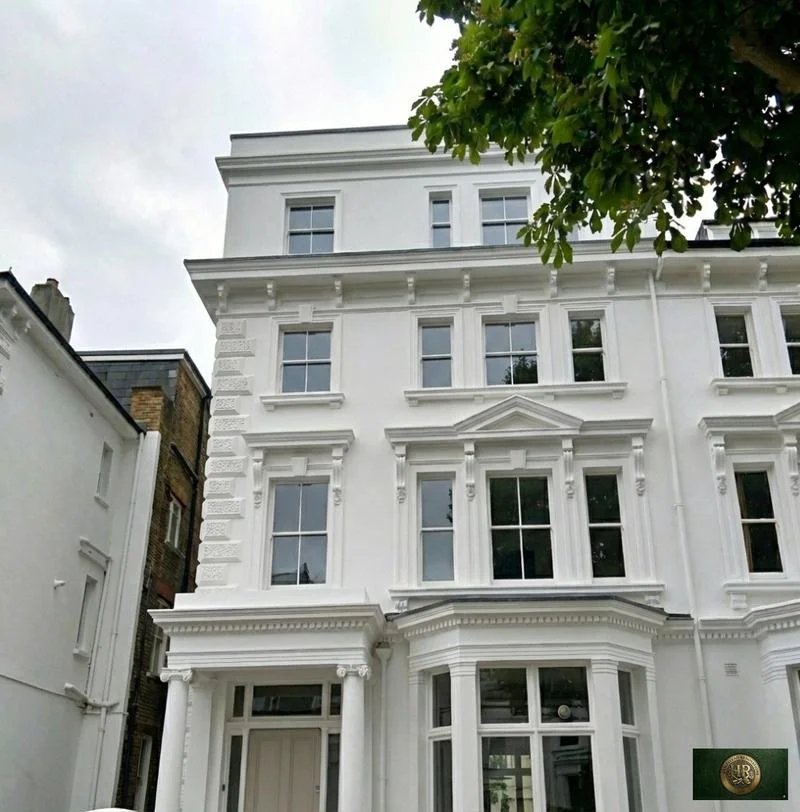
Establish a record before deciding what to change
The first inspection documents the building's visible materials, details and condition. Available drawings and photographs can help distinguish earlier work from later alterations, but gaps in the record are kept explicit. A decorative feature should not be assigned an age simply because it resembles a familiar style. Where significance or construction is uncertain, the brief identifies the further assessment needed before removal or alteration is considered.
That record also includes the homeowner's practical concerns. Difficult heating controls, inadequate storage or awkward access may explain why change is being proposed. We describe those problems separately from a preferred solution, allowing alternatives to be tested. Retaining a feature becomes easier to evaluate when its relationship with everyday use is clear, rather than presenting conservation and comfort as competing choices with no room for design.
Use the Brook Green profile as background
Hammersmith & Fulham's published character profile provides historic context for the Brook Green conservation area. It is a useful starting reference for understanding the surrounding townscape, while the current status and requirements for an individual property need their own check. We avoid treating the document as proof that every home has the same construction, designation or alteration history.
The property review brings that wider context together with direct evidence. External composition, surviving joinery and the arrangement of spaces may raise different questions. Where specialist heritage advice is needed, it should inform the proposal before details are settled. The resulting design can explain which elements are being repaired, which are retained without intervention and where a new component is proposed for a defined practical reason.
Sources: Hammersmith & Fulham: Brook Green character profile
Choose repair methods from the condition found
Repair decisions should reflect both the material and the cause of deterioration. We consider whether damage is local or connected to an unresolved issue elsewhere, and identify the investigations needed to distinguish those possibilities. Replacing an entire component is not the automatic response to a damaged section. Equally, a cosmetic patch should not be presented as a sufficient repair where the underlying condition remains uncertain.
Samples and trial details can make the proposed treatment understandable. A repaired timber edge, a plaster junction or a finish sample helps show how retained and new work will meet. The extent of intervention is recorded, including areas that need review after careful opening up. This allows discoveries to influence the method without losing track of the original objective or quietly expanding the removal of sound material.
Introduce services with deliberate routes
Contemporary heating, lighting and other domestic services need space within the building. We consider their routes alongside retained floors, walls and decorative features, rather than treating the technical installation as a separate exercise after the interior design. Access for maintenance matters as well as the initial appearance. Concealing a component is only useful if it can still be reached appropriately when attention is required.
The same approach applies to comfort improvements and new fittings. We review junctions, ventilation and the effect of proposed changes on existing fabric with the relevant advisers. Assumptions about how an older construction behaves should be checked before a detail is adopted. A carefully coordinated solution gives the homeowner a clear account of the intervention, its limitations and the information needed to look after it.
Manage discoveries and leave a usable record
Restoration work can reveal details that were not visible during the initial inspection. We establish how unexpected findings will be recorded and reviewed, including who needs to advise before connected work proceeds. Clear photographs and marked drawings help preserve the reasoning behind a decision. The aim is not to promise a building without uncertainty, but to give uncertainty a practical route to resolution.
At completion, repair information and relevant product guidance are brought together with the final design records. These should explain what was changed and where future inspection or maintenance is needed. Book a feasibility visit with existing plans, earlier photographs and a description of the features you value. We can then discuss the evidence and professional input needed for a proportionate restoration brief in Brook Green.
Before work begins
Heritage restoration in Brook Green: questions
Does an older appearance mean a feature must be original?
No. Earlier repairs and later additions can share similar forms, so appearance alone is not enough to establish age or significance. We record what is visible, review available evidence and identify where specialist assessment would help. That information should guide the treatment proposed for the feature.
Can heritage work include a more practical kitchen or bathroom?
Yes, the practical use of the home can be part of the brief. The design needs to consider retained fabric, service routes and the relevant property requirements together. We explore arrangements that address the household's needs while making the nature and extent of alterations clear.
How do you decide between repairing and replacing timber?
The decision depends on the timber's condition, its role and the cause of the damage. We assess what can reasonably be retained and where further investigation is needed. A repair proposal should explain the affected area and its junction with sound material, rather than defaulting to complete replacement.
What happens if hidden details are found during the work?
The finding is documented and the affected proposal is reviewed with the appropriate adviser. Any resulting change needs to be reflected in the relevant drawings and instructions. This keeps decisions traceable and avoids continuing an unsuitable detail simply because it was developed before the fabric became visible.
Which records should I gather before discussing restoration?
Useful material includes existing plans, photographs showing earlier appearances, records of previous repairs and any relevant consent documents. Add a description of defects and the features you wish to retain. Missing information is not a reason to invent a history; it becomes part of the investigation brief.
Official sources
Hammersmith & Fulham: Brook Green venue locations · Hammersmith & Fulham: Brook Green character profile
Sources checked on the dates recorded in the source register, most recently 8 November 2026. Maps, list entries and directions must be checked for the individual property and proposed work.