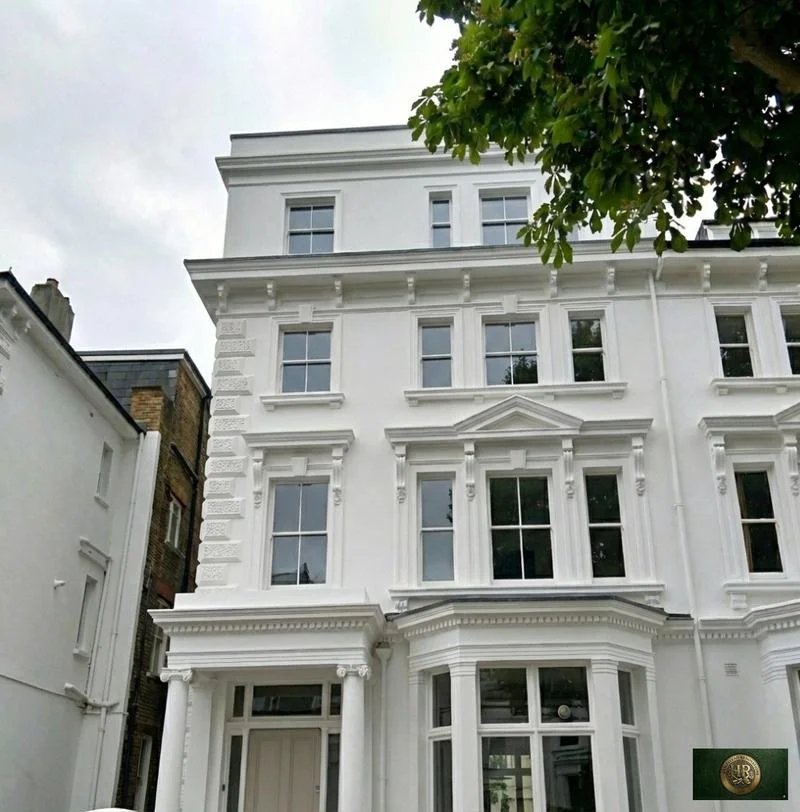
Establish the building's evidence before describing its history
The initial record brings together visible materials, photographs and any available documents about earlier work. We identify features whose origin or significance is known and keep uncertainty clear where the evidence is incomplete. A decorative style alone does not establish the date of an element. This distinction helps prevent an attractive story about the building from directing a repair that the material itself does not support.
We ask which features the household values and why. A stair, a sequence of rooms or a particular window detail may be central to the experience of the home. These preferences are considered alongside condition and significance. The aim is a practical restoration brief that explains what should be preserved, what needs attention and where a change is sought to support continued residential use.
Use local character information with the right limits
Hammersmith & Fulham publishes the Shepherds Bush conservation-area character profile as a historic reference. We consider it alongside the actual property and current checks relevant to the proposal. It does not establish that every Shepherd's Bush home shares one designation or that every visible feature is protected in the same way. The scope needs to identify the specific fabric and intervention being considered.
Where formal advice or consent is relevant, the description of the work should distinguish repair, replacement and alteration. Those terms should reflect what will actually happen to the material. We coordinate the supporting information with the design so the intention remains consistent. A general promise to preserve character is less useful than a clear detail showing which part is retained and how the proposed work meets it.
Sources: Hammersmith & Fulham: Shepherd's Bush character profile
Diagnose the defect and select a compatible response
Condition assessment considers the cause and extent of deterioration before specifying a treatment. Damaged timber, plaster or masonry may involve different mechanisms, and a visible defect can extend beyond the surface. We identify the need for suitable specialist investigation rather than assume that replacing the most obvious damaged area resolves the issue. The repair scope should be proportionate to the findings.
Material choice is informed by the existing construction and the conditions in which it performs. Compatibility includes more than a close visual match. Relevant technical advice guides preparation, repair materials and the treatment of junctions. We record the intended method and any sample needed to assess it. This gives the household and reviewers a concrete proposal instead of a broad instruction to make a feature look original.
Introduce modern use with a clear account of intervention
Improved comfort may call for new lighting, ventilation, heating or storage. We investigate routes and locations that can support those needs without unnecessary disturbance of retained fabric. Existing later alterations may offer useful opportunities, but their suitability still needs assessment. The design makes the intervention visible in the record, including any cutting, fixing or removal needed to install the proposed equipment.
Future maintenance is considered at the same time. Concealing a service behind significant finishes can create avoidable difficulty when it requires attention. We coordinate accessible controls, removable elements and working space with the room's appearance. The chosen arrangement should be understandable as both a conservation decision and a practical installation, so continued use does not depend on repeatedly disturbing the fabric being retained.
Review samples, unexpected findings and the completed record
Where a finish or repair cannot be adequately judged from a description, a sample can clarify the proposed result. We agree what it is intended to demonstrate and record the selected approach. During the work, unexpected evidence is assessed before it is covered or removed. The project should be able to respond to what the building reveals without allowing a provisional assumption to become an irreversible instruction.
At handover, relevant records explain the materials, treatments and maintenance considerations associated with the work. Photographs can document concealed repairs or service routes where useful. The household receives a practical account of what changed and what remains. This supports informed care and helps future advisers understand the intervention without relying on a finished surface to explain every decision behind it.
Before work begins
Heritage restoration in Shepherd's Bush: questions
How do you distinguish a historic feature from a later imitation?
We review available records, visible construction and the surrounding context, with specialist advice where appropriate. If the evidence does not establish an origin, that uncertainty remains explicit. A feature's treatment should be based on its actual condition and significance rather than a confident date inferred only from its appearance.
Can restoration include changes for contemporary living?
Yes. The household's practical needs form part of the brief. We explore how services, storage and room arrangements can improve use while treating relevant fabric carefully. The design explains the intervention and its junctions, so the proposed change can be assessed through both its practical purpose and its effect on the building.
When is a repair sample useful?
A sample helps where texture, colour, method or a junction cannot be understood sufficiently from drawings and words. It should answer a specific question and be assessed in the relevant context. Recording the selected result gives the wider work a clear reference rather than leaving each area to a separate interpretation during application.
What happens if opening up reveals an unexpected detail?
The finding is recorded and the affected work is reviewed before proceeding. We identify whether further advice or a revised detail is needed and consider any permission implications. This keeps the newly visible evidence within the decision process, rather than allowing an earlier assumption to determine how an unexamined feature is removed or concealed.
Which information should I gather for a restoration enquiry?
Photographs, earlier drawings, relevant consent records and a known repair history are useful. Explain the features you value and the practical changes you need. If a detail's origin is uncertain, say so. The initial review can then identify the research and investigation needed without treating an unsupported description as an established fact.
Official sources
Hammersmith & Fulham: Statement of Community Involvement · Hammersmith & Fulham: Shepherd's Bush character profile
Sources checked on the dates recorded in the source register, most recently 8 November 2026. Maps, list entries and directions must be checked for the individual property and proposed work.