Layout and structure
Start with how rooms connect, where daylight reaches and which features should remain. Test proposed openings, altered stairs and new room uses against the structure and the wider design before choosing finishes.
London houses · Hampstead design studio
Make the whole house work for you.
From period terraces to larger family homes, bring the layout, structure, services and finishes into one considered refurbishment. Explore our work and prepare a clear brief with our Hampstead team.
Unit 3, Palace Court, 250 Finchley Road, London NW3 6DN
020 7101 3168
Book a free feasibility visit
We reply within one working day, Monday to Friday, 8am to 6pm.
Or call 020 7101 3168
Photographs linked to their published project records.
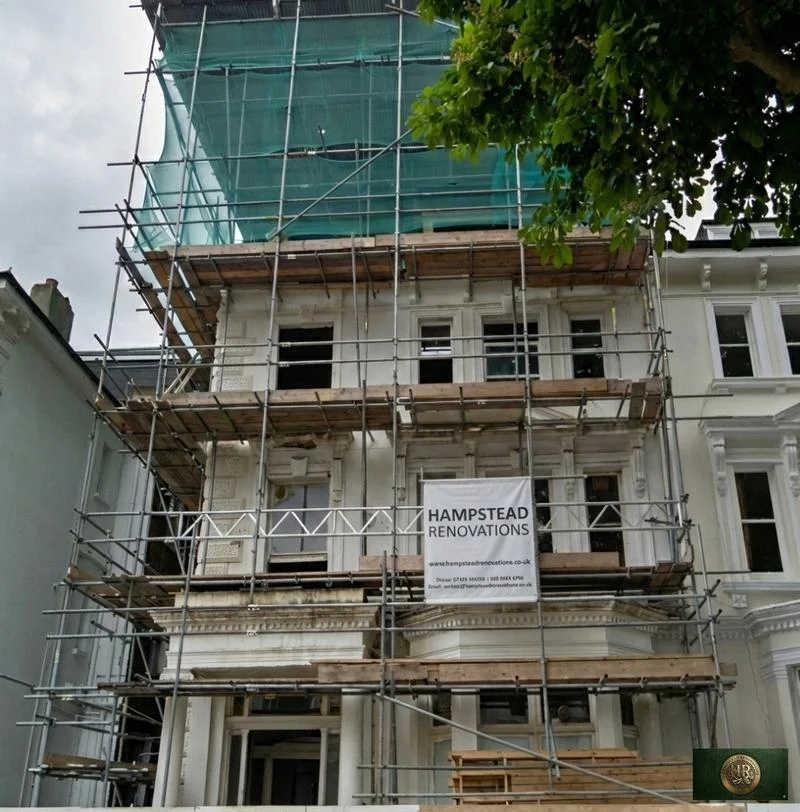
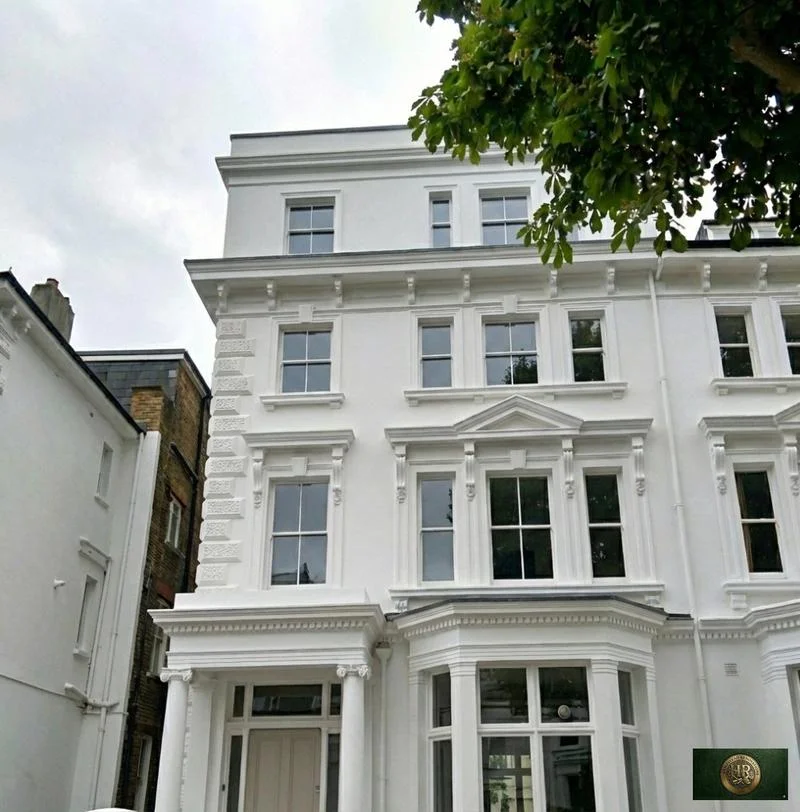
Belsize Park Gardens, NW3 — a full-house refurbishment with basement, extension and loft works.
Conservation Area · 5 Storeys · Documented programme: 12 months
The programme is recorded in the project documentation; it is not a verified measure of elapsed construction time or a timetable for another home.
One coordinated brief
House refurbishment, whole-house renovation and property refurbishment often describe the same ambition: making the home work as a whole. Decide what needs to change and what should remain before turning a room list into a specification.
Start with how rooms connect, where daylight reaches and which features should remain. Test proposed openings, altered stairs and new room uses against the structure and the wider design before choosing finishes.
Assess the existing installations before deciding what to renew. Coordinate heating, hot water, lighting, sockets, drainage and ventilation with the new layout so routes and maintenance access are resolved together.
Plan appliance positions, storage, water and waste connections, extraction and wet-area details before the first fix. Confirm the supply schedule and installation responsibilities alongside the room design.
Record the condition of roofs, walls, floors, windows and retained finishes. Repairs, insulation and ventilation need a coordinated approach that respects the materials and moisture behaviour of the building.
Agree storage, door swings, floor build-ups and finish junctions before ordering fitted work. A coordinated schedule makes choices, samples, tolerances and the order of installation clear.
Agree inspections, commissioning, snagging and the handover documents in the contract. Completed work carries a 12-month defects-rectification period under the JCT contract terms.
Most refurbishment websites quote a single "from" price. We don't, because the answer to "what does a London house refurbishment cost?" depends first on the depth of work, then on the specification you choose. Here is exactly how the four tiers we offer differ — line by line.
As a guide, a house refurbishment in London is priced by the depth of work. A cosmetic refurbishment that keeps the existing layout runs £650–£1,250 per square metre (typically £90,000–£180,000); a back-to-brick renovation, with a full strip-out and rebuild of the internal fabric and services, runs £2,250–£3,250/sqm (typically £275,000–£475,000). Both exclude VAT. These are guide ranges only — your fixed written price follows a survey, an agreed scope and a confirmed specification.
| Scope of work | Guide rate | Typical total |
|---|---|---|
| Cosmetic — existing layout retained | £650–£1,250/sqm | £90,000–£180,000 |
| Back-to-brick — full strip-out and rebuild of internal fabric and services | £2,250–£3,250/sqm | £275,000–£475,000 |
Beyond the headline rate
Use the specification guide above as a starting point. Confirm the measured scope, investigations, design and approval costs, allowances, exclusions and supply responsibilities before agreeing a fixed written price.
Keep temporary accommodation, furnishings and any external works visible in your overall budget. Ask how unforeseen conditions and instructed changes will be priced.
The guide rates above exclude VAT. The applicable treatment depends on the work and the circumstances; listed status alone does not make a refurbishment VAT-free. Confirm the position in the quotation.
Sequence before dates
Agree dates after the surveys, scope, approvals and procurement needs are understood. The order of decisions matters as much as the order of construction; there is no single week-by-week timetable for every London house.
Agree priorities, measure the property and identify the surveys needed. Record unknown conditions, retained features, access and whether the house will be occupied.
Coordinate the layout, structural and services designs. Confirm applications and other permissions, respond to conditions and allow for the decisions that affect the start date.
Set out the agreed scope, allowances and exclusions. Confirm long-lead items, samples and who makes each decision before fixing the construction programme.
Sequence protection, strip-out, structure, first-fix services and closing-up inspections before fitted work and finishes. Record the cost and time effect of changes before instructing them.
Allow time for testing, commissioning, snagging and a documented handover. Agree maintenance information, completion evidence and the arrangements for the defects period.
Plan where you will live before works begin. Any occupied or phased arrangement needs safe separation, suitable access and working essential facilities.
Separate approval routes
Internal alterations generally do not amount to planning development. External changes, extensions and excavation need assessment against the actual proposal, address, permitted-development conditions and any Article 4 restrictions.
Listed-building consent can apply to internal or external changes affecting a listed building’s special architectural or historic interest. Check the listing, conservation designation and relevant council controls; listed status and conservation-area status are different designations.
Agree the applicable approval, inspections and completion records separately from planning. Structural alterations and many changes to services or the building fabric may need approval. Identify the required route before construction.
Check whether work to a party structure, building on the boundary or certain nearby excavations needs notices and agreement before the affected work begins. A party-wall award is not universal, and the process is separate from planning permission.
Guidance checked . Use the linked official sources and the relevant council’s property records when preparing your brief.
Behind the finishes
Alterations need a suitable assessment of the building, the proposed loads and how it will remain stable during the work. Beam sizes, bearings, foundations and temporary support cannot be specified from a generic house type.
Asbestos can be present in buildings built or refurbished before 2000. Identify the material and survey needs for the areas affected by intrusive work before strip-out. The risk and type of work determine whether a licensed contractor is required.
HSE: where asbestos may be found · HSE: deciding who should do asbestos work
Treat repairs, insulation, airtightness, heating and ventilation as a connected design. In older buildings, consider existing materials, moisture movement and heritage significance before selecting systems. More insulation alone does not settle the design.
Confirm the condition and capacity of existing installations, the proposed changes and the competent people responsible for them. Record the inspections, testing, commissioning and certificates required for the agreed electrical, gas, heating and ventilation work.
Start with the existing building
Consider shared walls, access through the house, floor and roof structure, neighbouring properties and retained period details. A kitchen extension or loft conversion adds a different approval and construction scope to an internal refurbishment.
Review how the rooms, services and outdoor access work together. Test any proposed phasing against safe separation, essential facilities and the extent of structural or services work.
Start with the building’s significance and condition. Identify what should be retained or repaired, and resolve proposed alterations with the relevant specialists and consent authority before committing to a standard specification.
Find your area
Find the local house refurbishment page for your address. Each guide helps you prepare property and planning questions; our design studio is in Hampstead.
Before comparing proposals, separate the rooms and systems you want to change from the parts of the house that must remain. A useful brief makes priorities and unresolved questions visible to everyone pricing the work.
Record essential repairs, layout changes and optional improvements room by room. Add the survey findings, retained features, occupation plan and access restrictions; distinguish confirmed information from assumptions.
Ask each tenderer to identify design and specialist appointments, investigations, protection, temporary facilities, supply responsibilities, exclusions and allowances. Record which decisions are needed before a price or programme can be fixed.
Agree who checks critical work before concealment, how a change is priced and instructed, and which commissioning, maintenance and completion documents are due at handover.
The appointment and the team
Bring the layout, structure, services and finish decisions into one agreed scope. Confirm design responsibilities, communication and inspection points before construction.
A fixed written price follows the survey, scope and specification. Record allowances, exclusions, payment arrangements and the process for authorising changes in the contract.
Public liability insurance of £10 million with Aviva; certificate available on request.
12-month defects-rectification period on completed work, under the JCT contract terms.
A serious house refurbishment succeeds when structure, services, layout, joinery and finishes are planned as one coordinated sequence.
Hampstead Renovations coordinates whole-house refurbishments from measured survey and feasibility through to structural openings, rewiring, plumbing, heating, kitchens, bathrooms, bespoke joinery and final decoration. The value for clients is not only the finish, but the order in which the work is resolved: strip-out, intrusive surveys, design decisions, engineering input, procurement, first fix, plastering, fitted furniture and handover are sequenced before site pressure forces rushed decisions or compromise the specification.
For comparable proof, review our whole-house refurbishment case study, then compare how related scopes such as kitchen renovation and bathroom renovation are integrated into the wider programme. If you are testing feasibility, use the renovation cost calculator before booking a detailed survey.
Whole-house refurbishment decisions are easier when you can compare the proposed scope with real project evidence rather than a generic room-by-room list. Start with our whole-house refurbishment case study, then browse the wider case-study hub to see how structure, services, kitchens, bathrooms, joinery and finishes are coordinated as one programme. The point is not to copy another property, but to test whether your own brief needs design, structural input, procurement control or a staged build plan before pricing is fixed. If you want to discuss which evidence is most relevant to your home, contact Hampstead Renovations with the property type and intended scope. For survey-led due diligence before renovation, see surveying support before renovation.
Premium-postcode projects with comparable scope, planning context and finishing standards.
Five-storey period house: full refurbishment with basement conversion, extension and loft works.
View case study →Grade II listed penthouse duplex: refurbishment with roof reconstruction and structural steel works.
View case study →Four-storey Victorian townhouse: complete renovation with structural reconfiguration, period detail restoration, bespoke kitchen and three new bathrooms.
View case study →Double-storey rear/side extension and loft conversion with full refurbishment programme.
View case study →Before you enquire
It can bring layout, structure, services, kitchens, bathrooms, joinery and finishes into one coordinated project. The agreed scope identifies what is retained, repaired, replaced or upgraded; not every house needs every element.
The terms often overlap. This service covers a coordinated whole-property refurbishment or house renovation. A loft conversion, extension or basement project adds a particular design, approval and construction scope that should be identified separately.
It depends on the depth of work. A cosmetic refurbishment that keeps the existing layout runs £650–£1,250 per square metre (typically £90,000–£180,000); a back-to-brick renovation, with a full strip-out and rebuild of the internal fabric and services, runs £2,250–£3,250 per square metre (typically £275,000–£475,000). Both exclude VAT. These are guide ranges. A fixed written price follows a survey, agreed scope and confirmed specification.
Confirm the scope, drawings, specification, quantities, allowances and exclusions. Record who pays for design, approvals, investigations and specialist work; clarify VAT treatment, temporary accommodation and furnishings. Agree how changes and unforeseen conditions will be handled in the contract.
The programme depends on the property, surveys, design, approvals, procurement and construction scope. Agree a property-specific sequence and decision schedule before fixing dates. The published Belsize Park Gardens reference records a 12-month documentary programme; it is not a verified measure of elapsed construction time or a promise for another project.
Discuss occupation before the scope and programme are agreed. Structural work, dust, noise and loss of essential facilities can make occupation impractical. Any phased arrangement needs safe separation, suitable access and working facilities; temporary accommodation may be needed.
Internal alterations generally do not amount to planning development. Other proposed work, the property’s status and any restrictions need separate assessment. Building Regulations approval may still be required, and listed-building consent can apply to internal alterations affecting a listed building’s special interest.
Check the exact address and designation before deciding what work is appropriate. A listed building may require listed-building consent for changes affecting its special interest, including interiors. Conservation-area controls and Article 4 directions need a separate check against the actual proposal.
That depends on the work and its relationship to neighbouring buildings and boundaries. The Party Wall etc. Act can apply to work on a party structure, boundary building and certain nearby excavations. Check the notification process early; it is separate from planning and Building Regulations.
Resolve the proposed layout, structural design and service routes together before construction. The project should identify temporary support, inspection stages and what must be checked before work is covered. Electrical, heating, plumbing and ventilation installations need the testing and completion evidence appropriate to the agreed work.
Hampstead Renovations has £10 million public liability insurance with Aviva; the certificate is available on request. We provide a 12-month defects-rectification period on completed work under the JCT contract terms.
Send the property address and type, the rooms or systems you want to change, available plans and any surveys. Include your budget priorities, occupation needs and preferred timing. Use the enquiry form to discuss the brief with our Hampstead team.
“I would like to thank Ross and his team for their consistent commitment to quality and their unerring reliability. They delivered our property to specification and on time, proving to be an extremely effective, experienced, and proactive contractor.”
“We have worked with Ross and his company many times. They are extremely professional and hardworking individuals who can work under any circumstances. There was no variation to the works.”
Book a no-obligation consultation at our Finchley Road design studio or in your home. The first meeting is free, lasts 60–90 minutes, and concludes with an honest indication of feasibility, programme and budget band. No salespeople. No pressure.
Site visit · feasibility assessment · outline cost estimate · programme indication. No obligation. Saturday appointments available.
Continue planning
Organise the existing condition, proposed scope, approvals and decisions before obtaining detailed prices.
Use an initial estimate to start the conversation, then agree the measured scope and specification.
Look at the named property, actual location and published scope when choosing a relevant reference.
Plan fitted storage, cabinetry and architectural joinery within the sequence of the wider refurbishment.
An extension is a distinct scope to coordinate with the house layout, approvals, structure and services.
Discuss a bathroom within the whole-house brief or explore our standalone bathroom service.
The same design-build team delivers house refurbishment in these prime London neighbourhoods — each guide covers the local planning picture, typical properties and costs:
House Refurbishment: view substantial published case studies →
Made-to-measure cabinetry can be coordinated with the wider sequence of a whole-house project. For a focused fitted-cabinetry brief, see our bespoke joinery service in London.
Related reading
Related guidance for planning the scope and priorities of a whole-home project.
Read the local house refurbishment advice for Holland Park and Notting Hill and Notting Hill Gate. Send the full address and proposed scope when you enquire.