House renovation and refurbishment
for Holland Park's Victorian villas
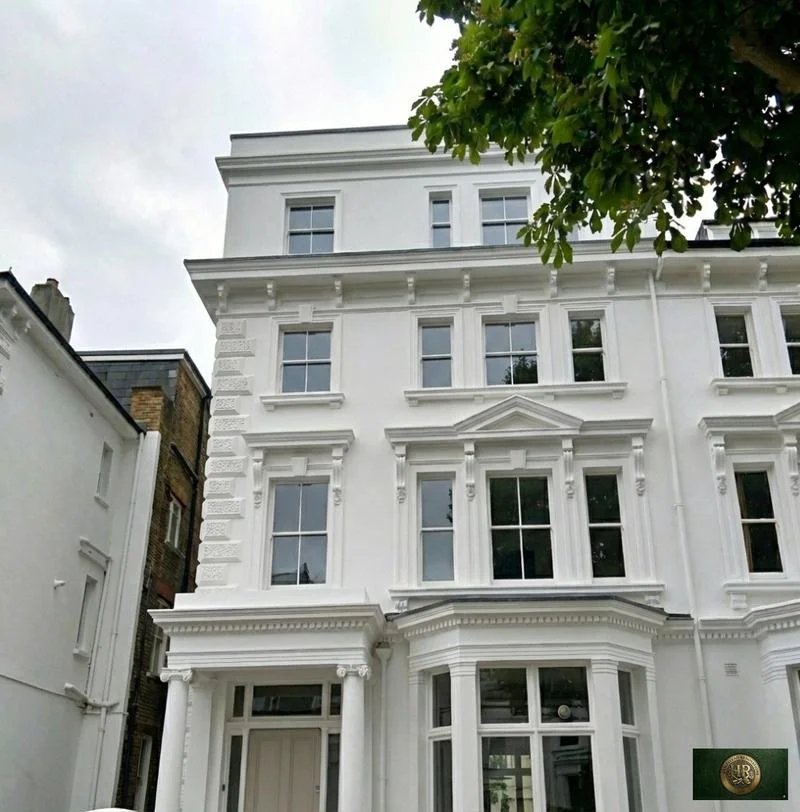
Holland Park's Victorian houses were generally built with two generous main storeys over half basements, and the area runs from the listed stucco group on the three streets called Holland Park to the 120 or so houses James Hall built around Addison Road and Holland Villas Road. Listing, Article 4 directions and, on the Ilchester Estate, the estate's written consent can all bear on one house, so we check the scope against each of them before it is priced.
Italianate terraces, Addison Road villas and studio-houses
RBKC designated the Holland Park conservation area in 1981 by merging two smaller ones. Its appraisal says the area centres on Holland House, listed grade I, and its grade II parkland, together with the speculative development around them, some of which is also listed. The three streets of stuccoed houses called Holland Park and the mews between them are all grade II as an important Italianate group, and Holland Park Mews is listed for its own significance and for its relationship to those houses.
James Hall built some 120 houses in Addison Road, Addison Crescent, Lower and Upper Addison Gardens and Holland Villas Road. The villas on Addison Road and Holland Villas Road have the largest front gardens in the borough, and there are communal gardens behind Upper and Lower Addison Gardens and Addison Crescent.
Melbury Road and Holland Park Road form one of the borough's enclaves with an important concentration of artists' studio-houses. Local Plan Policy CD1 sets itself against demolishing artists' studios and against inappropriate alterations or extensions to them, so we survey and record a studio room before any change to it is drawn.
The east of the conservation area, including the Holland House site, lies in the tier 2 'Holland Park, Campden Hill and Kensington' archaeological priority area, which we note before any excavation is planned.
Sources: Royal Borough of Kensington and Chelsea: Holland Park Conservation Area Appraisal (adopted June 2017), Royal Borough of Kensington and Chelsea: Local Plan (adopted July 2024)
What the appraisal counts as harm to a Holland Park house
For rear elevations, the appraisal names the harms: out-of-character or oversized extensions, painted or rendered brick, altered or moved windows, and the loss of uniformity and rhythm. Under Local Plan 2024 Policy CD13, an extension that projects past the general rear building line set by the neighbours' extensions, or climbs above their general height or up to the original main eaves or parapet, is resisted.
On roofs, it warns that small alterations can be as harmful as roof extensions, among them building between chimney stacks, infilling between slopes and adding rooflights, satellite dishes or aerials. Policy CD12 resists an extra storey on a complete terrace or group with an unimpaired roofline, and on any building or terrace already raised by a storey or a mansard.
Between detached houses, the appraisal adds, side extensions harm the houses' open setting.
A house still has permitted development rights here, though RBKC tightens the controls inside conservation areas, and Article 4 directions take away rights over front doors, windows, roof coverings and boundary walls on streets that include Holland Park Avenue, Holland Park Road and Holland Villas Road; Royal Crescent (1 to 44) and Royal Crescent Mews (11 to 32) have been under direction 96 since 6 July 2012. Away from a direction, double glazing can replace the old glass in an unlisted conservation-area house without planning permission, provided similar materials are used.
Policy CD4 asks every development to preserve or enhance what gives the conservation area its character, appearance and significance, and the Local Plan 2024 rules out outline applications there, so drawings are fully detailed from the start. On the Ilchester Estate, written consent from Ilchester Estates is needed for any external alteration to the appearance of the house, on top of planning permission or listed building consent from RBKC.
Sources: Royal Borough of Kensington and Chelsea: Holland Park Conservation Area Appraisal (adopted June 2017), Royal Borough of Kensington and Chelsea: Local Plan (adopted July 2024), Royal Borough of Kensington and Chelsea: conservation areas, RBKC, Article 4 Directions in Conservation Areas, Royal Borough of Kensington and Chelsea: Article 4 Directions in conservation areas, Ilchester Estate consent requirement, as published in RBKC's Holland Park Conservation Area Appraisal (2017)
A Holland Park basement under Policy CD11
Policy CD11 of RBKC's Local Plan 2024 caps basement development at half of each garden or open part of the site, at most, and requires the garden left untouched to be a single area, continuous with the gardens next door where that is relevant. In most cases it is limited to a single storey, which the plan defines as one that could not later be split into extra floors, generally around 3 to 4 metres from floor to ceiling.
No further basement floors are allowed under a house whose basement already has permission, has been built, or went in under permitted development rights. Digging beneath a listed building, its vaults included, is ruled out, which matters on the three streets called Holland Park, where the houses are listed as a group.
Over any part of a basement that lies under a garden, at least a metre of soil is required, and a sustainable drainage system must be fitted and kept. To guard against sewer flooding the basement needs a suitable pumped device; the Local Plan explains that a non-return valve alone will not do, because such a valve does not send sewage away from the building.
Light wells and railings at the front or side are resisted where they would seriously harm the look and character of the locality, above all on a street where they are not already established. The appraisal singles out a visible modern deep basement in Ilchester Place as out of keeping with the conservation area, whereas the Local Plan treats basements with no external manifestations as not affecting a conservation area's character or appearance.
A construction method statement from a qualified civil or structural engineer, with a ground and hydrological report, has to accompany the planning application. While the basement is built, noise, vibration and dust must be held to acceptable levels, and the traffic and site activity must not cause unacceptable harm to pedestrian, cycle and vehicle safety on the road.
Sources: Royal Borough of Kensington and Chelsea: Local Plan (adopted July 2024), Royal Borough of Kensington and Chelsea: Holland Park Conservation Area Appraisal (adopted June 2017)
RBKC's construction code applied to a house
Under RBKC's Code, a basement excavation or extension, or a full demolition and rebuild, makes a site Category 1; partial demolition, a residential extension or a minor basement extension inside the curtilage with under 50 m3 of spoil makes it Category 2. Either way, the signed Code checklist and a Site Construction Management Plan must be approved before work starts, and the Code says to leave at least 8 weeks for that. Every Category 1 project, and some in Category 2, also sends a draft Construction Traffic Management Plan in with the planning application and needs the final version approved before building begins.
RBKC expects neighbours to hear about proposals before a planning application goes in, wants them told of the start at least two weeks ahead, and asks a Category 1 site for a neighbour liaison strategy. If the work comes under the Party Wall etc Act 1996, gov.uk guidance says adjoining owners must be given notice in the way the Act lays down, and RBKC points out that a party wall agreement may cover vibration damage to adjoining structures, down to cracked plaster.
Noisy work may run between 8am and 6pm from Monday to Friday, with demolition and concrete breaking held to the spells from 9am to noon and from 2pm to 5.30pm; since the Code bans noisy work on Saturdays, the loud stages of a house programme fall on weekdays. Concrete deliveries and the collection of building waste count as noisy too, so they keep to the same hours.
Sources: Royal Borough of Kensington and Chelsea: Code of Construction Practice, Royal Borough of Kensington and Chelsea: Code of Construction Practice (April 2019), GOV.UK: Party Wall etc. Act 1996 guidance, Royal Borough of Kensington and Chelsea: construction site enforcement
How we plan and build a Holland Park house project
Our first step is a feasibility visit and a measured survey, after which we confirm the list entry, any Article 4 direction covering the address, the estate position and every party wall the work will touch. Drawings for planning and listed building consent come from our in-house architects, and the structural design from our in-house structural engineers.
Work on site starts when the consents are in place, following a design and site programme agreed in writing. A written quotation follows the feasibility visit, and No Deposit Required applies.
Holland Park house renovation: questions
Is a basement possible under a listed Holland Park house?
Not under the listed building itself, because Policy CD11 does not allow excavation beneath a listed building and its vaults. Under the garden, a basement is held to half of each garden at most and, in most cases, a single storey.
Can I paint the brickwork at the back of my house?
The appraisal advises against it. External brickwork was originally left fair-faced, painting it is a later intervention that usually harms the conservation area, and painted or rendered brick is among the changes it lists as harming rear elevations.
Do I need the Ilchester Estate's consent for building work?
For an external alteration to the appearance of a house on the Ilchester Estate, yes: written consent from Ilchester Estates is required as well as any planning permission or listed building consent from RBKC.
Can solar panels go on a listed Holland Park house?
RBKC's Local Listed Building Consent Order gives listed buildings blanket consent for solar panels, as long as its conditions are met. Policy GB1 still expects any retrofit of a historic or listed building to leave its special interest, its historic fabric and the conservation area's character unharmed.
How much does a house refurbishment cost in Holland Park?
Pricing: house refurbishment is costed on approved London-wide bands of £650–£1,250 per sqm (typically £90,000–£180,000) for a refresh and £2,250–£3,250 per sqm (typically £275,000–£475,000) for a full renovation, excluding VAT. Your Holland Park figure is confirmed after a feasibility visit.
Sources: Royal Borough of Kensington and Chelsea: Local Plan (adopted July 2024), Royal Borough of Kensington and Chelsea: Holland Park Conservation Area Appraisal (adopted June 2017), Ilchester Estate consent requirement, as published in RBKC's Holland Park Conservation Area Appraisal (2017)
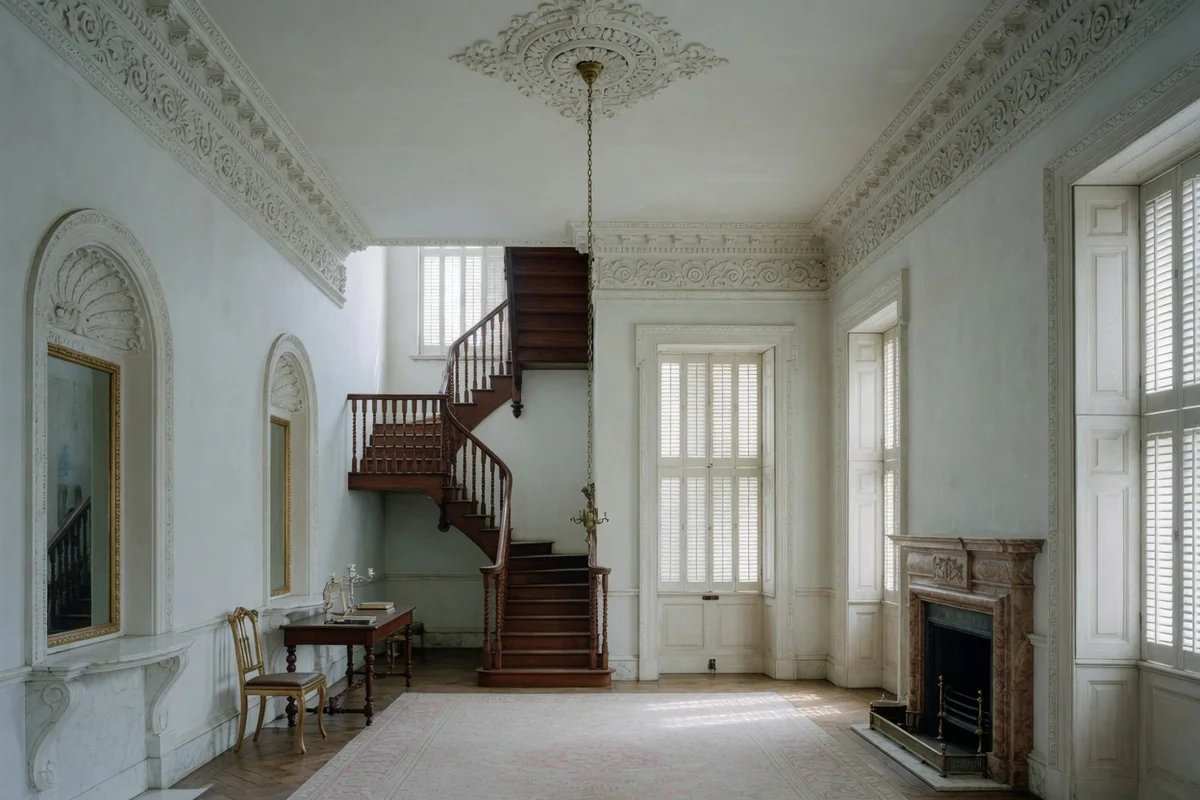
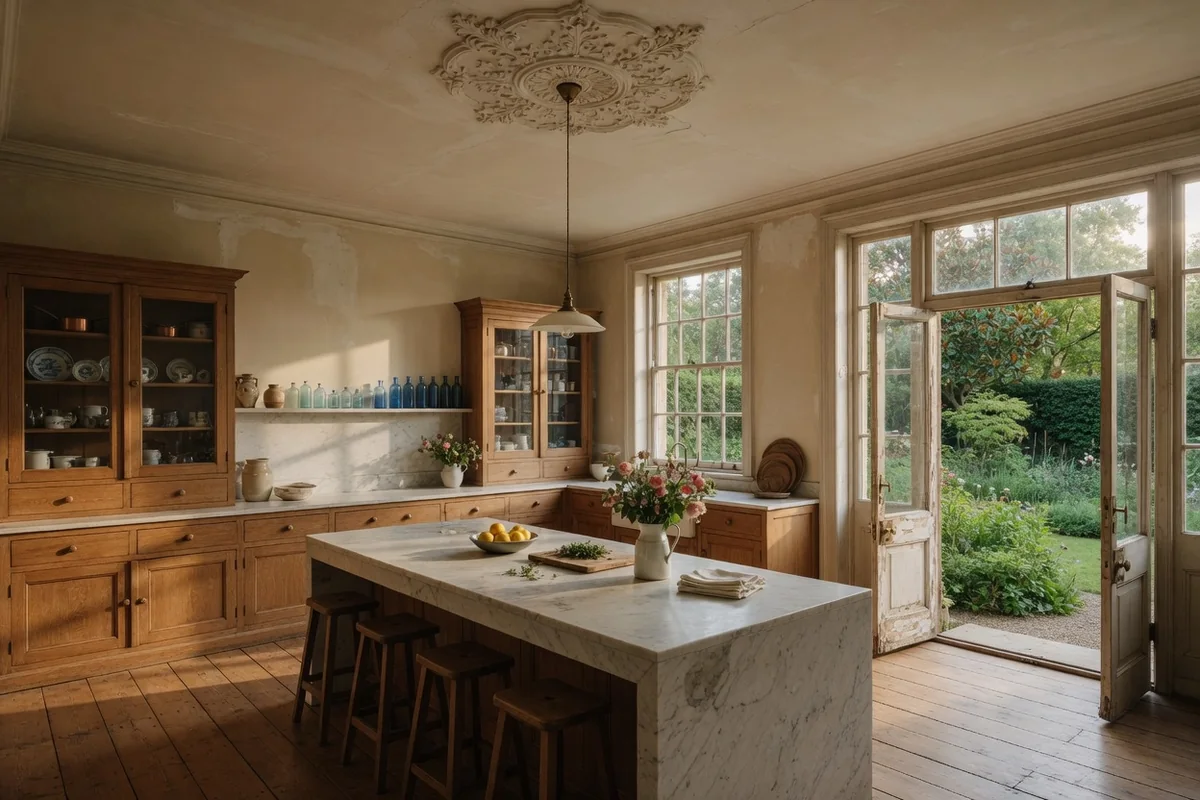
Rooms and elevations typical of Holland Park

Design, joinery and the build, under one contract in Holland Park
The same team stays with the project from the first visit to handover. In-house RIBA chartered architects, interior designers and IStructE chartered structural engineers draw and specify the work. Master joiners make the fitted furniture. Licence to alter, party wall matters, schedules of condition and Building Regulations sign-off sit with the sister practice, Hampstead Chartered Surveyors & Building Consultancy (RICS Firm No. 923064). One JCT contract covers the building work. Electrical installation is certified to BS 7671 by a registered competent person. Completed structural work carries a 12-month defects liability period. Cover is £5M public liability, £10M employers' liability and contractors' all risks cover. Main office: 250 Finchley Road, Hampstead, London NW3 6DN. Central London client consultation address: 2 Eaton Gate, Belgravia, London SW1W 9BJ. Telephone 020 7101 3168.
Licence to alter · Surveying support from the sister practice
What clients have said about the work
I would like to thank Ross and his team for their consistent commitment to quality and their unerring reliability.
We have worked with Ross and his company many times. They are extremely professional and hardworking individuals who can work under any circumstances. There was no variation to the works.
Verified Planning, Estate & Conservation Sources
- Royal Borough of Kensington and Chelsea: Holland Park Conservation Area Appraisal (adopted June 2017)
- Royal Borough of Kensington and Chelsea: Local Plan (adopted July 2024)
- Royal Borough of Kensington and Chelsea: conservation areas
- RBKC, Article 4 Directions in Conservation Areas
- Royal Borough of Kensington and Chelsea: Code of Construction Practice
- Royal Borough of Kensington and Chelsea: Code of Construction Practice (April 2019)
- GOV.UK: Party Wall etc. Act 1996 guidance
- Royal Borough of Kensington and Chelsea: construction site enforcement
Book a free feasibility visit
Request a visit
Completed renovation project examples