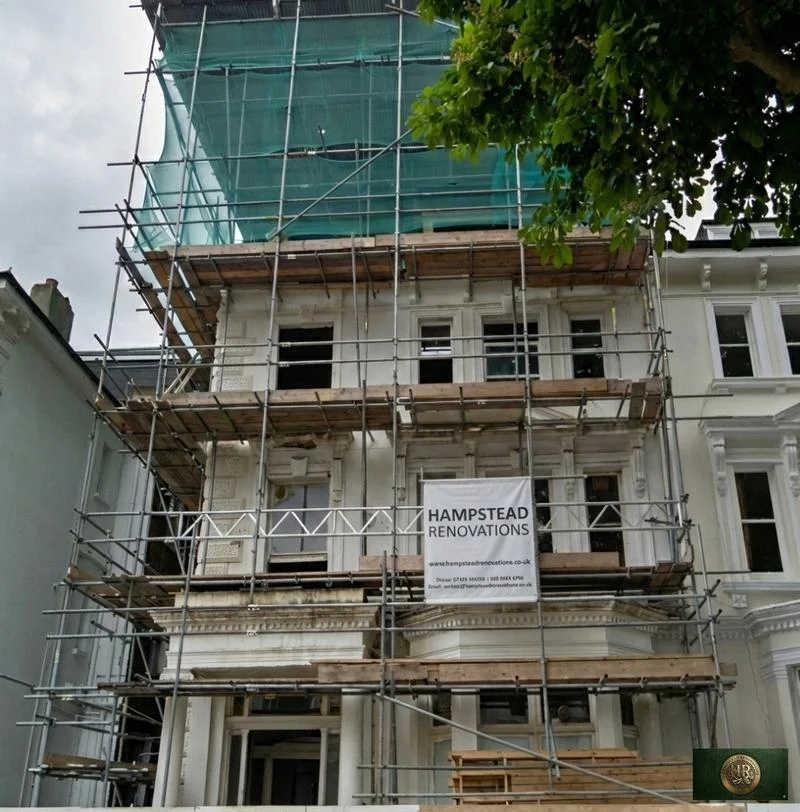
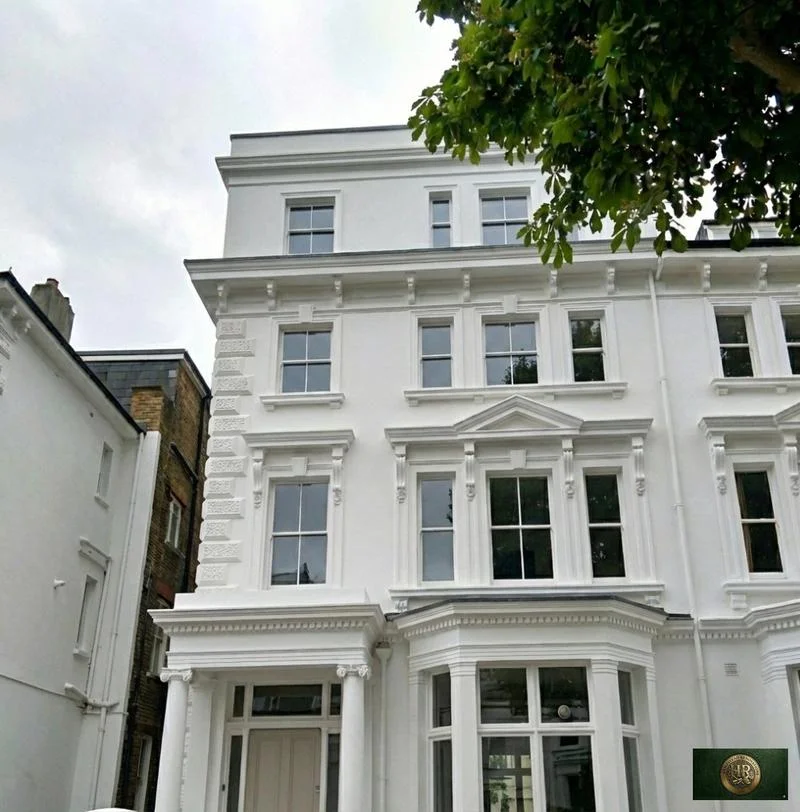
Verified Project Proof
Recent work from named London projects
Photographs linked to their published project records.
Architect-led, gut-to-finish renovation of London's finest houses — Georgian townhouses, Victorian terraces, Edwardian villas, Arts & Crafts homes and contemporary residences. RIBA Chartered architects, RICS surveying support through our sister company, structural engineers and master tradespeople delivering under one fixed-price contract from RIBA Stage 0 brief through to handover and aftercare.
A whole-house refurbishment is the most ambitious project a homeowner will ever commission. Done well, it transforms a tired or compromised property into a residence that performs, breathes and lives the way the address deserves. Done badly, it leaves you with cosmetic finishes laid over the same Victorian galvanised pipework, the same overloaded fuse-board, the same draughty sashes — a house that looks new and behaves old.
Full refurbishment, house renovation, property refurbishment — whatever you call it, this is the page for a complete whole-house programme in London. As an established refurbishment company and design-and-build contractor — architects, structural engineers, surveyors and builders under one roof — we take a tired or compromised property and rebuild it to a single, coherent standard under one fixed-price contract.
Hampstead Renovations was founded to close that gap. We are not a builder who sub-contracts design, nor an architectural practice that hands you a drawing pack and walks away. We are a single integrated studio of RIBA Chartered architects, RICS surveying support through our sister company, MIStructE structural engineers, MCIBSE M&E consultants, interior designers and our own directly-employed core build teams — operating under one JCT fixed-price contract with a single point of accountability. The architect who designed your floor plan walks the site every Tuesday. The estimator who priced your bill of quantities is the same person you call when you want to add a Crittall screen at week eleven.
This is the model the prime-London market has been moving towards for a decade. We have refined it across 103+ residential projects in NW3, NW8, NW1, SW1, SW3, SW7, W1 and W11 — Georgian townhouses on Mayfair garden squares, Italianate villas off Belsize Avenue, brick Victorian terraces in Primrose Hill, Bedford Park Arts & Crafts homes, Lutyens-influenced Edwardians in Hampstead Garden Suburb and contemporary residences in St John's Wood. Each is different. Each is held to the same standard.
Our work is a deliberate inversion of the industry default. We agree the price before we start. We programme to the day. We retain our subcontractors on long-term framework agreements rather than chasing the cheapest tender, which means the plumbing first-fix you receive is from a team whose previous fifty installations are within ten miles of yours. We snag relentlessly. We do not leave site until you are happy.
No two London houses are alike — and a Georgian townhouse, a Victorian terrace and a contemporary new-build each demand a fundamentally different specification. Below are the six typologies that account for the vast majority of our work.
Five-storey London brick stock built around proportional doctrine — basement kitchen, raised piano nobile, principal bedroom floor, secondary bedrooms, attic. Refurbishment requires lime mortar, sash window restoration to BS 644, breathable wall systems and Listed Building Consent for almost every internal alteration.
The defining London house — bay-fronted, with cornicing, plaster ceiling roses, encaustic-tile path, panelled timber doors and 9" solid brick walls. Refurbishment focus: structural opening of the rear ground floor (almost universally), full damp diagnosis, sash overhaul or like-for-like replacement, and a sympathetic services upgrade hidden in floor voids and chases.
Larger, lighter and more generously planned than their Victorian predecessors — typically 4–5 bedrooms with stained glass, bay windows, parquet flooring, oak balustrades and Tudor-revival detailing. Common refurbishment scope: removal of post-war partitioning, mansard or hip-to-gable loft conversion, full-width rear extension with structural opening into existing kitchen.
Voysey, Lutyens and Baillie-Scott legacy — handmade clay tiles, sweeping gables, oak-mullion windows, inglenook fireplaces, hand-finished plaster and a deliberate vernacular roughness. Refurbishment is a restoration discipline first: every replacement detail is sketched, prototyped and matched. Conservation officers in HGS, Bedford Park and Bishops Avenue review almost every external change.
The under-served middle of the London market — solid 9" brick to first floor, render or pebbledash above, often with original metal-framed windows and parquet floors. Refurbishment scope frequently centres on cavity-wall insulation, replacement of asbestos-bearing components (artex, soffits, roof cement), thermal upgrade and total reconfiguration of cellular living rooms into open social space.
Modernist new-builds and architect-designed replacements — large-format glazing, board-marked concrete, oak-clad joinery, exposed steel, MVHR and air-source heat pumps. Refurbishment focus: keeping pace with the technology cycle (smart-home rewires, EV-charging, photovoltaic integration) and updating original specification to current Building Regulations Part L & F.
Comprehensive isn't a marketing word for us — it is the contractual scope. Every line item below is delivered, certified and warranted under the same fixed-price agreement.
RIBA Stage 2–4 design by chartered architects: spatial planning, structural feasibility, daylight modelling, thermal envelope strategy and full GA drawings to 1:50, sectional details to 1:20 and key joinery details to 1:5. We optimise circulation before we touch a finish — opening the rear ground floor, relocating stair cores where viable, creating boot-rooms, utility runs, en-suite bathrooms and a properly resolved primary suite.
MIStructE-led calculations and detailing for steelwork, transfer beams, padstones, lintels, underpinning where required, floor strengthening and roof structural alteration. Building Control submission via your authority of choice (LABC or Approved Inspector) and full Party Wall etc. Act 1996 service of notices, schedules of condition and award negotiation by RICS surveyor through our sister company.
NICEIC-certified rewire to BS 7671 18th Edition (Amendment 2) — new consumer unit with RCBOs throughout, LED architectural lighting circuits with multi-scene dimming, UK and EU sockets, Cat6a structured cabling, Wi-Fi 6 access points, EV charging supply, fire and CO detection to BS 5839-6, AV pre-wire and full smart-home infrastructure (Lutron RA2 / Crestron / Control4 specification on request).
Complete replumb removing lead, galvanised steel and ageing copper. New high-efficiency condensing boiler or air-source heat pump, unvented mains-pressure hot water cylinder (typically Megaflo 200–300L), zoned heating with TRVs or modulating thermostats, underfloor heating to ground floor (8mm pipe centres in wet areas), and stainless-steel pipework with brass fittings to specification. Gas Safe certified.
Fabric-first approach: roof insulation upgrade (270mm mineral wool or 150mm PIR depending on zone), suspended-floor insulation with insect-proof mesh, internal wall insulation (Pavadry, IQ-Therm or wood-fibre on heritage buildings to maintain breathability), and acoustic separation between floors using resilient bar and dense rock-wool. SAP and Energy Performance Certificate uplift modelled at design stage.
In-house kitchen design with bespoke cabinetry made by our framework joinery partners in Hertfordshire and Norfolk — solid timber carcasses, hand-painted or fully-veneered finishes, and your choice of Miele, Sub-Zero & Wolf, Gaggenau or Liebherr appliances. Stone selection from our specified yards in Battersea and Park Royal — book-matched marble, dolomite, quartzite, sintered surfaces (Dekton, Neolith) or honed limestone.
Full waterproofing tanking (BAL WP1 or Schlüter-KERDI) to all wet zones, electric or hydronic underfloor heating, wall-hung sanitaryware (Duravit, Villeroy & Boch, Catalano), brassware to specification (Vola, Dornbracht, Lefroy Brooks, Drummonds), bespoke vanity joinery, and frameless shower enclosures with low-iron glass. Steam rooms, sauna integration and freestanding cast-iron baths to client brief.
Engineered or solid timber boards (10mm wear layer, 220mm width as standard, up to 320mm on request) — European oak, Douglas fir, walnut, ash, smoked or fumed finishes, oil or hardwax-oil sealed. Natural stone laid on heated screed: Burlington slate, Yorkshire stone, Carrara, French limestone (Dordogne, Massangis), or porcelain to slab format (1500×3000) with rectified joints to 2mm.
Our joinery shop produces every fitted element: floor-to-ceiling wardrobes, walk-in dressing rooms, library shelving, alcove cabinetry, window seats, panelling, internal doors (typically 5-panel solid core, 44mm with concealed hinges), skirting and architrave profiles drawn to match your building's period (or detailed plain for contemporary work).
Original cornicing, ceiling roses, dado rails, panelled doors, sash windows, encaustic floors, fireplaces and balustrades — repaired by traditional plasterers, joiners and conservators on our long-standing roster. Where features are missing, we draw, mould and reproduce to period accuracy. Conservation Area and Listed Building Consent applications managed in-house.
Premium specifications: Farrow & Ball, Paint & Paper Library, Edward Bulmer Natural Paint, Little Greene. Five-coat decoration to all walls and ceilings — primer, two undercoats, two finish coats — with full sanding between. Specialist finishes: lime wash, Venetian polished plaster (Marmorino, Stucco Veneziano), wood veneer panelling and fabric-lined walls.
A two-stage snagging process — internal pre-handover walk by our project manager and quantity surveyor, then a joint walk with you. Defects rectified before completion, not after. 12-month defects-rectification period and 10-year workmanship warranty (insurance-backed where required). One free post-handover service visit at 6 months.
We work to the RIBA Plan of Work 2020 — the discipline used by the country's leading architectural practices. Below, what each stage means for your project, and what we deliver to you at the end of it.
Initial consultation at our Finchley Road studio or your home. We discuss the way you live, the rooms that don't work, the objects you've collected, the way the light moves. We talk realistic budgets — not the inflated "guides" the trade press promotes — and we agree the broad shape of the brief. No charge, no obligation.
Measured survey of the existing building (laser-scanned to 3mm accuracy), CGI point-cloud model, planning and conservation review, asbestos screen if pre-2000, drainage CCTV, and a written feasibility report covering structural opportunity, planning risk and outline cost band. You receive a 30–50 page document at the end of this stage.
Two distinct concept directions developed and presented at design review — plans, sections, elevations, materiality boards and 3D walk-through. We then converge on a single preferred direction and refine. Full-resolution photoreal CGIs of two key rooms produced at the end of this stage.
If your project requires Planning Permission, Listed Building Consent, Conservation Area Consent or Permitted Development Lawful Use Certificate, we prepare and submit the application, manage statutory consultee correspondence, and respond to any conditions. Building Regulations submission (Full Plans) follows in parallel.
The drawing pack that the trades will build from: 1:50 plans, 1:20 sections, 1:5 details, full structural calculations, mechanical and electrical schematics, schedule of finishes, joinery elevations, kitchen and bathroom GAs and a fully itemised written specification of typically 80–140 pages.
JCT Intermediate or Standard Building Contract signed. Site set-up, scaffolding, asbestos removal (if required), strip-out, structural works, first-fix, second-fix, decoration, installation. Weekly written progress report with photography. Architect site visit weekly. Quantity surveyor cost report monthly. You retain full visibility throughout.
Pre-handover deep clean, full M&E commissioning, joint snagging walk with you, certification pack (electrical, gas, structural, building control completion), O&M manual, key handover. Where you have requested aftercare furnishing — sofas, beds, art hanging, curtains — we coordinate that as a separate completed package.
12-month defects rectification — anything that emerges as the building "settles" is corrected free of charge. 6-month complimentary service visit. Workmanship warranty on the build for 10 years. The architect remains your point of contact — most of our clients return to us for a second project within five years.
Most refurbishment websites quote a single "from" price. We don't, because the answer to "what does a London house refurbishment cost?" depends entirely on the specification you choose. Here is exactly how the four tiers we offer differ — line by line.
As a guide, a full house refurbishment in London typically costs £500–£700 per square metre at our Heritage (standard spec) tier, £800–£1,200/sqm at Considered (high-end), £1,300–£1,800/sqm at Connoisseur (premium) and £1,900–£2,400+/sqm at Atelier (super-prime), excluding VAT. These are guide ranges only — your fixed written price follows a survey, an agreed scope and a confirmed specification.
| Tier | Specification | Guide rate |
|---|---|---|
| Heritage | Standard Spec | £500–£700/sqm |
| Considered | High-End | £800–£1,200/sqm |
| Connoisseur | Premium | £1,300–£1,800/sqm |
| Atelier | Super-Prime | £1,900–£2,400+/sqm |
For a representative high-end (Considered tier) refurbishment of a 200 sqm Victorian terrace at £1,000/sqm — total contract £200,000. Here is the honest breakdown of where every pound is spent.
A house refurbishment is, before anything else, a technical exercise. Below is what is actually being designed, calculated and installed behind the walls.
More than 60% of our houses sit within a Conservation Area, and around one in four is statutorily Listed. Heritage work is not an obstacle for us — it is an embedded discipline.
Application drawings, heritage statement, schedule of works, photographic survey and pre-application meetings with Camden, Westminster, RBKC and City of London conservation officers managed in-house. We submit, we negotiate, we secure consent.
Article 4 directions, Permitted Development restrictions, design rationale and material justification documents prepared to the standard required by the most restrictive London authorities — Hampstead, Belgravia, Mayfair, Kensington Palace.
Hand-cut Accoya or sapele sash windows, draught-stripped to AECB standard, traditional weights restored, slimline 11mm Histoglass IGU where consent permits. Counterweighted, parting-bead detailed, factory-painted.
Hot-mixed lime plaster, NHL 2 / NHL 3.5 lime mortar pointing, hair plaster on lath. Carbonation cure properly understood — no cement contamination, no gypsum on heritage walls. Specialist plasterers with English Heritage experience.
Existing cornice profiles cast in plaster of Paris, hand-modelled by trained sculptors where original is lost. Centre roses, dado rails, picture rails, panel mouldings — all reproduced to period accuracy with traceable photographic evidence.
Original Victorian Minton tile paths and entrance halls — surveyed, lifted where damaged, individually replaced with Maw & Co reproductions. Minor cracks repaired with epoxy resin colour-matched to original glaze.
Reinstatement of original Victorian and Georgian chimneypieces — sourced through specialist dealers in Pimlico and Surrey, or hand-carved to original dimensions. Cast-iron register grates restored, hearths laid in stone or slate, chimneys re-lined to current Building Regs J.
Panelled doors (typically 4 or 6 panel solid pine, 44mm), period-correct skirting (ogee, torus, lambs-tongue), architraves to match, dado rail reinstatement, picture rail, and bespoke staircase balustrades — drawn from existing or comparable nearby properties.
London Stock matched to original through brick library samples, lime-mortar repointing in flush-struck or weather-struck profile, render repair using sand-and-lime mix. Lichen and pollution staining cleaned by JOS or DOFF system — never grit-blasted.
A representative programme for a 180 sqm three-bedroom Victorian terrace at Considered specification. Yours will differ — but this is what a properly run refurbishment looks like in real time.
There are perhaps fifteen design-and-build practices in London capable of delivering at this standard. Here is what makes us one of them.
One JCT agreement covering design, statutory approval, structural, M&E and finishes. No cost-plus surprises, no inflated provisional sums.
The RIBA Chartered architect who designed your project walks the site every Tuesday for the entire build. Decisions made in person, never via email tag.
Professional cost tracking can be coordinated for variations and monthly valuations, with RICS surveying support available through our sister company where appropriate. You see exactly what you've paid for.
Our core carpenters, plumbers, electricians and decorators are PAYE staff — not gig labour. Continuity of standard from project to project.
Successful applications across Camden, Westminster, RBKC, Kensington and the City. Conservation officers know our practice by name.
Public liability cover at £10M, well above industry standard. Required cover for prime-London freeholders.
Insurance-backed workmanship warranty (LABC, Premier or Build-Zone) — your investment protected long after the defects period closes.
One free service visit at six months. A 24-hour emergency line for live defects. Most clients return to us for a second project within five years.
For the most important local versions of this service, start with our house refurbishment pages across North London, Central London and South West London, including Mayfair, Belgravia, Knightsbridge, Chelsea, Kensington and South Kensington.
Period house refurbishment, conservation-aware planning and full-home upgrades for NW3 properties.
Whole-house refurbishment for stucco villas, family homes and heritage-sensitive Belsize Park properties.
High-spec refurbishment for villas, townhouses and substantial period homes across NW8.
Heritage-led refurbishment for Georgian, Victorian and Edwardian homes across Highgate N6.
Whole-house refurbishment for Victorian terraces, stucco houses and conservation area homes.
High-quality refurbishment for villas, terraces and substantial family homes around W9.
Period house refurbishment for terraces, villas and conservation area homes around NW1.
Whole-house refurbishment for Victorian and Edwardian homes across West Hampstead NW6.
Victorian and Edwardian house refurbishment for conservation area homes around NW5.
Conservation-sensitive refurbishment for Arts and Crafts houses and family homes in NW11.
Period house and townhouse refurbishment for Swiss Cottage properties around NW3.
Period house refurbishment for Victorian and Edwardian homes across Crouch End N8.
Period house refurbishment for Edwardian, Victorian and family homes across Muswell Hill N10.
Victorian and Edwardian house refurbishment for compact plots, terraces and conservation areas.
Georgian townhouse and period house refurbishment with conservation-sensitive detailing in N1.
Period house refurbishment for Georgian, Victorian and family homes across Highbury N5.
Georgian townhouse and period house refurbishment with conservation and listed-building care.
Family house refurbishment for detached, semi-detached and period homes around NW11.
Prime Central London townhouse and house refurbishment with heritage-sensitive detailing.
Townhouse refurbishment for stucco terraces, listed buildings and conservation area homes.
High-spec house refurbishment for prime terraces, mews houses and heritage homes.
Whole-house refurbishment for Chelsea terraces, townhouses and conservation area properties.
Period house refurbishment for villas, terraces and family homes across Kensington.
Conservation-sensitive refurbishment for South Kensington townhouses and period homes.
A serious house refurbishment succeeds when structure, services, layout, joinery and finishes are planned as one coordinated sequence.
Hampstead Renovations coordinates whole-house refurbishments from measured survey and feasibility through to structural openings, rewiring, plumbing, heating, kitchens, bathrooms, bespoke joinery and final decoration. The value for clients is not only the finish, but the order in which the work is resolved: strip-out, intrusive surveys, design decisions, engineering input, procurement, first fix, plastering, fitted furniture and handover are sequenced before site pressure forces rushed decisions or compromise the specification.
For comparable proof, review our whole-house refurbishment case study, then compare how related scopes such as kitchen renovation and bathroom renovation are integrated into the wider programme. If you are testing feasibility, use the renovation cost calculator before booking a detailed survey.
Whole-house refurbishment decisions are easier when you can compare the proposed scope with real project evidence rather than a generic room-by-room list. Start with our whole-house refurbishment case study, then browse the wider case-study hub to see how structure, services, kitchens, bathrooms, joinery and finishes are coordinated as one programme. The point is not to copy another property, but to test whether your own brief needs design, structural input, procurement control or a staged build plan before pricing is fixed. If you want to discuss which evidence is most relevant to your home, contact Hampstead Renovations with the property type and intended scope. For survey-led due diligence before renovation, see surveying support before renovation.
Premium-postcode projects with comparable scope, planning context and finishing standards.
Five-storey period house: full refurbishment with basement conversion, extension and loft works.
View case study →Grade II listed penthouse duplex: refurbishment with roof reconstruction and structural steel works.
View case study →Four-storey Victorian townhouse: complete renovation with structural reconfiguration, period detail restoration, bespoke kitchen and three new bathrooms.
View case study →Double-storey rear/side extension and loft conversion with full refurbishment programme.
View case study →“I would like to thank Ross and his team for their consistent commitment to quality and their unerring reliability. They delivered our property to specification and on time, proving to be an extremely effective, experienced, and proactive contractor.”
“We have worked with Ross and his company many times. They are extremely professional and hardworking individuals who can work under any circumstances. There was no variation to the works.”
Book a no-obligation consultation at our Finchley Road design studio or in your home. The first meeting is free, lasts 60–90 minutes, and concludes with an honest indication of feasibility, programme and budget band. No salespeople. No pressure.
Site visit · feasibility assessment · outline cost estimate · programme indication. No obligation. Saturday appointments available.
Priority local house refurbishment pages for detailed area-specific guidance.
The same design-build team delivers house refurbishment in these prime London neighbourhoods — each guide covers the local planning picture, typical properties and costs:
Photographs linked to their published project records.
House Refurbishment: view substantial published case studies →