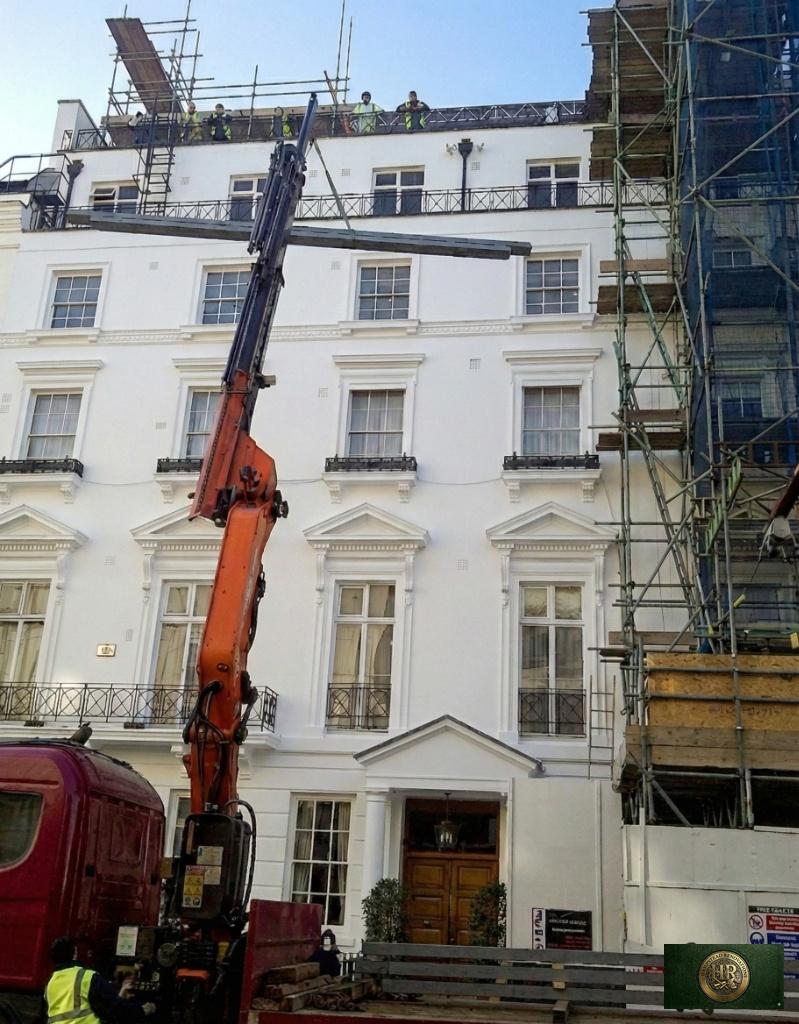
Kensington is where London's most prestigious residential architecture meets the strictest conservation controls. Our architects understand every garden square, every RBKC planning constraint, and every detail that makes W8 one of the most demanding — and extraordinary — places to renovate in England.
Kensington has been a seat of royal and aristocratic life since William III moved the court to Kensington Palace in 1689. The neighbourhood that grew up around the Palace — across Campden Hill, along Holland Park, and down through the garden squares to Kensington High Street — became one of the most prestigious residential addresses in the world. It remains so today: a landscape of white stucco terraces, grand Victorian houses rising five and six storeys, immaculate garden squares, and discreet mews tucked behind the principal streets.
The housing stock reflects Kensington's status. Phillimore Gardens and Campden Hill Road are lined with vast detached and semi-detached houses that were built for the Victorian upper middle class — properties of extraordinary scale with double-height reception rooms, sweeping staircases, and elaborate plasterwork. Kensington Square, one of London's oldest, retains its intimate Georgian character. Edwardes Square and De Vere Gardens exemplify the classic London garden square tradition. The mansion flats along Kensington High Street and Palace Gate brought a different form of grandeur — generously proportioned lateral apartments designed for wealthy residents who preferred service to the obligations of a house.
For homeowners in W8, this architectural heritage creates both extraordinary potential and exacting constraints. The Royal Borough of Kensington and Chelsea is among London's strictest planning authorities. Conservation areas — De Vere, Kensington, Kensington Court, Edwardes Square, Holland Park — cover virtually the entire neighbourhood. Conservation officer involvement is expected on most significant projects. RBKC's basement policy limits excavation and demands rigorous engineering evidence. Every renovation in Kensington demands specialist knowledge of what the borough will accept and the design quality to match the setting.
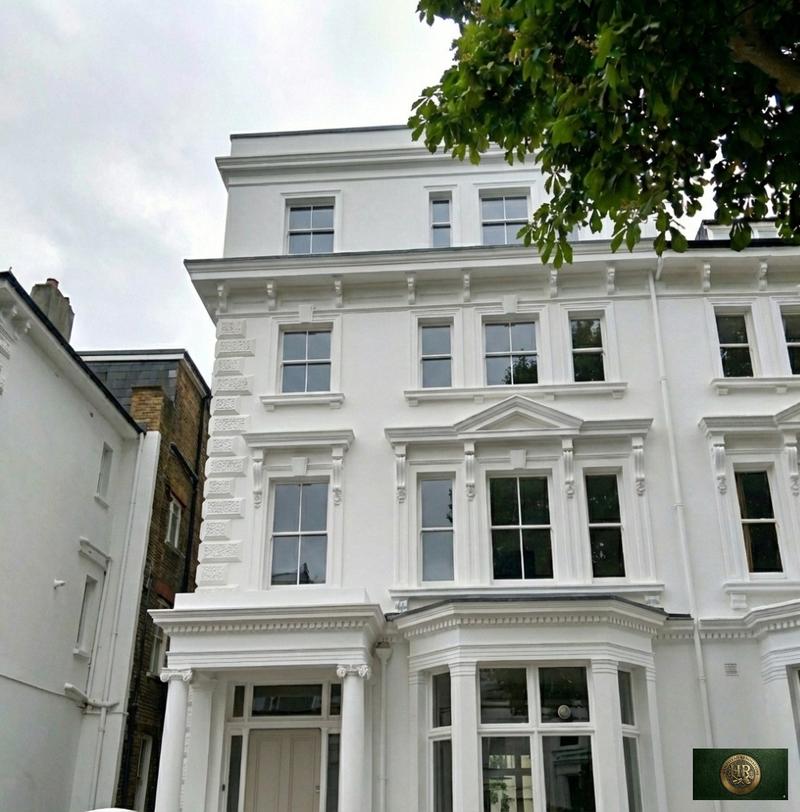
From grand stucco terrace restoration to multi-level basement extensions, every service shaped by deep knowledge of Kensington's conservation areas and RBKC's planning requirements.
Kensington's most transformative service. Multi-level basement dig-downs beneath grand Victorian houses, managed under RBKC's strict basement policy with full structural engineering and waterproofing.
Complete property transformation of Kensington's grand houses — from five-storey stucco terraces to mews houses. Structural work, all trades, and project management for the most ambitious W8 renovations.
Period feature restoration for Kensington's finest houses. Stucco facade repair, ornamental plasterwork, sash windows, and the balance between preservation and contemporary living in W8.
Rear and side extensions to Kensington's period houses. Conservation area design expertise for RBKC approval in W8.
Dormer and mansard conversions respecting Kensington's rooflines, ridge heights, and conservation area sightlines.
Bespoke kitchen design for Kensington's grand houses. Period proportions, contemporary performance, ultra-prime finishes.
Victorian restoration and contemporary luxury. Marble, natural stone, and bespoke joinery for W8 properties.
RIBA architects. Conservation area applications, 3D visualisation, construction drawings for RBKC submissions.
Chartered engineers. Wall removal, steel beams, underpinning, and foundations for Kensington's period properties.
Combining adjacent flats or reconfiguring Kensington mansion blocks to create grand lateral living spaces across entire floors.
RBKC planning expertise. Conservation area, listed building, and basement policy applications for W8 properties.
Grade I, II* and II listed property expertise. Listed Building Consent managed in-house for Kensington's heritage properties.
Specialist stucco restoration for Kensington's iconic white-fronted terraces. Lime render, moulding repair, and repainting.
Full Party Wall Act management through our RICS chartered surveying practice. Essential for Kensington's terraced properties.
RICS condition surveys via Hampstead Chartered Surveyors & Building Consultancy. Pre-purchase and pre-renovation.
Kensington falls under the Royal Borough of Kensington and Chelsea — one of London's most demanding planning authorities. The neighbourhood is covered by multiple overlapping conservation areas including De Vere, Kensington, Kensington Court, Edwardes Square, and Holland Park. Conservation officer involvement is the norm, not the exception, on significant projects in W8. Design quality, material authenticity, and respect for the established streetscape character are non-negotiable requirements.
RBKC's basement policy is particularly relevant in Kensington, where many of the grand houses have been the subject of ambitious basement excavations. The policy limits basements to a single storey beneath the original building footprint and requires detailed construction management plans, structural method statements, and impact assessments. Our engineers and architects have navigated numerous RBKC basement applications and understand precisely what the borough requires for approval.
View RBKC planning portal →De Vere, Kensington, Kensington Court, Edwardes Square and Holland Park conservation areas cover virtually all of W8. Character preservation is mandatory.
RBKC conservation officers are actively involved in most significant Kensington projects. Early engagement and high design quality are essential for approval.
RBKC limits basements to single-storey, beneath the original footprint only. Structural method statements and construction management plans required.
RBKC offers pre-application services. Essential for listed buildings, basement proposals, and sensitive conservation area schemes in W8.
Realistic cost ranges for the most common project types in Kensington. RBKC conservation requirements, ultra-prime specification standards, and basement policy compliance typically add 20–30% to standard London pricing.
Three centuries of Kensington's buildings, garden squares, and the royal presence that shaped one of London's most distinguished residential neighbourhoods.
How William III's decision to move the court westward in 1689 transformed a rural village into London's most aristocratic residential quarter.
A guide to the architectural character that defines Kensington's most important streets, from Phillimore Gardens to De Vere Gardens and Campden Hill.
The story behind the multi-level basement trend in Kensington's grand houses — and how RBKC's policy now governs what homeowners can build beneath their properties.
Selected projects from across London.

Five-storey house extension, full basement conversion, loft conversion and complete refurbishment within Belsize Park’s conservation area.
View Case Study →
Penthouse duplex refurbishment and roof reconstruction within a Grade II listed setting, unifying the top two levels into seamless luxury living.
View Case Study →
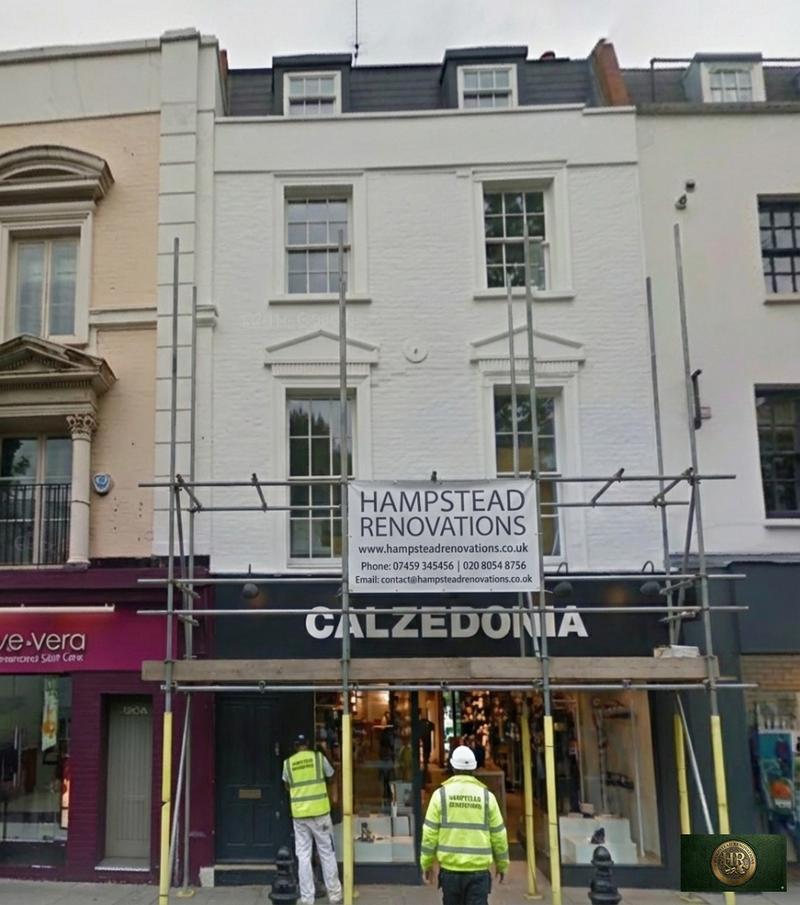
Office-to-retail and residential conversion delivering the Calzedonia store fit-out with three high-spec apartments above, preserving the original façade.
View Case Study →Use these area-specific guide pages to move from broad research into the main build routes people compare in Kensington W8.
Yes. Kensington W8 is covered by multiple overlapping conservation areas including De Vere, Kensington, Kensington Court, Edwardes Square, and Holland Park. Together they cover virtually the entire neighbourhood. Almost all external works require planning permission and must preserve or enhance the area's established character. View RBKC conservation area guidance →
Yes, but RBKC's basement policy is among the strictest in London. Basements are limited to a single storey beneath the original building footprint. You'll need a structural method statement, construction management plan, and flood risk assessment. Our engineers have navigated numerous RBKC basement applications in W8 and understand the policy requirements intimately.
Full refurbishment in W8 typically costs £550–£1,100 per square metre, depending on specification and the extent of period feature restoration. Kensington's grand houses — often 4,000–8,000+ sqft across five or six storeys — mean total project values frequently exceed £1M. All our projects are delivered on fixed-price contracts.
A lateral conversion combines two or more adjacent properties — or adjacent flats within a mansion block — into a single, larger residence on one floor. This is a popular approach in Kensington's mansion flats and terraced houses, creating expansive lateral living spaces. Planning and structural engineering expertise are essential.
Yes, but it requires Listed Building Consent in addition to planning permission. Kensington has numerous listed properties, particularly around Kensington Square, Phillimore Gardens, and Campden Hill. Our architects specialise in listed building applications and have extensive experience with RBKC's conservation officers.
Yes. Our in-house RIBA architects manage all planning, Listed Building Consent, and basement policy applications from initial feasibility through to approval. We have extensive experience with RBKC's planning team, their conservation area requirements, and their conservation officer review processes.
Our initial consultation is free and carries no obligation. Discuss your Kensington project with our RIBA architects, explore material selections, and understand what RBKC will permit for your property.