Hammersmith sits where the Thames curves south and London's grandest riverside terraces meet quiet residential streets. Our architects understand every LBHF conservation area, every riverside planning constraint, and the careful balance between period character and modern living that W6 demands.
Hammersmith is a place of contradictions that somehow resolve into one of West London's most appealing neighbourhoods. The roar of traffic around Hammersmith Broadway gives way, within a few hundred yards, to the silence of Upper Mall and Lower Mall — a stretch of Georgian riverside houses that ranks among London's most beautiful domestic architecture. Hammersmith Bridge, the ornate suspension bridge designed by Joseph Bazalgette in 1887, frames views up and down the Thames that have barely changed in a century.
Behind the riverside, the residential streets tell the story of Hammersmith's growth from a Thames-side hamlet to a prosperous Victorian suburb. Brackenbury Village — the grid of streets south of Goldhawk Road — is a textbook example of late-Victorian terrace housing: bay-fronted, generously proportioned, and now among the most sought-after streets in W6. Around Ravenscourt Park, larger Edwardian and Victorian houses line quiet, tree-planted avenues. St Peter's Square, an early Victorian development of elegant succeed houses around a private garden, offers a taste of Belgravia west of Hammersmith Broadway.
For homeowners in W6, the challenge is to honour this varied architectural heritage while creating homes that work for contemporary life. The London Borough of Hammersmith and Fulham takes a moderate but considered approach to planning — riverside properties and conservation area houses face tighter controls, while the borough's general planning policies offer reasonable scope for sensitive extensions, loft conversions, and internal remodelling. Our architects understand what LBHF will support and how to design schemes that respect Hammersmith's character while maximising space and light.
From Georgian riverside refurbishment to Victorian terrace extensions, every service shaped by deep knowledge of Hammersmith's conservation areas and LBHF's planning requirements.
Rear and side extensions to Hammersmith's Victorian terraces and Edwardian semis. Conservation area design expertise and LBHF planning management for W6 properties.
Complete property transformation from shell to finished home. Structural work, all trades, and project management for Hammersmith's most ambitious renovations.
Dormer and mansard loft conversions for Hammersmith's Victorian terraces. Adding bedrooms and bathrooms while respecting rooflines and conservation area sightlines.
Riverside Georgian house specialists. Period feature restoration, sash windows, lime plaster, and sympathetic modernisation for W6's finest properties.
Cellar conversions and underpins beneath Hammersmith's Victorian terraces. Structural engineering and waterproofing for W6 ground conditions.
Bespoke kitchen design for Hammersmith's period homes. Open-plan rear extensions with kitchen-diners a particular speciality in W6.
Victorian restoration and contemporary luxury. Natural stone, bespoke joinery, and period-sensitive design for Hammersmith properties.
RIBA architects. Conservation area applications, 3D visualisation, construction drawings for LBHF submissions.
Chartered engineers. Wall removal, steel beams, underpinning, and foundations for Hammersmith's period properties.
Period sensitivity with contemporary comfort. Material selection, space planning, and furniture specification for W6 homes.
LBHF planning expertise. Conservation area, permitted development, and riverside property applications managed in-house.
Cornicing, ceiling roses, original fireplaces, decorative tiling, and timber floors. Restoring the character of Hammersmith's Victorian and Georgian interiors.
Specialist repair and draught-proofing of original timber sash windows. Slim-profile double glazing where conservation areas permit.
Full Party Wall Act management through our RICS chartered surveying practice. Essential for Hammersmith's terraced and semi-detached properties.
RICS condition surveys via Hampstead Chartered Surveyors & Building Consultancy. Pre-purchase and pre-renovation.
Hammersmith falls under the London Borough of Hammersmith and Fulham, which takes a moderate but considered approach to residential planning. Unlike some inner-London boroughs, LBHF generally supports well-designed extensions and alterations — but properties within conservation areas or on the riverside face significantly tighter controls. The borough's four main conservation areas in Hammersmith — Hammersmith Mall, Bradmore, St Peter's Square, and Ravenscourt Park — protect the area's most architecturally significant streets.
For Hammersmith's Victorian terraces, rear extensions under permitted development rights remain one of the most popular and cost-effective ways to add space. Loft conversions with rear dormers are generally achievable outside conservation areas. Riverside properties, however, are subject to more restrictive policies that protect the Thames setting, views, and the character of the Mall's Georgian frontages. Our architects have extensive experience with LBHF's planning team and understand where the boundaries of the permissible lie.
View LBHF planning portal →Hammersmith Mall, Bradmore, St Peter's Square, and Ravenscourt Park conservation areas protect W6's most important streets and riverside character.
Victorian terraces outside conservation areas benefit from PD rights for rear extensions up to 6m (detached) or 3m (terraced/semi). Loft conversions with rear dormers also generally permitted.
Properties on Upper Mall and Lower Mall face additional scrutiny. Thames-side setting, views, and the Georgian character of the Mall are protected by specific policies.
LBHF offers pre-application services. Recommended for conservation area schemes, riverside properties, and any works requiring planning permission in W6.
Realistic cost ranges for the most common project types in Hammersmith. Conservation area and riverside properties typically attract a 10–20% premium for specialist design and materials.
From Georgian riverside houses to Victorian terraces and the bridge that defined a neighbourhood — the architectural story of Hammersmith.
How Upper Mall and Lower Mall became one of London's most beautiful riverside walks, from the 18th-century merchants who built here to the rowers and pub-goers who keep it alive today.
A guide to the architectural character of Hammersmith's most desirable streets — bay windows, decorative brickwork, original tiling, and the art of the sensitive rear extension.
The story of Joseph Bazalgette's 1887 suspension bridge — its engineering ingenuity, its uncertain future, and how it shaped Hammersmith's identity as a riverside neighbourhood.
Selected projects from across London.

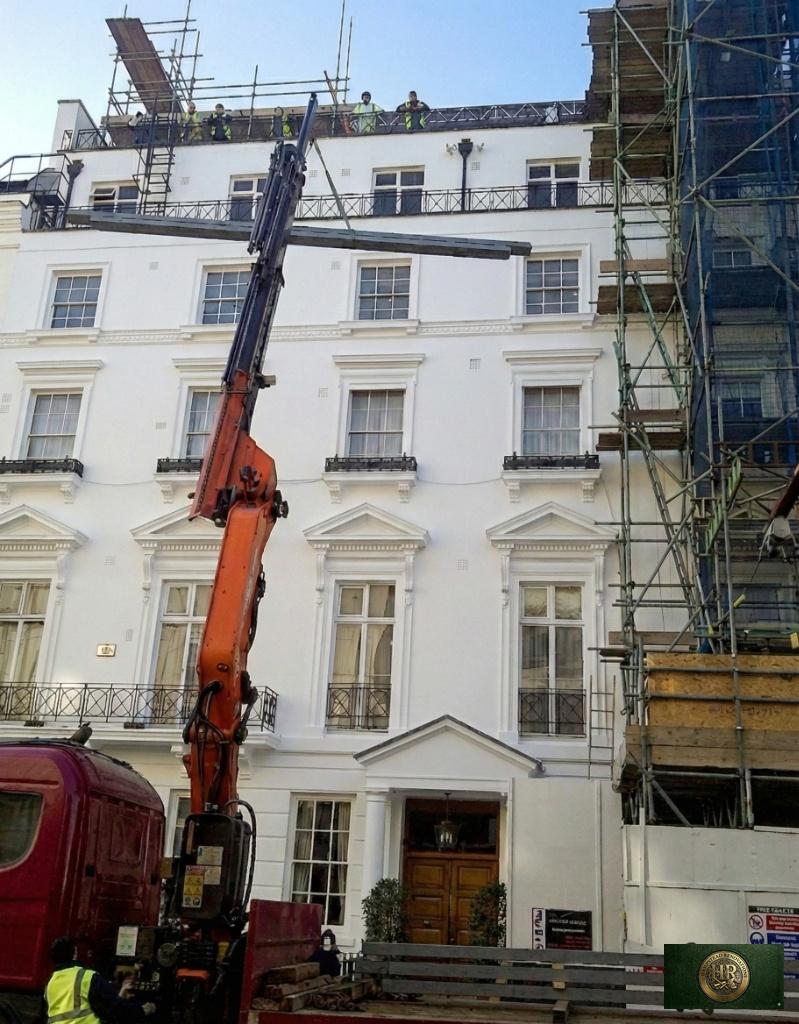
Five-storey house extension, full basement conversion, loft conversion and complete refurbishment within Belsize Park’s conservation area.
View Case Study →
Penthouse duplex refurbishment and roof reconstruction within a Grade II listed setting, unifying the top two levels into seamless luxury living.
View Case Study →
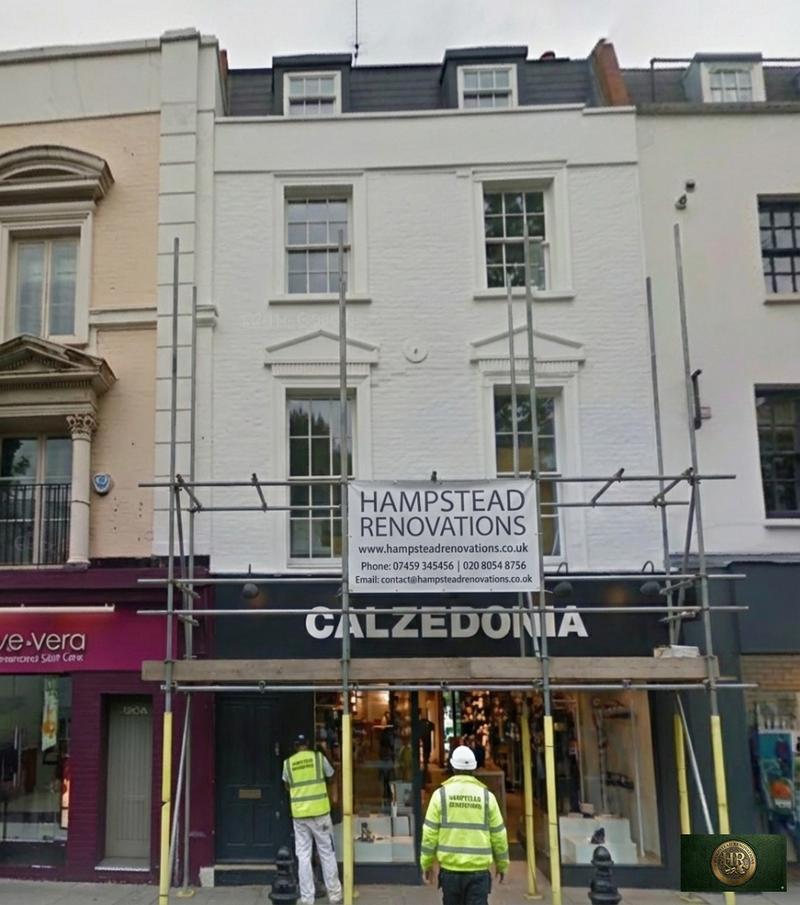
Office-to-retail and residential conversion delivering the Calzedonia store fit-out with three high-spec apartments above, preserving the original façade.
View Case Study →Use these area-specific guide pages to move from broad research into the main build routes people compare in Hammersmith W6.
Parts of Hammersmith are. The borough has four main conservation areas in W6: Hammersmith Mall (covering the riverside), Bradmore, St Peter's Square, and Ravenscourt Park. Properties within these areas face additional planning controls on external alterations. Many residential streets outside conservation areas benefit from standard permitted development rights. View LBHF conservation area maps →
In most cases, yes. Victorian terraces outside conservation areas can typically be extended under permitted development rights — up to 3m for terraced houses. Within conservation areas, planning permission is required but LBHF generally supports well-designed extensions that respect the character of the property and streetscape. Our architects design extensions that maximise your chances of approval.
Loft conversions in W6 typically cost £55,000–£120,000 depending on the type (rear dormer, L-shaped dormer, or mansard) and specification. Victorian terraces in Brackenbury Village and around Ravenscourt Park are particularly well suited to loft conversions. All our projects are delivered on fixed-price contracts.
Riverside properties on Upper Mall and Lower Mall face more restrictive planning policies due to the conservation area designation and the Thames-side setting. External works must preserve the Georgian character, and new development that affects views of or from the river is closely scrutinised. Our architects have specific experience with riverside properties and LBHF's requirements.
It depends on whether your property is in a conservation area and the size of the extension. Outside conservation areas, single-storey rear extensions up to 3m (terraced) or 4m (semi-detached) can typically be built under permitted development. Within conservation areas, planning permission is usually required. Our architects assess your specific situation during the initial consultation.
Yes. Our in-house RIBA architects manage all planning and conservation area applications from initial feasibility through to approval. We have extensive experience with LBHF's planning team, their conservation area requirements, and the specific policies that apply to Hammersmith's riverside and residential streets.
Our initial consultation is free and carries no obligation. Discuss your Hammersmith project with our RIBA architects, explore material selections, and understand what LBHF will permit for your property.