Mayfair is the apex of London's residential hierarchy — the Grosvenor Estate's masterpiece, where Georgian squares and cobbled mews streets have housed dukes, ambassadors, and press barons since the 18th century. Bond Street, Mount Street, and Berkeley Square define an area of extraordinary wealth, exclusivity, and architectural magnificence. Our architects deliver renovations at the very highest level of craftsmanship that this unparalleled address demands.
Mayfair was developed by the Grosvenor family from 1720, creating London's most prestigious residential quarter over a period of 40 years. Grosvenor Square — named for the family — was the centrepiece, surrounded by a grid of streets containing some of the finest Georgian architecture in England. The area takes its name from the May Fair held annually on the site from 1686, which was suppressed in 1750 as the neighbourhood's aristocratic residents objected to its noise and disorder. That suppression captures something essential about Mayfair: a quarter that has always insisted on its exclusivity.
The housing stock is defined by the Grosvenor Estate's continuing ownership of much of the freehold. Grand Georgian townhouses on Grosvenor Square, Upper Brook Street, and South Audley Street; the charming scale of Carlos Place and Bourdon Street; and throughout, a network of cobbled mews — Reeves Mews, Culross Street, Rex Place — where former carriage houses command prices that would seem extraordinary anywhere else. The entire quarter is held on Grosvenor Estate leases, meaning renovation requires both Westminster planning consent and full estate approval.
For leaseholders in W1, three overlapping authorities govern every renovation. Westminster City Council manages planning. The Grosvenor Estate — one of London's largest private landowners — manages its lease conditions and has strict design standards covering everything from front door colours to ironwork profiles. English Heritage manages Listed Building Consent for individually listed buildings. All three must be satisfied simultaneously, making Mayfair renovation one of the most complex — and most rewarding — undertakings our architects conduct.
From our Finchley Road studio, our architects have delivered projects on Mayfair's most prestigious streets. We have established working relationships with the Grosvenor Estate's surveying team and understand the exacting standards — in design, materials, and finish — that this unparalleled address demands.
From Georgian hilltop restoration to hillside extensions, every service shaped by our deep knowledge of the three-borough planning landscape and Highgate's unique topographical challenges.
Complete, estate-approved renovation of Mayfair's Georgian townhouses. From basement swimming pools to rooftop terraces — every detail meeting the Grosvenor Estate's standards and Westminster's conservation requirements. The complete package.
Transformation of Mayfair's cobbled mews residences into spectacular two- and three-bedroom luxury homes. Structural glazing, mezzanine levels, roof terraces, and bespoke interiors on London's most charming side streets.
Specialist restoration of Mayfair's Grade I, II* and II listed townhouses. Original feature reinstatement, period-appropriate materials, and sensitive interior modernisation — with Grosvenor Estate and English Heritage managed simultaneously.
Rooftop terraces and mansard additions to Mayfair townhouses. Westminster and Grosvenor Estate roofline sensitivity. Park views achievable from upper floors.
basement swimming pools, home cinemas, wine cellars, and gyms beneath Mayfair townhouses. Westminster basement policy and Grosvenor Estate approval managed.
Bespoke kitchen design for period homes. Heritage proportions, contemporary performance.
Victorian restoration and contemporary luxury. Marble, stone, and bespoke joinery.
RIBA architects. Conservation area applications, 3D visualisation, construction drawings.
Chartered engineers. Wall removal, steel beams, underpinning, and foundations in N6.
Period-appropriate schemes. Material selection, space planning, furniture specification.
Multi-borough planning expertise. Westminster and Grosvenor Estate triple-consent. Conservation area, listed building, and leasehold compliance for Mayfair W1.
Grade I, II* and II listed property expertise. Listed Building Consent managed in-house.
Specialist renovation of Mayfair's Georgian townhouses, cobbled mews, and grand mansion flats.
Full Party Wall Act management through our RICS chartered surveying practice.
RICS condition surveys via Hampstead Chartered Surveyors & Building Consultancy.
Highgate falls under the City of Westminster + Grosvenor Estate. The Highgate Conservation Area is one of the largest in London and covers virtually the entire village, spanning Camden, Haringey, and Islington. Planning permission is required for almost all external works, and each borough applies its own design standards.
Mayfair has one of the highest concentrations of listed buildings anywhere in London. The Grosvenor Square conservation area contains numerous Grade I, Grade II* and Grade II properties. For individually listed buildings, Listed Building Consent is required in addition to planning permission and estate consent — meaning some projects require three separate approval processes running simultaneously. Our architects coordinate all three.
View Westminster planning portal →Mayfair Conservation Area protects London's finest Georgian quarter. Westminster enforces the most rigorous conservation standards in the capital.
The Grosvenor Estate owns much of Mayfair's freehold. All leaseholders require estate consent for renovation works, applying the estate's design code across materials, finishes, and architectural details.
Mayfair has an exceptional concentration of Grade I and II* listed buildings. Listed Building Consent is required for all works affecting their character — a third consent layer beyond Westminster planning and estate approval.
Westminster offers pre-application services. Essential for all Mayfair properties. The Grosvenor Estate offers pre-submission consultations. Both recommended before any project commences.
Realistic cost ranges for the most common project types in Highgate. The combination of listed building requirements, Grosvenor Estate standards, and Mayfair's ultra-premium market add 40–60% to standard London pricing.
The Grosvenor Estate, Georgian perfection, and the world's most exclusive address — built over 40 years in the 18th century.
How the Grosvenor family has shaped, maintained, and protected Mayfair's extraordinary character for nearly 300 years.
The story of London's largest Georgian square — once the American Embassy's home — and the palatial mansions that surround it.
How the cobbled lanes behind Mayfair's great townhouses — originally built to house horses and carriages — became some of the most sought-after residences in the world.
Selected projects from across London.

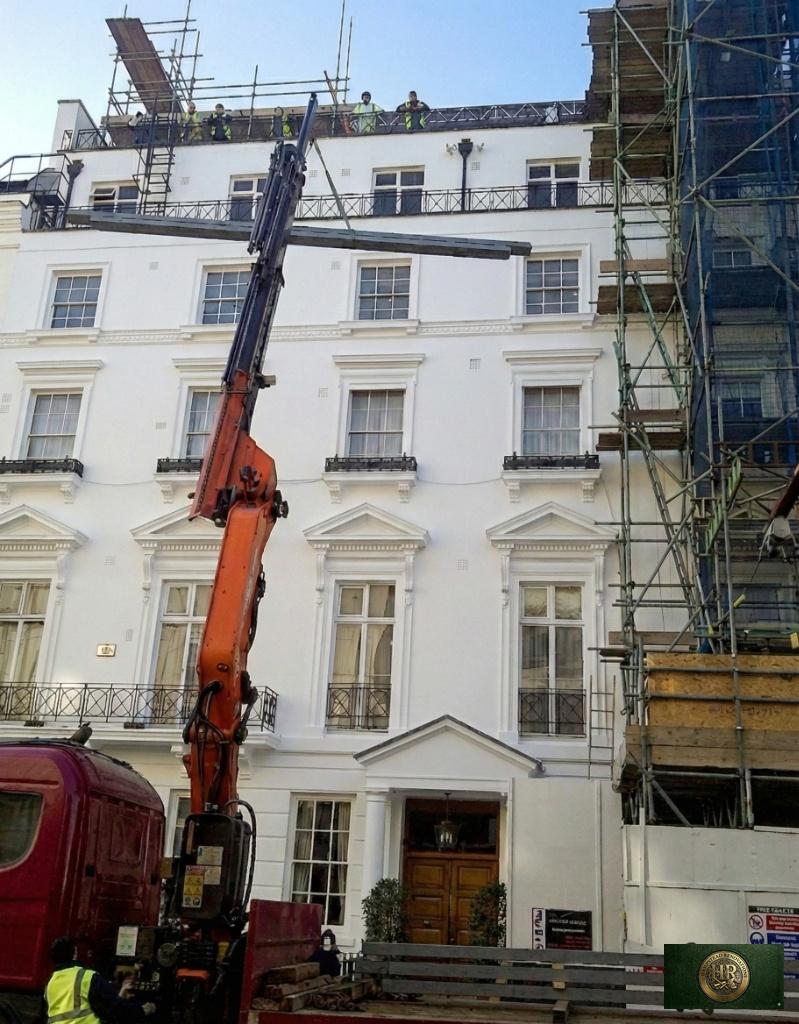
Five-storey house extension, full basement conversion, loft conversion and complete refurbishment within Belsize Park's conservation area.
View Case Study →
Penthouse duplex refurbishment and roof reconstruction within a Grade II listed setting, unifying the top two levels into seamless luxury living.
View Case Study →
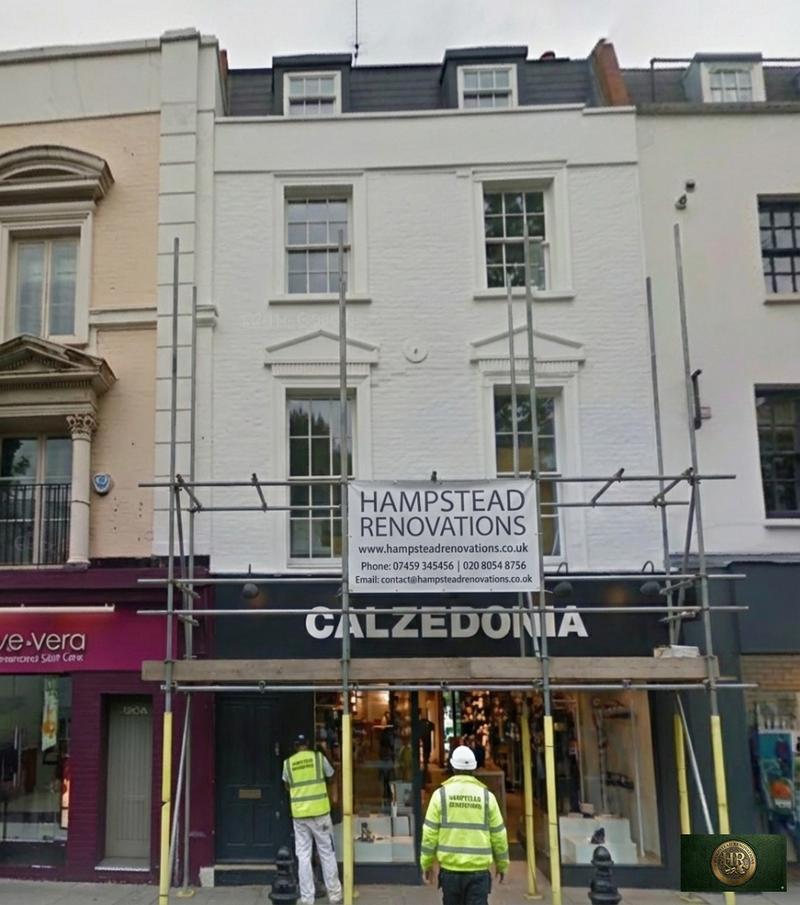
Office-to-retail and residential conversion delivering the Calzedonia store fit-out with three high-spec apartments above, preserving the original façade.
View Case Study →Use these area-specific guide pages to move from broad research into the main build routes people compare in Mayfair W1.
The Grosvenor Estate has a surveying team that reviews all proposed works on its leaseholds. They apply their design code — covering materials, colours, ironwork, window specifications, and architectural details — and may request modifications before approving. The process runs parallel to Westminster's planning process. Our architects prepare estate submissions alongside planning applications to minimise overall project timescales.
Mayfair has an exceptionally high concentration of listed buildings. Many townhouses on Grosvenor Square, Upper Brook Street, and South Audley Street are Grade I or Grade II* listed. Even unlisted properties within the conservation area face strict external controls. Check the Historic England website to confirm your property's listing status, then consult us about what this means for your renovation.
Mayfair sits at the very top of London's construction market. Townhouse renovations typically cost £1,500–£3,000 per square metre. Mews transformations range from £2,500–£4,000 per square metre. Luxury basements cost £5,000–£9,000 per square metre. Listed building requirements, estate standards, and ultra-premium finishes add 40–60% to standard London pricing. All projects on fixed-price contracts.
Rear extensions and basement excavations are viable on most Mayfair townhouses, subject to Westminster planning and Grosvenor Estate approval. Rear extensions must be at the back, must not affect the principal facade, and must use materials approved by the estate. Basement excavations are subject to Westminster's basement policy. Our architects have delivered both on Mayfair's most prestigious streets.
Mayfair clients expect — and receive — the finest available. Our projects in W1K typically feature bespoke kitchens by Smallbone, Boffi, or Henrybuilt; bathroom suites by Waterworks or Samuel Heath; Lutron or Crestron smart home systems; and interior design by recognised London studios. The Grosvenor Estate's itself enforces high standards for all external finishes. We match the quality of the address.
Yes. Our in-house RIBA architects coordinate all three consent processes simultaneously: Westminster planning, Grosvenor Estate submission, and Listed Building Consent (where required). We prepare a single, comprehensive design package that satisfies all three authorities — saving time and cost compared to managing the processes separately.
Our initial consultation is free and carries no obligation. Visit our design studio on Finchley Road to explore material selections, meet our team, and discuss your project in person.