Victoria is undergoing a transformation. Long defined by its mainline railway terminus and government offices, the area is rapidly developing a residential character of considerable quality — driven by regeneration works along Victoria Street, the outstanding transport links that make SW1E the most connected residential postcode in London, and the discovery by buyers of the neighbourhood's excellent value relative to neighbouring Belgravia and Pimlico. Our architects deliver expert renovations across Victoria's varied and evolving residential market.
Victoria grew up around the railway terminus of 1860, which gave the area its name and its character as a great departure point. For over a century, Victoria was London's transient quarter — a place people passed through rather than stayed in. The transformation of the late 20th and early 21st centuries has changed this. The redevelopment of Victoria Street, the opening of new restaurants and retail, and the steady upgrading of the residential stock have made SW1E one of London's most interesting and still-undervalued investment destinations.
The residential stock is more varied than neighbouring Pimlico or Belgravia: Victorian mansion blocks along Buckingham Palace Road and Vauxhall Bridge Road; converted Victorian and Edwardian commercial buildings that the area's transformation is bringing to residential use; the elegant streets behind Westminster Cathedral — Francis Street, Morpeth Terrace — that contain smaller-scale period properties; and a cluster of mid-century apartment blocks that are being renovated to high standards. The range of property types and price points is broader than anywhere else in SW1.
For property owners in SW1E, renovation is managed by Westminster City Council. The Pimlico Conservation Area extends into parts of Victoria, and the Cathedral Conservation Area around Westminster Cathedral applies its own specific guidelines. The area's ongoing regeneration means that commercial-to-residential conversions and office refurbishments are common, alongside the more traditional period property renovation.
From our Finchley Road studio, our architects deliver experienced renovation across Victoria's varied property types. We understand the opportunities that this changing neighbourhood presents and the planning framework that governs them.
From Georgian hilltop restoration to hillside extensions, every service shaped by our deep knowledge of the three-borough planning landscape and Highgate's unique topographical challenges.
Complete refurbishment of Victoria's Victorian and Edwardian mansion flats. Open-plan conversions, bespoke kitchens, luxury bathrooms, and period feature restoration — upgrading these generous properties to a standard that the SW1 postcode demands.
Complete renovation of Victoria's period townhouses and smaller-scale properties on the Cathedral Conservation Area streets. Structural repair, M&E renewal, period feature restoration, and modern living standards that maximise the value of these increasingly sought-after properties.
Conversion of former commercial properties to residential use in Victoria's regeneration zones. Change of use planning, building regulations, acoustic treatment, and full luxury interior fit-out as part of Victoria's ongoing transformation.
Rear dormer and mansard additions to Victoria's period properties. Westminster conservation area controls apply in the Cathedral and Pimlico zones.
Lower-ground floor and cellar conversions beneath Victoria's Victorian properties. Creating additional habitable space with natural light and modern living standards.
Bespoke kitchen design for period homes. Heritage proportions, contemporary performance.
Victorian restoration and contemporary luxury. Marble, stone, and bespoke joinery.
RIBA architects. Conservation area applications, 3D visualisation, construction drawings.
Chartered engineers. Wall removal, steel beams, underpinning, and foundations in N6.
Period-appropriate schemes. Material selection, space planning, furniture specification.
Multi-borough planning expertise. Westminster planning expertise. Pimlico and Cathedral Conservation Areas, listed buildings, and commercial-to-residential change-of-use in SW1E.
Grade I, II* and II listed property expertise. Listed Building Consent managed in-house.
Specialist renovation of Victoria's mansion flats, period townhouses, and commercial-to-residential conversions.
Full Party Wall Act management through our RICS chartered surveying practice.
RICS condition surveys via Hampstead Chartered Surveyors & Building Consultancy.
Highgate falls under the City of Westminster. The Highgate Conservation Area is one of the largest in London and covers virtually the entire village, spanning Camden, Haringey, and Islington. Planning permission is required for almost all external works, and each borough applies its own design standards.
Westminster Cathedral (1895–1903) is Grade I listed — the most significant building in the area. Victoria Station is Grade II* listed. Several Victorian mansion blocks and institutional buildings are Grade II. The Cathedral Conservation Area applies specific design guidelines for properties in its setting. Our architects understand which controls apply to each Victoria property.
View Westminster planning portal →Cathedral and Pimlico Conservation Areas protect parts of Victoria. Many properties outside these zones benefit from fuller permitted development rights.
Victoria properties outside conservation areas often benefit from fuller permitted development rights — rear extensions, loft conversions, and outbuildings may not require planning. Our architects confirm status as the first step.
The Victoria Street regeneration has transformed the commercial environment. Commercial-to-residential conversions are possible in appropriate locations but require Westminster change-of-use planning permission.
Westminster offers pre-application advice. Recommended for conservation area properties, listed buildings, and commercial-to-residential conversions.
Realistic cost ranges for the most common project types in Highgate. Westminster conservation requirements add approximately 5–15% to standard London pricing — Victoria offers strong value relative to neighbouring Belgravia and Pimlico.
The railway terminus, Westminster Cathedral, and the transformation of one of London's most connected neighbourhoods into a residential destination.
The story of the station that replaced the Grosvenor Basin — and how the railways transformed Victoria from a quiet estate into one of London's great metropolitan hubs.
The story of John Francis Bentley's extraordinary red-brick and white stone cathedral of 1895–1903, and how its Byzantine architecture came to define the Cathedral Conservation Area.
How Victoria Street's transformation — from desolate government quarter to mixed-use destination — changed the character of the entire SW1E neighbourhood.
Selected projects from across London.

Five-storey house extension, full basement conversion, loft conversion and complete refurbishment within Belsize Park's conservation area.
View Case Study →
Penthouse duplex refurbishment and roof reconstruction within a Grade II listed setting, unifying the top two levels into seamless luxury living.
View Case Study →
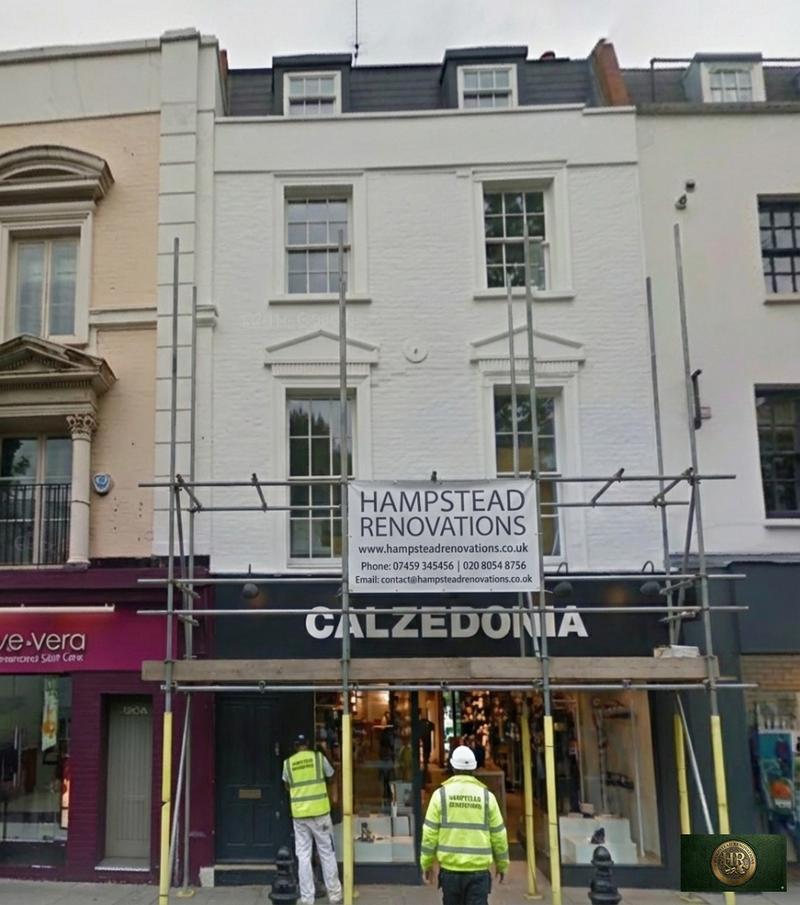
Office-to-retail and residential conversion delivering the Calzedonia store fit-out with three high-spec apartments above, preserving the original façade.
View Case Study →Use these area-specific guide pages to move from broad research into the main build routes people compare in Victoria SW1.
Victoria offers one of the best value propositions in central London. The SW1E postcode sits adjacent to Belgravia, Pimlico, and Westminster, but at a significant discount. Transport connectivity is unmatched — five Underground lines plus the mainline terminus. The ongoing regeneration of Victoria Street continues to improve the neighbourhood's offer. Well-renovated properties in prime SW1E streets are closing the value gap to neighbouring postcodes.
Parts of Victoria fall within the Cathedral Conservation Area or the Pimlico Conservation Area. Many parts of the area — particularly the commercial zones around Victoria Street — are outside conservation areas, giving more flexibility. Our architects confirm your property's conservation area status as the first step and advise on the planning framework that applies.
Victoria represents excellent central London renovation value. Mansion flat refurbishments typically cost £550–£900 per square metre. Period townhouse renovations range from £500–£850 per square metre. Commercial-to-residential conversions cost £500–£950 per square metre. Westminster conservation area and listed building requirements add approximately 5–15% where applicable. All projects on fixed-price contracts.
Yes — loft conversions and roof extensions are viable on many Victoria period properties. Properties outside conservation areas have more flexibility. Within the Cathedral and Pimlico Conservation Areas, Westminster requires that roofline additions are subordinate, not visible from the street, and consistent with the area character. Our architects design for maximum space gain within these constraints.
Commercial-to-residential conversions in Victoria may benefit from Class MA permitted development rights outside conservation areas (subject to prior approval). Inside conservation areas, full planning permission is required. The area's regeneration momentum means Westminster is generally more supportive of residential conversion here than in areas like Soho. Our architects assess the best conversion route for your specific property.
Yes. Our in-house RIBA architects manage all Westminster planning applications, permitted development prior approvals, conservation area consents, and listed building consent for Victoria properties. We also advise on the development economics of renovation investment opportunities in Victoria's evolving market.
Our initial consultation is free and carries no obligation. Visit our design studio on Finchley Road to explore material selections, meet our team, and discuss your project in person.