St. James's is London's royal quarter — the neighbourhood that contains Buckingham Palace, Clarence House, St. James's Palace, and the London residences of the senior royal family. For those living and working in its Georgian townhouses and gentleman's clubs, this proximity to the Crown creates a district of unmatched historical gravitas and architectural magnificence. Our architects deliver renovations of exceptional quality that honour this extraordinary address.
St. James's takes its name from the medieval hospital of St. James's — later demolished for the palace that still stands. The area was developed as an aristocratic residential district in the late 17th century, when Henry Jermyn, Earl of St. Albans, laid out the streets around St. James's Square. The result is London's most formal residential district: a neighbourhood of Georgian townhouses and mansion blocks where foreign embassies, gentleman's clubs, and the Crown Estate's properties combine to create an atmosphere of understated, ancient power.
The residential stock is dominated by Georgian and early Victorian townhouses on the streets around St. James's Square, and mansion flats in the converted Victorian and Edwardian buildings of Pall Mall and St. James's Street. Much of the property is held on Crown Estate leases, which impose their own conditions and design requirements alongside Westminster's planning policies. The concentration of foreign embassies and royal-connected properties makes this one of London's most intensively security-conscious and regulated neighbourhoods.
For property owners in SW1A, renovation requires navigation of Westminster City Council's conservation area framework alongside the Crown Estate's lease conditions and design standards. The Crown Estate manages much of the St. James's Conservation Area and enforces design standards that, in some respects, go further than Westminster's planning requirements. Security considerations — given the royal residences and embassies — may also affect works programmes and contractor access.
From our Finchley Road studio, our architects deliver renovations at the level of quality and discretion that St. James's demands. We navigate Crown Estate requirements and Westminster planning with the same authority — understanding that in this neighbourhood, the standard expected is simply the finest available.
From Georgian hilltop restoration to hillside extensions, every service shaped by our deep knowledge of the three-borough planning landscape and Highgate's unique topographical challenges.
Complete renovation of St. James's Georgian townhouses and mansion flats. Crown Estate design standards, Westminster conservation area compliance, and ultra-premium interior fit-out for one of London's most prestigious addresses.
Specialist restoration of St. James's listed Georgian townhouses — facades, ironwork, sash windows, and historic interiors. Crown Estate and Westminster listed building consent managed to impeccable standards.
Complete refurbishment of St. James's Victorian and Edwardian mansion flats. Generous proportions, period features, and the finest finishes — restored and reconfigured for contemporary luxury living in London's royal quarter.
Rooftop additions and penthouse conversions in St. James's. Westminster and Crown Estate roofline sensitivity. Views to Green Park and Buckingham Palace achievable from upper floors.
Basement excavations beneath St. James's townhouses. Westminster basement policy and Crown Estate structural requirements managed. Wine cellars, gyms, and home cinemas at the finest standard.
Bespoke kitchen design for period homes. Heritage proportions, contemporary performance.
Victorian restoration and contemporary luxury. Marble, stone, and bespoke joinery.
RIBA architects. Conservation area applications, 3D visualisation, construction drawings.
Chartered engineers. Wall removal, steel beams, underpinning, and foundations in N6.
Period-appropriate schemes. Material selection, space planning, furniture specification.
Multi-borough planning expertise. Westminster and Crown Estate planning expertise. St. James's Conservation Area, listed building consent, and royal proximity compliance in SW1A.
Grade I, II* and II listed property expertise. Listed Building Consent managed in-house.
Specialist renovation of St. James's Georgian townhouses, mansion flats, and Crown Estate leasehold properties.
Full Party Wall Act management through our RICS chartered surveying practice.
RICS condition surveys via Hampstead Chartered Surveyors & Building Consultancy.
Highgate falls under the Westminster + Crown Estate. The Highgate Conservation Area is one of the largest in London and covers virtually the entire village, spanning Camden, Haringey, and Islington. Planning permission is required for almost all external works, and each borough applies its own design standards.
St. James's Palace is Grade I listed, as are several of the mansion blocks and government buildings. St. James's Square contains numerous Grade II* and II listed properties. This concentration means that Listed Building Consent is very commonly required for renovation works. Westminster and the Crown Estate together make St. James's one of London's most carefully protected neighbourhoods.
View Westminster planning portal →St. James's Conservation Area applies Westminster's most rigorous controls. The Crown Estate enforces additional design standards for its leaseholds.
The Crown Estate owns much of St. James's freehold. Leaseholders require estate approval for renovation works, applying strict design standards to materials, finishes, and architectural details.
The proximity of royal residences and foreign embassies creates heightened security considerations for construction works. Contractor vetting, access protocols, and works programmes are managed accordingly.
Westminster offers pre-application services. The Crown Estate offers pre-submission consultations. Both strongly recommended before any St. James's project commences.
Realistic cost ranges for the most common project types in Highgate. Crown Estate standards, listed building requirements, and the royal quarter's exceptional market add 35–55% to standard London pricing.
St. James's Palace, the Club Mile, and the royal quarter that has shaped London's formal character for four centuries.
The story of the medieval palace that gave the neighbourhood its name — and still forms the official London residence of the British Royal Family.
The story of the street that contains more gentlemen's clubs per metre than anywhere on earth — and what their extraordinary Victorian buildings tell us about British power and privilege.
How Henry Jermyn's 1660s development created the model for the London residential square — and why the houses that surround it remain among the most coveted in the capital.
Selected projects from across London.

Five-storey house extension, full basement conversion, loft conversion and complete refurbishment within Belsize Park's conservation area.
View Case Study →
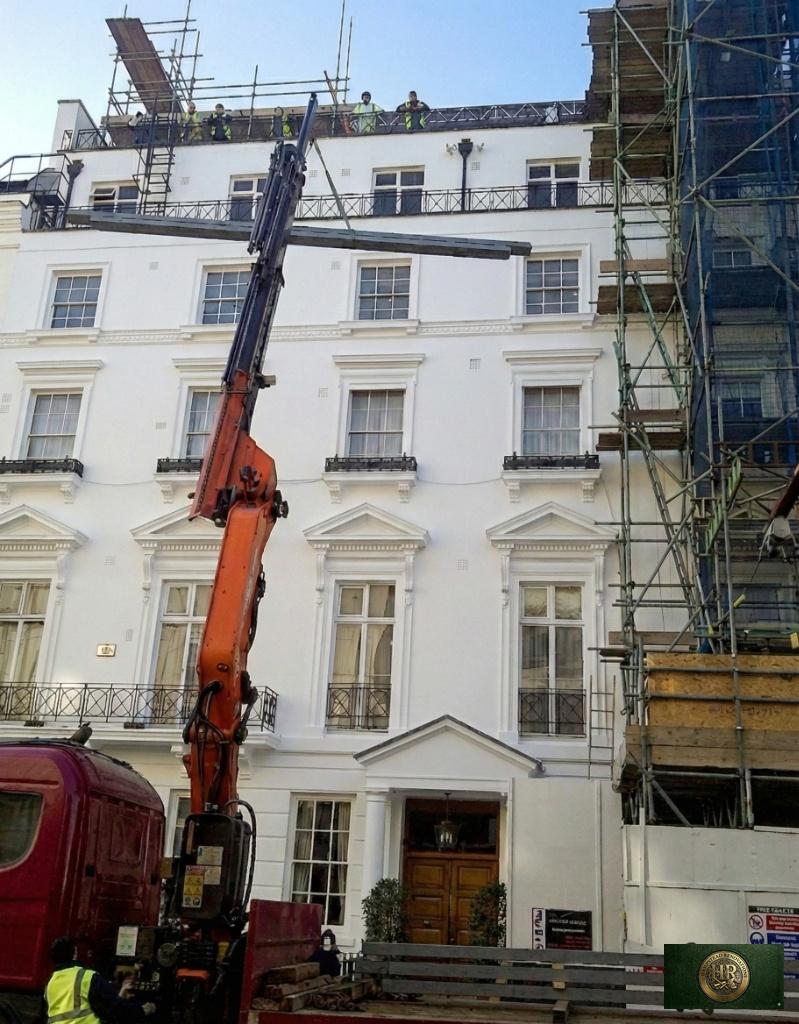
Penthouse duplex refurbishment and roof reconstruction within a Grade II listed setting, unifying the top two levels into seamless luxury living.
View Case Study →
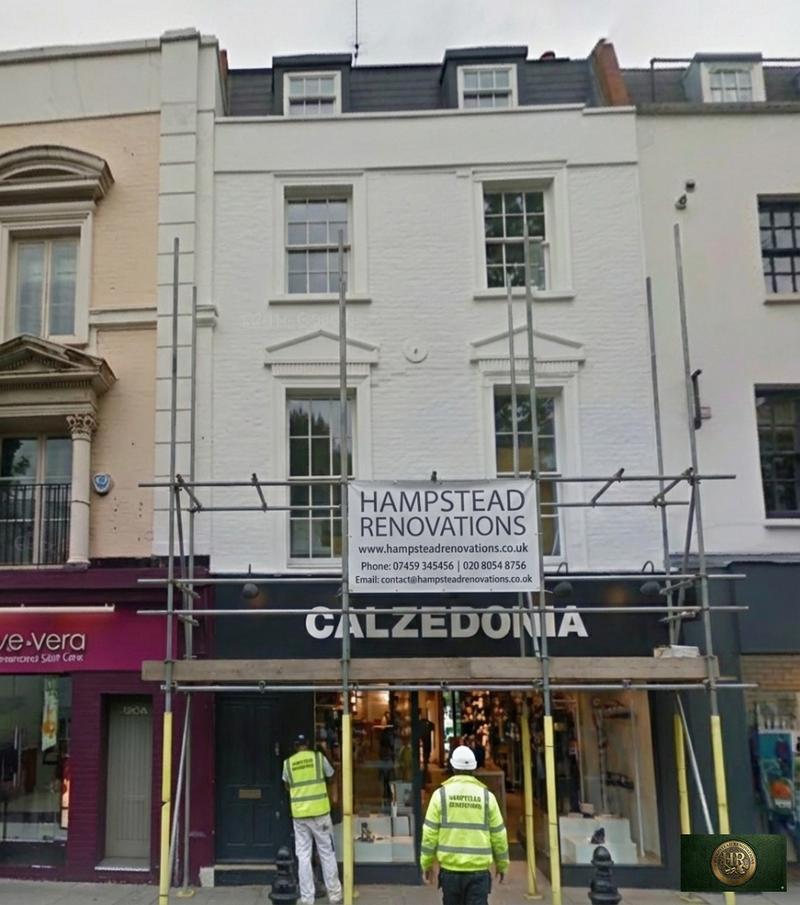
Office-to-retail and residential conversion delivering the Calzedonia store fit-out with three high-spec apartments above, preserving the original façade.
View Case Study →Use these area-specific guide pages to move from broad research into the main build routes people compare in St James's SW1.
If your property is held on a Crown Estate lease — as most in St. James's are — yes, estate approval is required for renovation works in addition to Westminster planning. The Crown Estate has a surveying team who review all proposals and may specify or restrict materials, colours, and architectural details. Our architects prepare estate submissions concurrently with planning applications.
Very likely. St. James's has an extremely high concentration of listed buildings — from the Palace itself to many of the townhouses and mansion blocks. Check the Historic England register to confirm your property's listing status. Even unlisted properties in the conservation area face strict external controls. Listed Building Consent, when required, is a third consent process alongside Westminster planning and Crown Estate approval.
St. James's is at the absolute top of London's property and construction market. Townhouse renovations typically cost £1,200–£2,500 per square metre. Mansion flat refurbishments range from £800–£1,500 per square metre. Luxury basements cost £4,500–£8,000 per square metre. Crown Estate standards, listed building requirements, and the royal quarter's exceptional market add 35–55% to standard London pricing. All projects on fixed-price contracts.
In principle — but Westminster and the Crown Estate apply very strict controls to roofline changes in St. James's. Any roof addition must be invisible from street level, must not affect the building's Conservation Area contribution, and must satisfy the Crown Estate's structural and design standards. Our architects can assess the feasibility for your specific building — some St. James's rooftops offer extraordinary views to Green Park and Buckingham Palace.
The proximity of Buckingham Palace, Clarence House, and St. James's Palace creates heightened security considerations. Construction works must be managed with awareness of royal schedules and high-security protocols. Our project managers have experience of working in this environment and manage contractor access, deliveries, and working hours accordingly.
Yes. Our in-house RIBA architects prepare both Crown Estate submissions and Westminster planning applications simultaneously, coordinating the two processes to minimise overall project timescales. We also manage Listed Building Consent and building regulations where required, delivering all consents as a coordinated programme.
Our initial consultation is free and carries no obligation. Visit our design studio on Finchley Road to explore material selections, meet our team, and discuss your project in person.