Wimbledon is where London's suburban ambition meets genuine village character. Our architects understand the conservation areas, the scale of the Village villas, and the planning nuances that make SW19 one of the most desirable — and distinctive — places to renovate in south-west London.
Wimbledon's character was forged by two defining features: 1,140 acres of common land that kept the countryside at the doorstep, and a hilltop village that remained resolutely separate from the town below. When the railway arrived in 1838 it brought prosperity but not uniformity — the Village on the hill developed as a precinct of large detached villas set in generous gardens, while the town around the station grew with handsome Victorian terraces, parades of shops, and the civic confidence of a borough that knew its own worth.
The housing stock reflects this dual identity. Wimbledon Village — centred on the High Street, Church Road, and the roads radiating from the Common — contains some of south-west London's finest domestic architecture: substantial Victorian and Edwardian detached houses, many with Arts and Crafts detailing, set behind mature hedges on wide, tree-lined streets. Parkside and Wimbledon Hill Road offer sweeping properties with views over the Common. In the town, Victorian terraces and Edwardian semis line streets like Gladstone Road and Palmerston Road, while inter-war developments extend towards Raynes Park and South Wimbledon.
For homeowners in SW19, renovation is about matching ambition to setting. Wimbledon Village's conservation area imposes additional design controls on the premium properties, and Merton Council takes a considered approach to proposals that affect the area's leafy, low-density character. Extensions, basement conversions, and large-scale refurbishments are all achievable — but they demand an understanding of what Merton will approve, and the architectural quality to justify the investment in one of London's most sought-after suburbs.
From Village villa refurbishment to contemporary basement extensions, every service shaped by deep knowledge of Wimbledon's conservation areas and Merton's planning requirements.
Wimbledon's most transformative service. Complete property renovation from shell to finished home — structural work, all trades, and project management for the Village's most ambitious villa refurbishments.
Rear, side, and wraparound extensions to Wimbledon's period properties. Conservation area design expertise for Village villas and town terraces alike, with Merton planning managed in-house.
New basement excavations and existing cellar conversions for Wimbledon's larger properties. Structural engineering, waterproofing, and full Merton planning and Building Control compliance.
Dormer and mansard conversions for Wimbledon's Victorian and Edwardian properties, respecting rooflines and conservation area sightlines.
Bespoke kitchen design for Wimbledon's period homes. Heritage proportions, contemporary performance, luxury finishes for family living.
Victorian restoration and contemporary luxury. Marble, natural stone, and bespoke joinery for SW19's finest properties.
Period property specialists. Sash window restoration, decorative plasterwork, Arts and Crafts detailing, and original features preserved.
RIBA architects. Conservation area applications, 3D visualisation, construction drawings for Merton Council submissions.
Chartered engineers. Wall removal, steel beams, underpinning, and foundations for Wimbledon's period properties.
The Wimbledon style — village elegance with contemporary family living. Material selection, space planning, furniture specification.
Merton Council planning expertise. Conservation area, permitted development, and householder application management.
Specialist restoration of Wimbledon's distinctive Arts and Crafts houses — tile-hanging, half-timbering, leaded lights, and handmade brickwork.
Traditional sash window repair, draught-proofing, and slim-profile double glazing for Wimbledon's conservation area properties.
Full Party Wall Act management through our RICS chartered surveying practice. Essential for terraced and semi-detached properties in SW19.
RICS condition surveys via Hampstead Chartered Surveyors & Building Consultancy. Pre-purchase and pre-renovation for Wimbledon properties.
Wimbledon falls under the London Borough of Merton — a planning authority that takes a considered, moderate approach but applies greater scrutiny within its conservation areas. Wimbledon Village Conservation Area covers the hilltop village and its immediate surroundings, while Wimbledon Hill Road Conservation Area protects the impressive approach from town to Village. Parts of the town centre also carry conservation area status. Within these areas, planning permission is required for most external alterations, and proposals must demonstrate they preserve or enhance the area's character.
Outside conservation areas, many Wimbledon properties benefit from permitted development rights — allowing certain extensions, loft conversions, and outbuildings without full planning permission. However, the scale of many Village properties means that ambitious refurbishments and basement conversions will typically require planning consent. Our architects assess every property individually, identifying the full scope of what is achievable and managing the Merton planning process from pre-application advice through to approval.
View Merton planning portal →Wimbledon Village and Wimbledon Hill Road conservation areas protect the premium properties. Character preservation is mandatory for external works.
Many Wimbledon properties outside conservation areas benefit from PD rights for rear extensions, loft conversions, and outbuildings — subject to size limits.
Basement excavations require careful planning, particularly for Village properties. Structural method statements and construction management plans are essential.
Merton offers pre-application services. Recommended for Village conservation area schemes, basement proposals, and larger extensions in SW19.
Realistic cost ranges for the most common project types in Wimbledon. Village conservation area requirements and the scale of larger properties can add 10–20% to standard London pricing.
From the ancient Common to the Victorian Village, the buildings and landscapes that shaped one of London's most distinctive suburbs.
How a hilltop hamlet overlooking the Common became one of London's most desirable addresses, with architecture spanning Georgian simplicity to Arts and Crafts grandeur.
A guide to the distinctive tile-hung, half-timbered, and handmade-brick houses that give Wimbledon Village its unique character among London suburbs.
The story of how London's largest common survived enclosure, shaped the surrounding architecture, and continues to define the character of SW19.
Selected projects from across London.

Five-storey house extension, full basement conversion, loft conversion and complete refurbishment within Belsize Park’s conservation area.
View Case Study →
Penthouse duplex refurbishment and roof reconstruction within a Grade II listed setting, unifying the top two levels into seamless luxury living.
View Case Study →
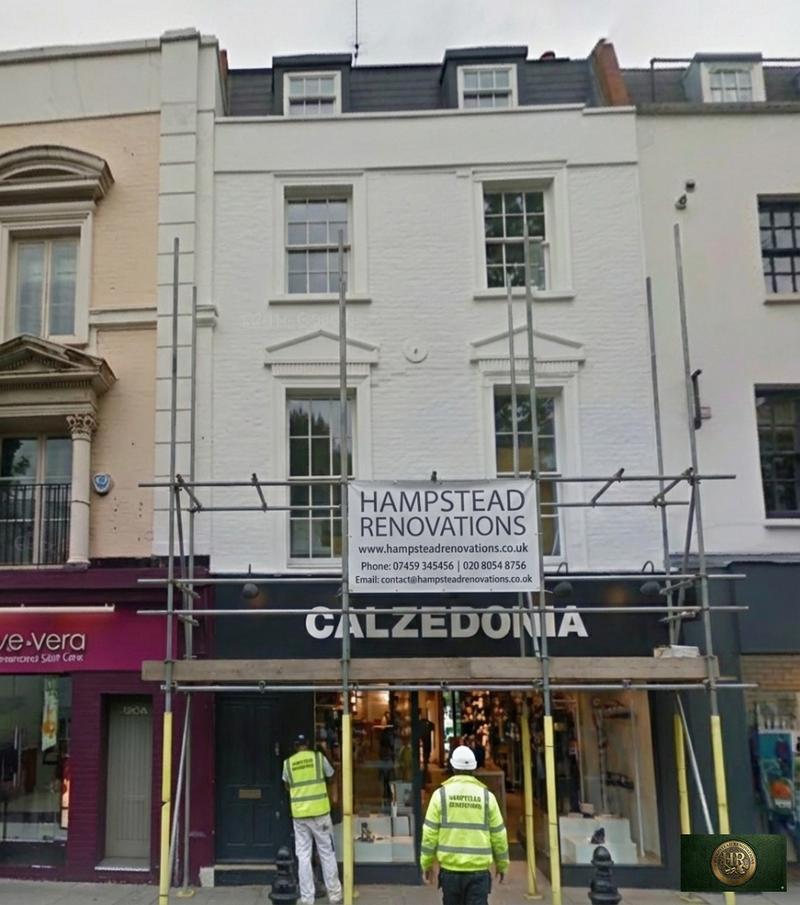
Office-to-retail and residential conversion delivering the Calzedonia store fit-out with three high-spec apartments above, preserving the original façade.
View Case Study →Use these area-specific guide pages to move from broad research into the main build routes people compare in Wimbledon SW19.
Yes. Wimbledon Village Conservation Area covers the hilltop village, including the High Street, Church Road, and surrounding residential streets. Wimbledon Hill Road also has its own conservation area designation. Within these areas, planning permission is required for most external works, and proposals must preserve or enhance the area's character. View Merton conservation area guidance →
Yes. Basement conversions are increasingly popular in Wimbledon, particularly for larger Village properties where the value justifies the investment. You will need planning permission, a structural method statement, and a construction management plan. Merton takes a pragmatic approach but expects thorough documentation, especially within conservation areas. Our engineers have extensive experience with basement projects in SW19.
Full refurbishments in SW19 typically cost £500–£900 per square metre. The scale of Wimbledon Village villas — many exceeding 300 sqm — means total project costs can be substantial, but the value uplift in this market is significant. Conservation area requirements and the quality expected of Village properties can add 10–20% to standard pricing. All our projects are delivered on fixed-price contracts.
In most cases, yes. Properties outside conservation areas often benefit from permitted development rights allowing certain extensions without full planning permission. Within the Village and Hill Road conservation areas, planning permission is typically required, and designs must be sympathetic to the existing property and streetscape. Our architects assess every property individually.
Wimbledon Village contains a diverse mix of high-quality domestic architecture: large detached Victorian and Edwardian villas, Arts and Crafts houses with distinctive tile-hanging and half-timbering, some Georgian properties, and inter-war houses. Many sit on generous plots with mature gardens. Property values typically range from £2M to £8M and above.
Yes. Our in-house RIBA architects manage all planning applications — householder, conservation area, and full applications — from initial feasibility through to approval. We have experience with Merton's planning team and understand the design standards they expect, particularly for Wimbledon Village conservation area submissions.
Our initial consultation is free and carries no obligation. Discuss your Wimbledon project with our RIBA architects, explore material selections, and understand what Merton Council will permit for your property.