Layout and Joinery
Circulation was simplified and new full-height joinery introduced to make the entrance, bedroom, and living areas feel more resolved. Storage was integrated into the architecture rather than added afterwards.
A high-spec full renovation of a prime Central London apartment, balancing restored period proportions with bespoke joinery, a statement kitchen, marble bathrooms, and a quietly luxurious finish palette throughout.
The brief centred on upgrading every part of the apartment without losing the grace of the original envelope: generous sash windows, ornate cornicing, strong room proportions, and a quiet sense of permanence.
At Royal Court House on Sloane Street, the focus was a true end-to-end renovation rather than a cosmetic refresh. The scheme reworked flow between the entrance, reception space, kitchen, bedroom, and bathroom areas so the apartment feels both more open and more private, with better storage, cleaner sightlines, and a stronger sense of sequence from room to room.
Material decisions were deliberately restrained. Rich timber tones, herringbone flooring, natural stone, and softly detailed plasterwork were used to reinforce the apartment's period character, while bespoke slatted joinery, integrated lighting, and tailored cabinetry introduced a contemporary layer that feels precise rather than over-designed.
The kitchen and bathrooms became the main performance upgrades. Joinery was detailed for long-term durability, appliance integration was handled cleanly, and the wet areas were rebuilt around marble finishes, upgraded plumbing, improved ventilation, and a more considered lighting strategy. Throughout the apartment, the emphasis stayed on craftsmanship, proportion, and lasting value.
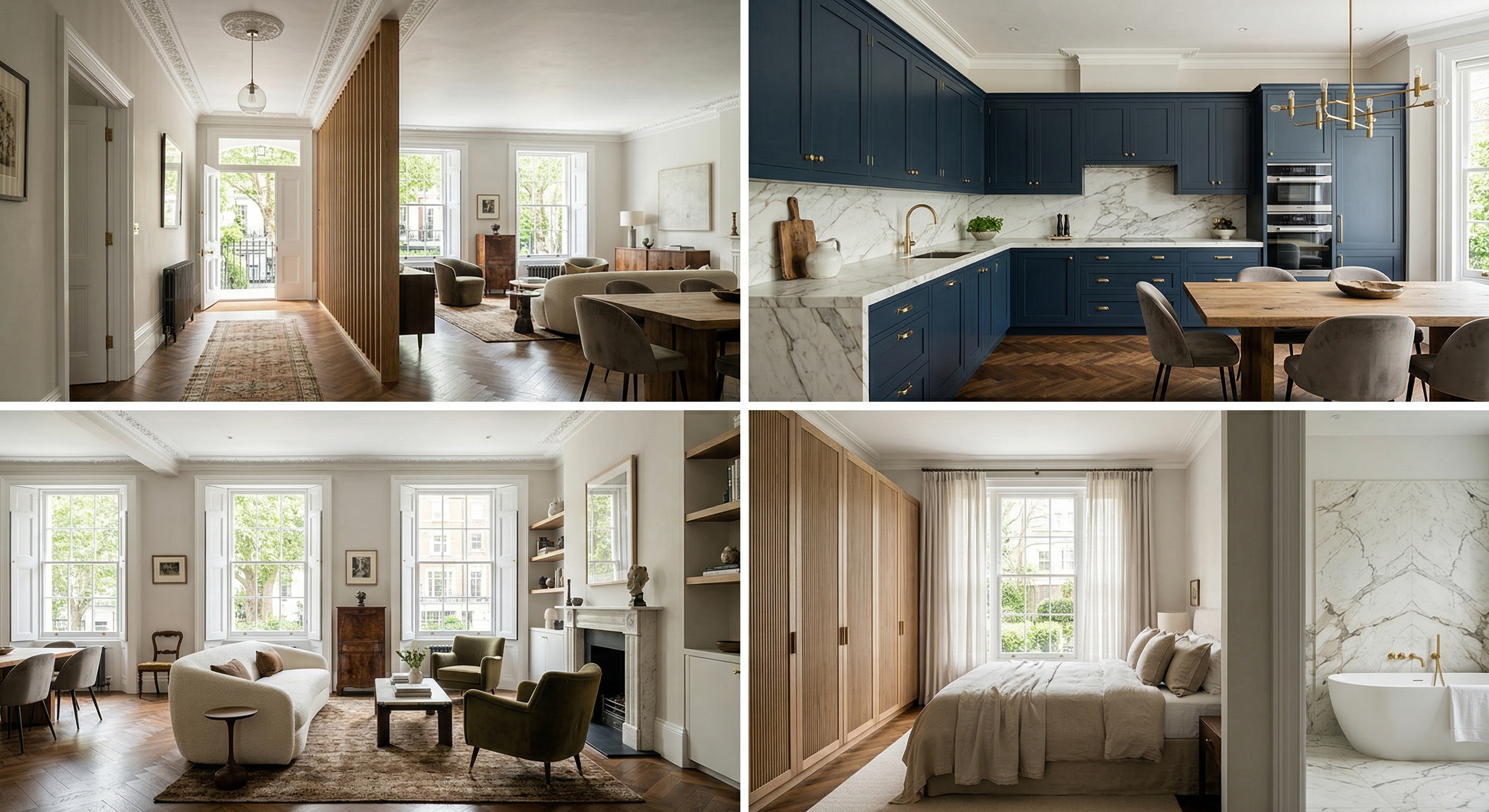
The result is a whole-home upgrade: better planning, quieter detailing, stronger storage, and a specification suited to a prime London apartment rather than a patchwork of isolated room upgrades.
Circulation was simplified and new full-height joinery introduced to make the entrance, bedroom, and living areas feel more resolved. Storage was integrated into the architecture rather than added afterwards.
A bespoke shaker kitchen with marble surfaces, integrated appliances, upgraded task lighting, and improved working geometry brought the service core of the apartment up to a genuinely premium standard.
Stone-lined wet areas, a freestanding bath, refined brassware, and a calmer lighting approach created a more hotel-grade experience without losing the residential warmth expected in a long-term home.
Behind the finishes, the apartment benefited from upgraded plumbing, electrics, ventilation, heating controls, decorating, flooring, and detailed repair work to keep the restored rooms feeling crisp and dependable.
The programme was sequenced to protect period fabric, control lead times on specialist finishes, and keep the decision-making process clear all the way through the build.
Measured surveys, room-by-room condition checks, and finish workshops established where the apartment needed real intervention and where the existing character should simply be restored and highlighted.
Existing finishes, dated cabinetry, and redundant services were removed carefully so repairs to walls, timber, and cornice lines could be completed before new work began.
Lighting positions, power layouts, plumbing routes, extraction, and joinery interfaces were coordinated early so the finished rooms would read as calm and uncluttered rather than heavily engineered.
With the building fabric prepared, the high-value packages moved in: bespoke cabinetry, stonework, feature joinery, sanitaryware, brassware, decoration, and flooring.
Final snagging, balancing of lighting and services, finish protection removal, and client walkthroughs completed the programme, with the apartment handed over as a fully resolved home rather than a partially dressed shell.
Original cornicing, window proportions, and the apartment's sense of height and light needed to remain legible after the renovation, not be lost beneath a heavier modern fit-out.
The best full refurbishments make upgraded lighting, ventilation, power, and plumbing feel almost invisible. Coordination around joinery, stone, and decorative finishes was therefore critical.
When a scheme relies on tonal restraint rather than visual excess, every junction matters. Timber grain, paint tone, stone selection, and hardware detailing had to work together across all rooms.
The completed apartment reads as a single, considered composition. Each room is calmer, better organised, and more useful, while the overall finish level aligns with the expectations of a prime Sloane Street address.
We deliver design-and-build refurbishments for apartments, penthouses, and period homes across prime Central and South West London, with the same focus on detail, sequencing, and finish quality shown here.
Discuss Your Project